

If you're wondering when to schedule that tree removal, let's get right to it. The absolute best time is almost always during the tree's dormant season, which runs from late winter into early spring. There's a good reason for this timing—it’s all about working with nature, not against it, which makes the whole job safer and cleaner.
The Best Season for Tree Removal Explained
Timing is everything in tree work. Think of a tree in the dead of winter as being in a deep sleep, almost like a bear hibernating. Its growth has halted, its sap isn't flowing, and it's essentially just resting. Removing it in this state is far less of a shock to the tree and the surrounding landscape.
This isn't just about being considerate to the ecosystem; it's also incredibly practical. When the leaves are gone, an arborist can see the tree’s entire structure—every branch, every potential weak spot. This clear line of sight is a game-changer for safety and precision, allowing the crew to plan their cuts perfectly.
Why Dormancy Matters for Your Yard
Another huge plus for winter removal is the ground itself. Here in the Atlanta area, the soil is generally much firmer during the colder months. A hard, sometimes even frozen, ground provides a solid foundation for any necessary equipment. This drastically cuts down on the risk of leaving deep, muddy ruts all over your lawn. Trying to do the same job on soft, wet ground in spring or summer can quickly turn your yard into a mess.
This infographic breaks down the pros and cons of tree removal across the different seasons.
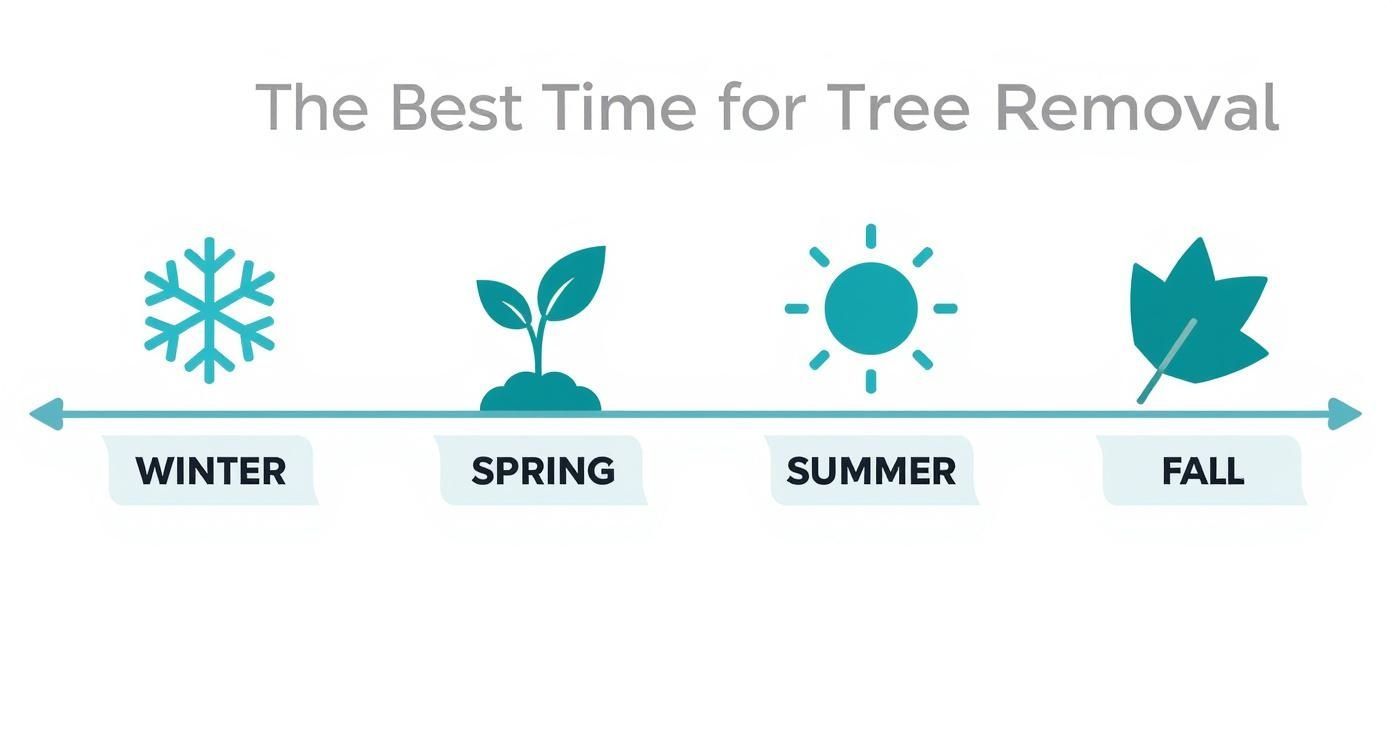
As you can see, winter consistently comes out on top, offering the best conditions for both the tree crew and your property.
It all circles back to the tree's natural growth cycle. When a tree is dormant, removing it minimizes stress and significantly lowers the chance of opportunistic pests or diseases invading the fresh cut. In fact, seasoned arborists will tell you that late winter removals can reduce the risk of complications by about 30%. That’s a huge margin, and it speaks volumes about why timing is so critical. For a broader look at tree populations, you can find some interesting data on global tree cover trends on Statista.
Key Takeaway: Planning your tree removal for the dormant season (late winter to early spring) is the smartest move. It protects your landscape, sidesteps pest and disease issues, and creates a much safer worksite for the professionals handling the job.
Why Arborists Prefer the Dormant Season
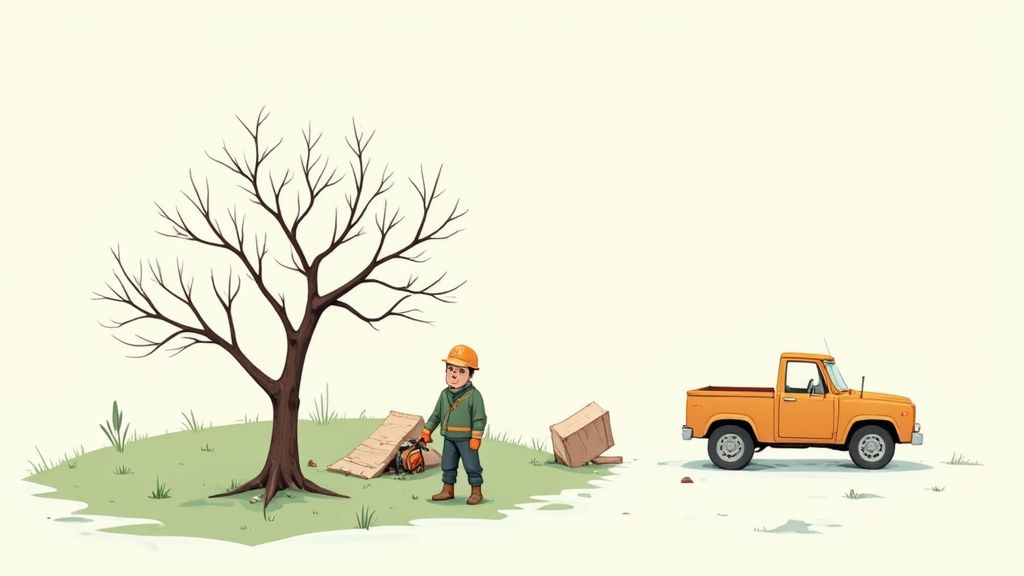
When you see a consensus among professionals, it’s usually for a good reason. Ask any experienced arborist about the best time for tree removal, and they’ll almost always point to the dormant season. This isn't just a matter of preference; it’s a strategy backed by practical, science-based advantages that benefit you, your property, and the crew.
Think of a deciduous tree in winter like a skeleton. Once the leaves are gone, its entire structure is on full display. Every branch, every potential weak spot, and the tree's overall growth pattern are laid bare, giving the removal team a massive advantage.
A Clear Advantage: A leafless tree allows arborists to map out the safest, most efficient cutting strategy. It eliminates guesswork, reduces the risk of misjudgment, and ensures each cut is precise.
This crystal-clear visibility translates directly into a safer work environment and a much more controlled removal from the first cut to the last.
Protecting Your Landscape and Property
One of the biggest worries for any homeowner is the toll a tree removal can take on their lawn and garden. Heavy equipment, falling limbs, and constant foot traffic can quickly turn a soft, saturated lawn into a muddy disaster.
The dormant season offers a natural solution. When the ground is firm or frozen, it acts like a protective mat, helping to distribute the weight of equipment and minimize the overall impact. This means fewer ruts, less soil compaction, and a much cleaner job site when everything is said and done.
The benefits are hard to ignore:
- Minimized Lawn Damage: Heavy equipment can move around with a much lower risk of sinking into the turf, preserving your yard.
- Protection for Surrounding Plants: The firm soil helps shield the root systems of nearby shrubs and flowers from being crushed.
- Reduced Cleanup: With less mud and soil disruption, the final cleanup is faster and more straightforward.
Biological and Financial Benefits
Beyond the obvious physical advantages, working in the colder months has some key biological perks. When a tree is dormant, its metabolism slows to a crawl. It’s not actively pushing sap or trying to grow, which makes the removal less of a shock to the surrounding ecosystem.
On top of that, the cold weather naturally keeps many pests and diseases at bay. Insects like bark beetles are inactive, and fungal spores aren't floating around in the air, which helps protect your other trees from a potential infestation after the removal.
This smart timing also makes good financial sense. Scheduling a tree removal for late winter can lower operational costs by up to 25% simply by avoiding the risks that come with soft, unstable ground. In fact, forestry data shows that crews have 20-30% fewer injuries when working on frozen soil—a powerful testament to how much safer and more efficient dormant season work really is. You can find more insights on forestry operations at Evertreen.com.
Ultimately, choosing this time isn't just a preference; it's a strategic decision rooted in safety, efficiency, and respect for your property.
How Tree Species Affects Removal Timing
While the dormant season is a fantastic rule of thumb, it’s not a one-size-fits-all solution for every tree on your property. The specific species you’re dealing with plays a massive role in figuring out the absolute best time for removal. Think of it like this: a general cooking temperature might work for a lot of dishes, but you wouldn’t cook a delicate piece of fish the same way you’d cook a hearty roast.
Different trees have their own unique growth cycles, biological clocks, and vulnerabilities. A removal plan that’s perfectly safe for one species could be a serious mistake for another, especially when it comes to preventing the spread of disease. Knowing these differences is what separates generic advice from a smart, tailored strategy for your yard.
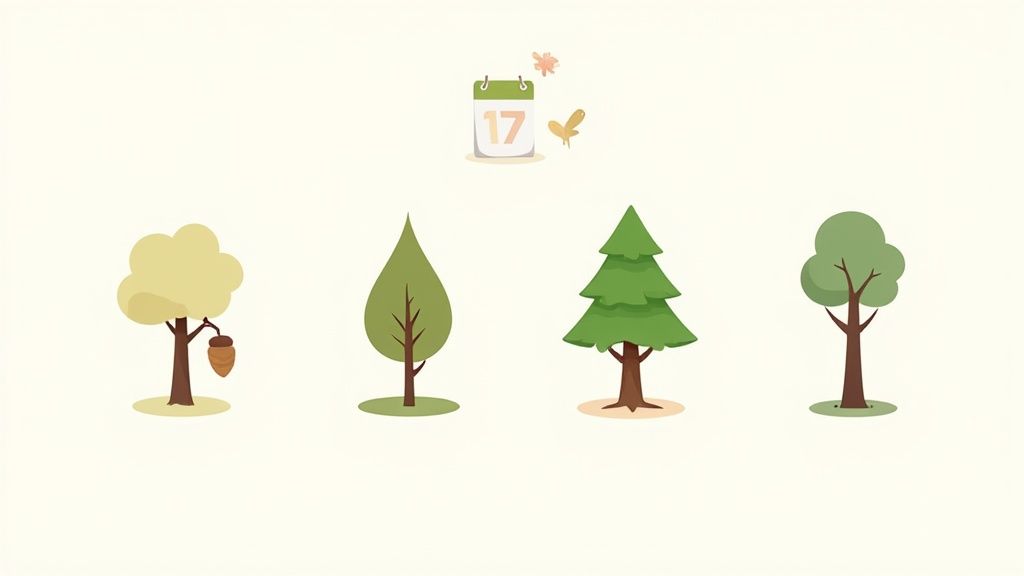
Deciduous Trees Like Oaks
When it comes to hardwoods, especially our beautiful oaks, timing is everything. Oaks are particularly vulnerable to a devastating fungal disease called oak wilt, which is spread by tiny sap beetles. These pests are most active during the warmer months—think spring through summer—and they’re drawn to fresh wounds on oak trees like magnets.
Removing an oak during this high-risk period is like putting out a welcome mat for infection. All it takes is a single infected beetle to find that fresh cut, and a perfectly healthy, mature oak can be doomed.
For this reason, any certified arborist will strongly advise against pruning or removing oak trees between April and October here in the Atlanta area. The only truly safe window is during the dead of winter when both the tree and the beetles are dormant.
Evergreen Trees Like Pines
Evergreens, like the pines you see all over Georgia, give you a lot more wiggle room. Since they don’t drop their needles, they don’t have that obvious visual cue of dormancy. That means, technically, you can remove them at just about any time of year without the same disease risks you’d face with an oak.
Even so, winter is still the best season for the job. During the colder months, the sap flow in pine trees slows way down. This makes for a much cleaner removal, with a lot less sticky resin to contend with. It’s simply more efficient for the crew and leaves your property much tidier.
Flowering Trees Like Dogwoods and Magnolias
For the ornamental trees we all love, like dogwoods and magnolias, the biggest concern is often aesthetic. Of course, safety and tree health always come first, but most of us want to enjoy those gorgeous spring blooms one last time. Taking down one of these beauties right before it puts on its annual show can feel like a real shame.
If the removal isn't an emergency, the best practice is to wait until just after the tree has finished flowering. The other great option is to remove it during the winter. This ensures its final bloom cycle isn't cut short, letting you enjoy the beauty of your landscape until the very last moment. It’s a simple way to respect the tree’s natural rhythm and your own enjoyment of it.
Working With (And Against) the Atlanta Climate
General advice on tree removal is a decent start, but when you're dealing with Mother Nature, local knowledge is everything. For anyone with a home in the Atlanta metro area, our one-of-a-kind climate—think mild winters followed by incredibly hot, sticky summers—throws a few curveballs that can make or break a project. Getting a handle on these regional quirks is the key to doing this right.
Anyone who has lived through an Atlanta summer knows about our infamous pop-up thunderstorms. One minute it's sunny, the next you're dealing with high winds and torrential rain. This wild weather makes summer a risky time for any kind of tree work. Saturated soil loosens a tree's grip on the ground, and powerful wind gusts can bring it down unexpectedly. It's a recipe for disaster, creating an incredibly dangerous environment for arborists working high up in the canopy.
Safety Always Comes First: If you can, avoid scheduling tree removal during Atlanta’s peak summer storm season. Pushing any non-emergency work to the calmer, drier months of late fall or winter dramatically lowers the risk to the crew, your home, and your property.
Pests, Permits, and Local Peculiarities
It’s not just the weather. Atlanta's climate is also a playground for all sorts of pests and diseases that love our iconic Southern pines and hardwoods. That humidity we complain about is a perfect breeding ground for fungi and insects, which are drawn to fresh tree wounds like moths to a flame. By scheduling a removal during the colder, drier dormant season, you can help stop these problems from spreading to the other healthy trees in your yard.
Another huge piece of the puzzle is navigating the maze of city and county rules. To protect our urban canopy, many local municipalities have tree ordinances in place. This means you’ll likely need to get a permit before you can take down a tree of a certain size or species. In an ever-expanding area like Atlanta, tree removal often spikes in late winter and early spring, lining up with construction schedules. It’s a perfect example of how our urban growth and natural environment are connected. Globally, 34% of tree cover loss is tied to changes in land use, which really highlights why timing matters. You can find more insights on this at gfr.wri.org.
Getting a grip on these local requirements is the first real step in planning your project. To help you sort it all out, we put together a guide on everything you need to know about an Atlanta tree removal permit to make sure your project is fully compliant. Having this kind of location-specific knowledge is what lets you plan your tree removal with total confidence.
Recognizing an Emergency Tree Removal Situation
While we all love a good plan, nature doesn't always play by the rules. We can talk all day about the benefits of removing a tree in the dormant season, but sometimes, a tree decides it’s coming down now. When a tree becomes a clear and present danger, the best time for tree removal is immediately.
In these urgent cases, safety trumps seasonality, no questions asked. A tree that poses a direct threat to your home, family, or property needs to be dealt with right away. Waiting for the "perfect" time isn't just impractical—it's downright dangerous.
Red Flags That Signal an Emergency
You don’t have to be an arborist to spot a tree in trouble, but you do need to know what to look for. Think of these signs as the tree’s way of screaming for help—or screaming that it’s about to cause some serious damage.
If you spot any of these red flags, it's time to call in the professionals for an emergency look.
- A Sudden or Severe Lean: A tree that was straight yesterday and is now leaning toward your house is a massive warning sign. This often means the root system has failed, and it’s only a matter of time before gravity wins.
- Large, Cracked, or Hanging Limbs: Arborists call these "widowmakers" for a reason. A major branch that's split, cracked, or just dangling overhead can come down at any moment, with or without wind.
- Deep Cracks or Splits in the Trunk: A deep, vertical crack isn't just a cosmetic issue; it's a sign of a major structural failure from within. The tree is literally splitting apart.
- Signs of Advanced Disease or Decay: Look for the obvious stuff. Big patches of dead wood, mushrooms sprouting around the base (a sign of root rot), or hollow spots you can see or hear when you tap on the trunk all point to a severely weakened tree.
Crucial Takeaway: When a tree becomes a hazard, the season is totally irrelevant. The potential cost of doing nothing—from a crushed roof to a serious injury—is infinitely higher than the benefit of waiting a few months.
Dealing with a hazard tree, especially one that’s been battered by a storm, is not a weekend DIY project. It’s a high-stakes job that requires a very specific skill set and heavy-duty equipment. To get a better sense of what’s involved, you can learn more about professional storm-damaged tree removal and see why this work should always be left to the experts.
Why Professional Expertise Matters More Than Timing
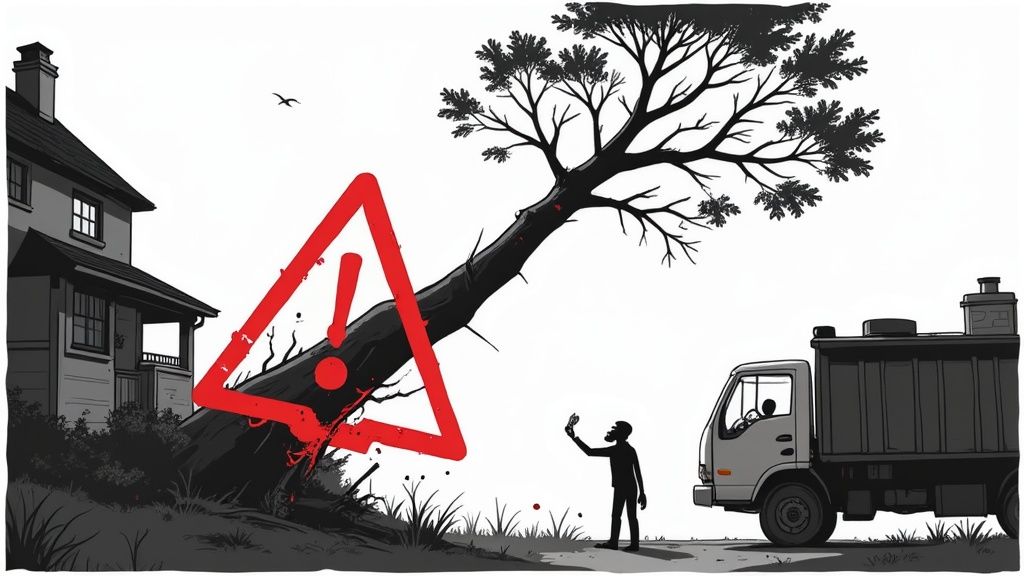
While knowing the best time of year for tree removal is helpful, it’s really just one piece of the puzzle. The single most important decision you'll make isn’t when to take the tree down, but who you trust to do the job. A weekend warrior with a chainsaw is simply no match for a trained professional, and the risks of cutting corners are enormous.
There's a good reason tree removal is one of the most dangerous jobs in the country. Trying it yourself can lead to life-altering injuries, catastrophic damage to your home, and serious legal liability if anything goes wrong. A falling limb doesn’t care about property lines—it can easily crush a neighbor’s roof or vehicle, leaving you holding the bill.
This is where the difference between a random person with a saw and a certified arborist becomes crystal clear.
Vetting Your Tree Removal Team
A true professional brings so much more than just equipment to your property; they bring expertise, proven safety protocols, and accountability. When you’re looking to hire a tree service, you absolutely have to verify their qualifications. It's the only way to protect yourself and your home.
Here’s a quick checklist of the non-negotiables:
- ISA Certification: This is the gold standard in the tree care industry. It proves the arborist has a deep understanding of tree biology, safety procedures, and proper removal techniques.
- Comprehensive Insurance: The company must carry both liability insurance and workers' compensation. This is your shield, protecting you from any financial responsibility if an accident or property damage occurs.
- Specialized Equipment: Professional-grade tools, complex rigging systems, and proper safety gear are all essential for a controlled and safe removal.
Choosing a qualified team ensures the job is done correctly and safely, regardless of the season. An expert can assess hidden risks, handle complex rigging in tight spaces, and navigate challenges that only come with years of dedicated training and on-the-job experience.
Ultimately, a seasoned expert will always provide the safest, most efficient solution. You can learn more about the rigorous standards involved and what an ISA-Certified Arborist is to better understand the level of skill required for this demanding work. Their guidance is far more important than just timing alone.
Frequently Asked Questions About Tree Removal
Even after you've done your research, it’s completely normal to have a few more questions pop up. To make sure you feel totally confident in your decision, we've put together answers to some of the most common things homeowners ask us about timing a tree removal.
What Is the Absolute Worst Time of Year to Remove a Tree?
If we had to pick one, it's definitely mid to late summer. While emergencies can strike anytime, scheduling a removal during the peak of an Atlanta summer introduces a triple threat of challenges: intense heat, sky-high humidity, and those pop-up thunderstorms we all know so well.
The ground is often soft and saturated from the rain, making it a nightmare to bring in heavy equipment without turning your lawn into a mud pit. On top of that, the tree's full, dense canopy of leaves makes it much harder for our crew to see the underlying branch structure, complicating the precision cuts needed for a safe takedown.
And let's not forget the pests. Summer is when insects and diseases are most active, and a fresh cut on a tree is like an open invitation. This can risk spreading problems to the other healthy trees on your property.
Does the Cost of Tree Removal Change with the Season?
Absolutely. It really boils down to simple supply and demand. Late spring and summer, especially right after a big storm rolls through, is peak season for tree companies. When everyone needs help at once, prices naturally reflect that high demand.
On the flip side, the dormant season—from late winter into early spring—is typically our slower period. To keep our crews busy, many companies, including ours, are often able to offer more competitive pricing. If your tree removal isn't an emergency, planning it for this "off-season" can lead to some real savings without sacrificing an ounce of quality.
By scheduling your tree removal during the "dormant season" of February and March, you can often secure a better rate. It’s the sweet spot where lower demand meets ideal working conditions.
How Can I Tell if My Tree Is Truly Dormant?
This is an easy one for deciduous trees (the kind that drop their leaves). Once the last leaf has fallen, the tree has officially entered its winter slumber. A completely bare tree is your clearest sign.
Another great way to check is to look closely at the buds on the branches. When a tree is dormant, its buds will be small, tight, and sealed up. If you start to see those buds swell or catch a hint of green, the tree is waking up for spring, and that perfect dormant window is closing.
When it's time for professional tree care in the Atlanta area, trust the team with decades of local experience. For a free estimate and expert advice, contact Richmond Tree Experts GA today. Learn more about our services at https://richmondtree.com.
Need a tree taken down safely? Richmond Tree Experts has worked on Marietta and Metro Atlanta trees since 1985, and every job is looked at by an ISA Certified Arborist before it is priced. Start with tree removal, or see everything we do: tree removal, stump grinding and arborist services across Cobb, Fulton, Cherokee, Gwinnett and DeKalb counties (service areas).
Call (770) 974-3964, 7am to 11pm every day, or request an estimate online.

