

That moment you see a big, broken branch on your property can be jarring. Maybe a storm just rolled through, or maybe it snapped under its own weight. Whatever the cause, your first instinct might be to rush out and deal with it, but the most important thing to do first is pause and assess the situation from a safe distance.
Your First Steps After Finding a Broken Branch

Before you grab a saw or even get too close, take a moment for a quick visual sweep of the area. Safety, not speed, is the priority here.
Assess the Immediate Dangers
First things first: look up. Is the branch tangled in or anywhere near power lines? If the answer is yes, this is no longer a DIY situation. Keep a wide berth and call your local utility company immediately. Electrocution is a serious risk, and it’s not worth taking.
Next, see where the branch has landed—or where it might fall. Is it resting on your roof, your car, or a fence? Even a medium-sized limb carries an incredible amount of weight that can cause serious structural damage. This is also a good time to think about the bigger picture of roof maintenance and damage prevention to protect your home from future tree-related issues.
We're seeing more and more of this kind of damage lately, and it's no surprise why. With increasingly severe weather, our trees are under a lot of stress. Research has shown that storms are responsible for a staggering 46% of all natural forest disturbances, making these breaks more and more common in our own backyards.
Use this quick reference to decide if you should handle the branch yourself or call a professional arborist immediately.
Immediate Safety Assessment Checklist
| Hazard | What to Look For | Recommended Action |
|---|---|---|
| Electrical Wires | Branch is touching, tangled in, or near any power line. | Do not approach. Call your utility company immediately. |
| Large/Heavy Branch | The branch is too big to be moved by one person or is over 6-8 inches in diameter. | Call a professional arborist. The weight is deceptive and dangerous. |
| Height/Accessibility | The break is high up in the tree, or the branch is dangling precariously. | Call a professional arborist with the right safety equipment. |
| Property Damage | The branch is resting on a roof, car, or other structure. | Call a professional. Improper removal can cause more damage. |
| Visible Decay | The tree shows signs of rot, fungi, or disease near the break. | Call a professional for a full tree health assessment. |
If you've run through this checklist and realized the situation is bigger than you thought, that's okay. Knowing when to call for help is the smartest move you can make.
Dealing with the aftermath of a storm can be overwhelming, and a damaged tree is a serious issue. Our team has extensive experience with https://richmondtree.com/storm-damaged-tree-removal/ and can safely manage the situation, preventing further damage while making sure the tree is cared for correctly.
Alright, with the immediate dangers out of the way, it’s time to play detective. A closer look at that broken branch will tell you everything you need to know about what to do next—not just for the limb, but for the future of the entire tree.
First things first, get a good look at the break itself. Was it a clean, sharp snap? That's often the work of a sudden, heavy gust of wind on an otherwise healthy branch. Or are you looking at a jagged, splintered mess that ripped a long gash of bark down the trunk? That’s a much bigger problem. A wound that big is an open invitation for pests and disease.
Next, size up the branch and where it was on the tree. A small branch way up high might not be a huge deal. But a thick, low-hanging branch is another story, and could have been a risk for a while. The diameter is a big tell; honestly, any branch thicker than a few inches is probably going to require more muscle and specialized tools than what most folks have in their garage.
A jagged tear right at the trunk is a serious red flag. In the tree world, we call this a "peel-out," and it’s bad news because it damages the tree’s system for moving water and nutrients. Getting this pruned correctly and caring for the wound afterward is absolutely critical if the tree is going to pull through.
Look for Underlying Causes
Sometimes, a broken branch isn’t just a random accident. It’s a symptom of a deeper issue. Take a good look at the wood on the broken piece and on the stub still attached to the tree. You’re looking for subtle clues that tell a bigger story:
- Signs of Decay: Does the wood feel soft, spongy, or look discolored? That’s a classic sign of pre-existing rot that was weakening the branch from the inside out.
- Pest Activity: Do you see little holes, sawdust-like material (called frass), or tunneling? This points to borers or other insects that have been compromising the branch’s structure for a while.
- Fungal Growth: Spotting mushrooms or other fungal bodies on the trunk or branch stub is a dead giveaway that decay is present.
For example, sometimes insects like cicadas will cut little slits into young branches to lay eggs. It seems minor at first, but those slits create the perfect entry point for disease years before the branch finally gives way. Figuring out these underlying problems is key, because just cutting off the broken limb won’t fix a sick tree.
Mastering the Three-Cut Pruning Method
When you've got a broken branch on your hands, your first instinct might be to just saw it off right at the trunk. It seems simple enough, but that’s one of the worst things you can do. A clean cut almost never happens this way. Instead, the branch’s weight will tear a long, ugly strip of bark right down the trunk, leaving a massive wound that your tree will struggle to heal.
This is where the pros turn to a specific technique: the three-cut pruning method. It’s designed to do two things really well: prevent that disastrous bark stripping and leave a clean wound the tree can easily seal off on its own. Getting these cuts right gives your tree the best shot at a quick recovery and helps keep diseases or pests from setting up shop in the fresh wound.
Before you even pick up a saw, take a moment to assess the situation. This infographic gives a great visual guide on what to look for.
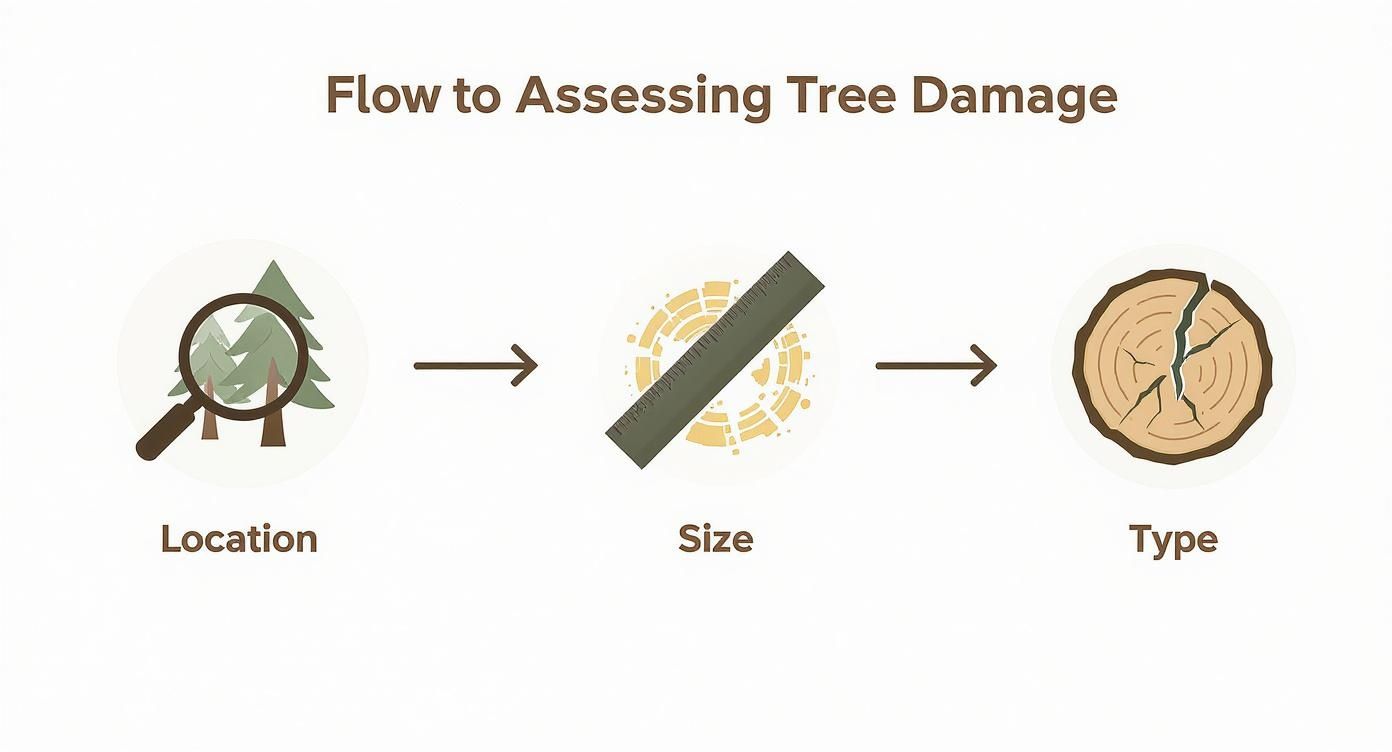
As you can see, the size of the branch, where it broke, and the type of break are all huge factors in figuring out the best way to handle it.
Getting the Cuts Just Right
The three-cut method is all about precision and order. Each cut serves a very specific purpose, all working together to protect the most important part of the tree for healing: the branch collar. That’s the slightly swollen-looking area where the branch meets the trunk, and it’s packed with specialized cells that are critical for closing the wound.
Here’s how to break it down:
-
The Undercut: Your first cut should be on the underside of the branch, about 12 to 18 inches away from the trunk. Saw upwards, going only about a third of the way through the branch. Think of this as your safety net—it stops the bark from tearing down the trunk when the branch starts to fall.
-
The Relief Cut: Next, move a couple of inches further out from your first cut (away from the trunk). This time, saw from the top down until the branch snaps off completely. All that dangerous weight is now gone, which means no more risk of a messy tear.
-
The Final Cut: Now you’re just left with a small, manageable stub. Make your last cut just outside the branch collar, carefully following its natural angle. The key is to avoid cutting into the collar or leaving the stub too long.
Your main goal with that final cut is to leave the branch collar totally untouched. It might be tempting to make it perfectly flush with the trunk, but doing so removes the very tissue the tree needs to heal itself. A flush cut is a classic pruning mistake, similar to other damaging practices you can learn about by understanding the risks of tree topping.
Using a careful method like this is even more critical when trees are already under a lot of stress. Take wildfires, for example. These events cause immense damage and branch breakage on a huge scale. In a single year, wildfires have burned 13.5 million hectares of forest globally, a staggering number that shows just how much our trees have to endure. When you use proper pruning techniques, you're helping your tree save its precious energy for what matters most: healing.
Knowing When to Call a Certified Arborist
There's a certain satisfaction in taking care of your own property, and tackling a small, broken tree branch can feel like a solid weekend win. But one of the most important skills a homeowner can have is knowing when to put the tools down and pick up the phone.
Some jobs are just too big or too dangerous to handle without serious training and professional-grade equipment. Trying to be a hero when you're out of your league can lead to disaster—for you, your home, or your neighbor's property.
The biggest, most non-negotiable red flag? Power lines. If a broken branch is anywhere near electrical wires—touching them, tangled in them, or even just hanging close—stay far away. Electricity can arc, jumping from a power line to a nearby conductive object like your aluminum ladder or pole saw. That's a life-or-death situation, and it's a job strictly for the utility company or a specially trained arborist.
Signs a Professional Is Required
Beyond the obvious danger of power lines, the sheer scale of the job is often what separates a DIY task from a professional necessity. It’s time to call in the pros if you run into any of these common scenarios:
- Size and Weight: The branch is thicker than 5-6 inches in diameter. A limb this size is deceptively heavy and carries an incredible amount of force when it falls. It's not something one person can safely manage.
- Height: The break is high up in the canopy, forcing you to work off a ladder. Few things are as dangerous as operating a saw from an unstable position high off the ground. It's a recipe for a serious accident.
- Location: The branch is looming over your roof, a car, your fence, or a public sidewalk. Getting it down without causing major damage requires careful, controlled rigging—not just a hopeful cut.
A certified arborist doesn't just show up with a bigger chainsaw. They arrive with the expertise, rigging equipment to lower heavy limbs with absolute control, and the proper insurance to cover any "what ifs."
Why Expertise Matters
Safety is the number one reason to call a pro, but it's not the only one. A trained arborist can look at a broken branch and see the real problem. Was it just a storm, or did the branch fail because of an underlying disease, insect infestation, or a structural flaw in the tree?
They can diagnose these issues and create a plan to protect the rest of your tree, potentially saving it from further damage or even complete failure down the road. When you need to be sure about who you're hiring, it helps to understand what an ISA Certified Arborist brings to the table. Their expertise is an investment in your property's safety and the long-term health of your trees.
Post-Pruning Care for a Healthy Recovery

Alright, you've made the final cut and the broken branch is safely on the ground. But your job isn't quite over. How you care for the tree in the next few weeks is just as critical for a strong recovery and building resilience against future damage.
Let's clear up a common myth right away: do not apply wound paint or sealer to the cut. This is an old, outdated practice that arborists now know does more harm than good. These sealers often trap moisture right against the fresh wood, which can create a perfect breeding ground for fungus and decay.
The absolute best thing you can do for that fresh cut is simply let it air out. A clean, precise cut triggers the tree's amazing natural defense system. It’s a process we call compartmentalization, where the tree forms a protective barrier of new wood to seal off the wound from the inside out.
Supporting a Strong Recovery
Your main goal now is to reduce any other stress on the tree. You want it to focus all its energy on healing that pruning wound. A tree under stress is an open invitation for pests and diseases to move in, especially through that fresh opening.
Focus on these simple but incredibly effective care tips to help it bounce back:
- Water Consistently: Make sure the tree gets enough water, especially if you hit a dry spell. The key is a deep, slow watering once a week, which is much better than a light sprinkle every day.
- Keep an Eye Out for Pests: Regularly check the wound and the branches around it. Look for any signs of trouble, like fine sawdust from boring insects or any unusual sap seeping from the cut.
- Hold Off on Fertilizing: It can be tempting to feed a stressed tree, but don't rush it. Applying fertilizer right away can add more stress. It’s best to wait until the next growing season to give it a gentle, slow-release nutrient boost.
Common Questions About Broken Branches
When you're standing in your yard, staring up at a snapped or dangling tree branch, a lot of questions probably pop into your head. It’s a pretty common sight after a storm, but figuring out the right thing to do isn't always obvious. Let's walk through some of the most frequent questions we get from homeowners.
Can I Save a Partially Broken Branch?
It’s completely understandable to want to save a branch that’s still hanging on, but in almost every case, it's not the right move. A partially broken branch is a weak point. It’s structurally compromised and has a very high chance of failing completely later on—often when you least expect it.
The best and safest thing you can do is prune it off correctly. This gives the tree a clean slate to properly seal the wound and prevents the damaged limb from becoming a much bigger hazard down the road.
Should I Use Wound Paint on the Cut?
This is an old practice that we now know does more harm than good. So, the short answer is a firm no. For years, the common wisdom was that covering a fresh cut with sealer or paint helped it heal. We’ve since learned it actually does the opposite.
These sealants are notorious for trapping moisture and decay-causing fungi right up against the fresh wood. This suffocates the tree’s natural healing process. A clean, proper cut made just outside the branch collar is the best treatment you can give it; that’s what lets the tree use its own powerful defense systems.
How Do I Know if Disease Caused the Break?
Take a close look at the wood right where the break happened. If a healthy branch snapped under the force of high winds, you'll typically see clean, solid wood. But if a disease or pest was the underlying cause, you’ll find some tell-tale signs.
Keep an eye out for:
- Wood that looks soft, spongy, or has a strange discoloration.
- Fungus, conks, or mushrooms growing on or near the break.
- A fine, sawdust-like material (called frass), which is a clear sign of insect activity.
If you spot any of these, that broken branch might just be a symptom of a much larger health problem with the tree. In that case, it's a really good idea to get a professional arborist's opinion.
At Richmond Tree Experts GA, our ISA Certified Arborists are here to help with everything from a single broken branch to a full tree health assessment. If you're in Cumming, Johns Creek, Milton, or anywhere in the greater Atlanta area, contact us for professional, safe, and reliable tree care.
Need a tree taken down safely? Richmond Tree Experts has worked on Marietta and Metro Atlanta trees since 1985, and every job is looked at by an ISA Certified Arborist before it is priced. Start with tree removal, or see everything we do: tree removal, stump grinding and arborist services across Cobb, Fulton, Cherokee, Gwinnett and DeKalb counties (service areas).
Call (770) 974-3964, 7am to 11pm every day, or request an estimate online.

