

So, what exactly is brush pile removal? On the surface, it’s about clearing away all that accumulated yard debris—the branches, twigs, and leaves that build up over time. But it's so much more than just a weekend cleanup.
Proper brush pile removal is really about improving safety, keeping pests away, and maintaining a healthy, vibrant landscape. Depending on the size of your pile, it can be a straightforward DIY project or something that calls for a professional crew.
What Brush Pile Removal Really Involves
It almost always starts small, doesn't it? A few trimmed branches stacked neatly in the corner of the yard. But before you know it, that small stack grows into a sprawling, messy heap that tanks your curb appeal and creates a whole host of hidden problems.
Effective brush pile removal isn't just about hauling away sticks. It's a methodical process of breaking down that hazard and getting rid of the organic material in a responsible way.
Think of an unmanaged brush pile as a "vacancy" sign for all sorts of trouble. It’s not just an ugly collection of yard waste; it’s a potential habitat for unwanted critters and a serious liability for your property. The whole point of removal is to dismantle that messy structure and take back your space safely and cleanly.
More Than Just an Eyesore
Sure, no one likes looking at a giant pile of dead branches. But the real reasons to clear a brush pile go much deeper than just aesthetics. Many homeowners in our area, from Alpharetta to Milton, don't realize the underlying risks that come with letting a pile sit. What starts as a minor nuisance can quickly snowball into a major headache.
Here's a quick rundown of what we're helping you solve:
- Pest Infestations: Piles of damp, decaying wood are the perfect breeding ground for termites, snakes, rodents, and other pests. They create a dark, sheltered home, often just a few feet from your own.
- Fire Hazards: Especially during dry spells, a brush pile is just a stack of tinder waiting for a spark. A stray ember from a grill or fire pit can ignite it in seconds, putting your home and your neighbors at risk. This is a huge concern in more wooded areas like Forsyth and Cherokee County.
- Property Damage: A heavy, dense pile will eventually smother and kill the grass and plants underneath it. This leaves you with ugly dead spots and can damage the soil, making it hard for anything to grow back.
- Local Ordinance Violations: Many of our local cities, including Roswell and Marietta, have codes against letting yard waste accumulate. Ignoring them can lead to warnings from the city or even fines.
To make it simple, we've put together a table summarizing the common risks that spring from unmanaged brush piles and the best ways to solve them.
Brush Pile Risks and Solutions at a Glance
| Identified Risk | Potential Consequence | Effective Solution |
|---|---|---|
| Pest Magnet | Infestations of termites, rodents, and snakes near your home. | Complete removal and disposal of the pile. |
| Fire Hazard | A dry pile can ignite easily, spreading fire rapidly. | Chipping for mulch or hauling to a proper disposal facility. |
| Lawn Damage | Smothered grass and soil compaction leading to dead spots. | Timely removal to allow the area to recover. |
| Code Violations | Fines or warnings from local city or county authorities. | Adhering to local disposal rules and keeping the property clear. |
As you can see, tackling a brush pile isn't just about tidying up—it's about proactively managing your property to keep it safe and healthy.
A brush pile isn’t just sitting there; it’s an active environment that’s constantly changing. It attracts pests and creates real fire risks. Dealing with it is simply part of being a responsible homeowner.
A Quick Look at the Process
When it comes down to it, the removal process has a few key stages. First, you have to assess the pile and break it down into pieces you can actually handle. From there, you choose how to get rid of it for good.
This could mean chipping the wood into valuable mulch for your garden beds, hauling it all off to a designated facility, or even composting it on-site. Every step needs a bit of planning to make sure it's done safely and follows all the local regulations here in the Atlanta area. Don't worry—this guide will walk you through everything you need to know to get the job done right.
The Hidden Dangers Lurking in Your Yard Debris
That stack of branches and leaves you’ve got piling up in the corner of your yard might look harmless enough, but it’s actually a ticking clock of potential problems. What starts as a simple collection of yard debris can quickly morph into a major safety, environmental, and even legal headache for homeowners across the Atlanta metro area.

This isn't just an issue of curb appeal. A neglected brush pile creates genuine risks that go way beyond just being an eyesore, which is why professional brush pile removal is such a critical part of responsible property maintenance.
A Powerful Fuel Source for Wildfires
One of the most immediate dangers is the serious risk of fire. As the branches, leaves, and twigs in a brush pile dry out over time, they become incredibly flammable. You can think of it as a pre-built bonfire just waiting for a spark.
A stray ember from a summer barbecue, a carelessly tossed cigarette, or even a spark from your lawn mower can be all it takes to set the entire thing ablaze. For homeowners in the suburbs of Forsyth and Cherokee County, where homes are often built closer to wooded areas, this risk is especially high. It doesn't take much for a small brush fire to jump to a fence, a shed, or even your house.
This local risk is even more significant when you look at the bigger picture. During a recent fire season, global fire-related emissions reached 2.2 petagrams of carbon—that's 9% above the historical average. This really highlights why managing dead wood is so important, as major fires have caused devastating damage and forced mass evacuations. For folks in places like East Cobb and Gwinnett County, getting rid of brush piles is a direct and effective way to lower this threat. You can dive deeper into these trends in this report on global fire emissions.
An Open Invitation for Unwanted Pests
Beyond the fire hazard, a brush pile is basically a five-star hotel for pests. It offers the perfect mix of shelter, moisture, and darkness that a lot of undesirable critters are looking for.
And we're not just talking about a few harmless bugs. These piles create the ideal habitat for a whole range of pests that can cause serious property damage or pose health risks.
- Termites: Decaying wood is a feast for termites. A brush pile sitting near your foundation is like rolling out the welcome mat for an infestation that can lead to thousands of dollars in structural damage.
- Rodents: Rats, mice, and other rodents absolutely love the shelter a brush pile gives them. From there, it's just a short trip into your garage, attic, or walls.
- Snakes: These piles are excellent hiding spots for snakes, and that includes venomous species like copperheads, which are common here in Georgia.
- Spiders and Ticks: The dark, damp environment is also perfect for spiders, disease-carrying ticks, and other insects you don't want near your family.
By letting a pile sit, you’re basically running a pest incubator just a few steps from your back door.
Environmental and Legal Complications
An unmanaged brush pile can also cause real harm to your landscape and even get you into trouble with local authorities. The dense, heavy weight of the pile will eventually smother and kill the grass and healthy plants underneath it, leaving you with a barren, compacted patch of dirt.
A brush pile doesn’t just occupy space; it actively degrades the land it sits on. It can smother healthy plant life, disrupt the local ecosystem, and even spread invasive species that harm your entire yard.
On top of that, these piles can become breeding grounds for invasive plants. Seeds from unwanted species can take root in the pile and then spread all over your property, creating a new problem.
Finally, you have to think about the legal side of things. Many cities and counties, including Roswell and Marietta, have municipal codes that regulate the accumulation of yard debris. A neglected brush pile can be officially deemed a public nuisance or a safety hazard, which could lead to warnings or even fines from the city. Taking care of it proactively keeps you on the right side of the law and avoids any unnecessary penalties.
Picking the Right Way to Get Rid of Your Brush Pile
So, you’ve wrestled that messy pile of branches and leaves into submission. Now what? The next move is a big one—deciding how to get rid of it all. How you handle your brush pile removal doesn't just affect your wallet and your weekend plans; it impacts the health of your yard and even the safety of your neighborhood.
Think of that pile of yard debris as raw material. You can either treat it like junk to be tossed out or see it as a resource waiting to be used. The best choice really comes down to the size of your pile, what kind of equipment you have on hand, local rules, and what you want for your landscape in the long run.
Turn Debris Into a Resource with Wood Chipping
One of the smartest and most eco-friendly ways to go is wood chipping. This involves feeding branches and limbs into a powerful machine that chews them up into small, uniform wood chips. Instead of paying someone to haul away your debris, you’re actually making something valuable right there on your property.
These fresh wood chips are perfect for spreading as organic mulch around your trees, shrubs, and flower beds. Using mulch gives your landscape a huge boost in several ways:
- Moisture Retention: A good layer of mulch helps the soil hold onto water, meaning you won't have to water as often during those scorching Georgia summers.
- Weed Suppression: Mulch is great at blocking sunlight, which stops pesky weed seeds from sprouting and taking over your garden beds.
- Soil Health: Over time, those wood chips break down and slowly release nutrients back into the soil, making it healthier and more fertile.
Chipping is a fantastic way to complete the cycle, turning a messy problem into a sustainable solution that directly benefits your yard.
Hauling Debris to a Disposal Facility
If making your own mulch isn't on your to-do list, or if the pile is just too massive to deal with on-site, hauling it away is another common option. This means loading up a truck or trailer and taking all the debris to a local green waste facility or landfill.
This method gets the mess completely off your property, which is a big plus. But it’s not without its challenges. You'll need a vehicle that can handle the load and be prepared for some serious manual labor. You also have to think about tipping fees—that's what the disposal facility charges you based on how much stuff you’re dumping.
When you're thinking about hauling, don't forget to add up all the hidden costs. Your time, the gas for your truck, and even potential dumpster rental fees can turn a "simple" task into a much bigger headache.
For really big cleanups, renting a dumpster can make life easier, but it definitely adds to the cost. Before you go this route, it's a good idea to look into local dumpster rental costs to make sure it fits your budget.
Composting Smaller Debris
For all the smaller stuff—twigs, leaves, and green clippings—composting is a fantastic choice. You can add this "green" material to your compost pile along with "brown" stuff like dried leaves to create your own nutrient-rich soil booster for the garden.
Just keep in mind, composting won't work for big branches or thick limbs. They just take way too long to break down. It’s best used as a secondary strategy for the smaller bits and pieces of your brush pile, not as the main solution for the whole thing.
The Dangers and Restrictions of Burning
Finally, there’s the idea of a controlled burn. It might sound like the quickest and easiest way to make a brush pile vanish, but it's easily the riskiest and most heavily regulated option out there. In packed areas like Cobb and Gwinnett County, open burning is often restricted by strict local rules and seasonal burn bans.
Trying to burn a brush pile without the right permits or during a ban can lead to some seriously steep fines. Even worse, it’s a major fire hazard that could put your home, and your neighbors' homes, in real danger. With all the risks and legal hoops to jump through, professional brush pile removal services will almost always point you toward safer, more reliable methods like chipping or hauling.
Your DIY Guide to Tackling a Brush Pile
Taking on your own brush pile removal can feel like a win, but it’s a job you need to approach with a healthy dose of respect and some solid planning. Don’t think of it as just another weekend yard task; it's more like a small-scale demolition project. To get it done right, you need a methodical game plan that puts safety first.
Before you even think about picking up a tool, the first step is always to size up the situation. You're not just looking at a pile of wood—you're looking for hidden surprises. Are there any telltale signs of snakes, rodents, or angry insect nests? Is the pile all tangled up with poison ivy or nasty thorny vines? Knowing exactly what you’re getting into will determine the gear you need and how you approach the job. While going the DIY route can be satisfying, it's also smart to understand the serious health risks of DIY hazardous cleanup, especially when you don't know what's lurking in that debris.
Gearing Up With the Right Protective Equipment
Once you’ve given the area a good look, it’s time to gear up. Your Personal Protective Equipment (PPE) is absolutely non-negotiable. This is what stands between you and everything from minor cuts and scrapes to a serious eye injury.
Here's what your essential PPE list should look like:
- Heavy-Duty Gloves: To protect your hands from splinters, thorns, and whatever critters might be hiding inside.
- Safety Glasses or Goggles: This is a big one. You need to shield your eyes from flying wood chips, dust, and branches that can snap back.
- Long Sleeves and Pants: Put a solid barrier between your skin and scratches, bug bites, or nasty plants like poison ivy.
- Sturdy, Closed-Toe Boots: You'll want the ankle support and protection from sharp sticks or falling branches.
Choosing Your Tools and Breaking Down the Pile
With your safety gear on, you can start thinking about tools. The right equipment doesn't just make the job easier; it makes it a whole lot safer. I always recommend starting with manual tools to peel back the outer layers. This lets you see what you’re dealing with as you go.
Grab some loppers and pruning saws to cut away the smaller, more manageable branches first. Work your way from the outside in, untangling the mess piece by piece instead of just yanking from the bottom. This keeps the whole pile from collapsing on you. A chainsaw might be necessary for the bigger limbs, but only break one out if you have experience and are completely comfortable using it.
Safety Tip: Never bite off more than you can chew. Break the pile down into smaller, more manageable sections. Keep your workspace clear so you’re not tripping over the very debris you’re trying to remove.
This infographic breaks down what to do with all the debris you're creating.
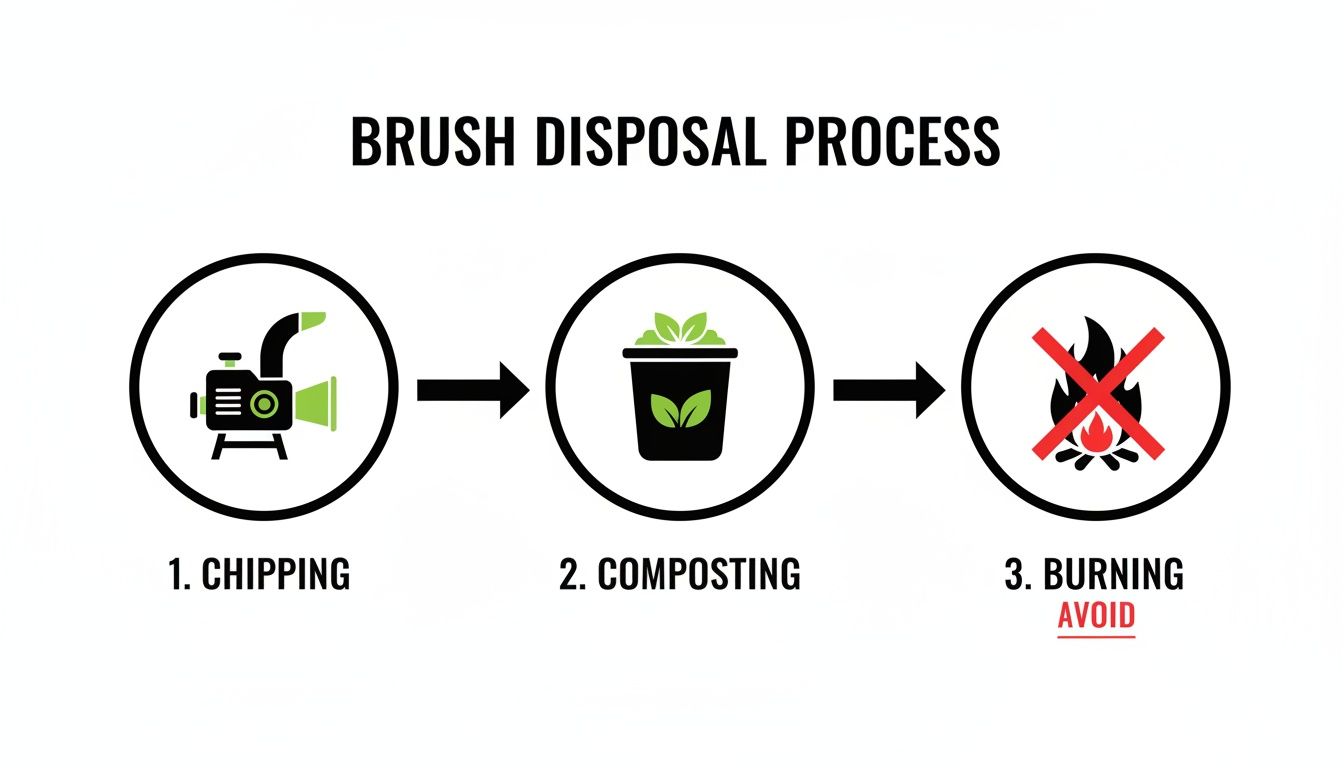
As you can see, sustainable choices like chipping and composting are the way to go, while burning is a high-risk option to avoid.
Processing and Final Disposal Logistics
After you've dismantled the pile, you're going to be left with a ton of organic debris. Now comes the final step in your brush pile removal project: getting rid of it. A great, sustainable option is to rent a wood chipper and turn all those branches into valuable mulch for your garden beds.
Another route is to bag up the smaller stuff for curbside pickup, assuming your local municipality offers that service. If you have a large volume, you might need to load up a truck or trailer and haul it to a designated green waste facility. Always double-check the local rules in places like Forsyth or Cobb County before you start, because yard waste disposal guidelines can be very different from one area to the next. Plan every step, and you’ll set yourself up for a successful DIY project.
Navigating Costs and Regulations in the Atlanta Metro
Getting rid of a brush pile involves more than just muscle. You've got to think about the financial and legal side of things, too. Across the Atlanta metro, the costs and rules can be all over the map, and understanding them is key to deciding whether a weekend DIY project makes sense or if calling in the pros is the smarter move.
When you weigh the costs of renting equipment and paying disposal fees against the all-inclusive price of a professional service, the right choice starts to become clearer. Let's break down what you can expect.
Breaking Down the Costs
Going the DIY route means you're trading your own sweat and time for what you hope are cost savings. But before you get started, it's critical to know that the expenses go way beyond a good pair of work gloves.
Here’s a realistic look at what you’ll likely have to pay for:
- Tool Rental: Not many homeowners have a professional-grade wood chipper just sitting in the garage. Renting one can set you back several hundred dollars for a single day. You might also need to rent a chainsaw or other heavy-duty gear.
- Hauling Expenses: If you don't own a truck that can handle a heavy, bulky load, you'll need to rent one. Don't forget to add in the cost of fuel, which can add up if you have to make multiple trips to a disposal site.
- Disposal Fees: Green waste facilities and landfills across places like Cobb County and Forsyth County have "tipping fees," which are charges based on how much your debris weighs or how much space it takes up. For big piles, these fees can be a real shock.
In contrast, when you hire a professional service, all those individual costs are bundled into one straightforward quote. Yes, the number looks bigger upfront, but it covers everything—the crew's labor, all the equipment, hauling, and disposal. It saves you a massive logistical headache. For a deeper dive, check out our guide on the factors influencing brush removal cost.
To make it even clearer, here’s a rough comparison of what you might spend doing it yourself versus hiring a crew like ours.
Cost Comparison: DIY vs. Professional Brush Pile Removal
| Pile Size | Estimated DIY Cost (Tool Rental, Fees, Time) | Estimated Professional Service Cost |
|---|---|---|
| Small Pile (e.g., from pruning a few shrubs) | $150 – $300 | $250 – $450 |
| Medium Pile (e.g., clearing a small, overgrown area) | $400 – $700 | $500 – $850 |
| Large Pile (e.g., from clearing multiple trees or a large lot) | $800 – $1,500+ | $900 – $2,000+ |
As you can see, for smaller jobs, the DIY savings might be worth the effort. But once the pile gets bigger, the costs, time, and hassle start to make a professional service look a lot more appealing.
The High Price of Large-Scale Clearing
When you zoom out and look at what it costs for major clearing operations, it really puts the value of professional equipment and expertise into perspective. Studies on forest residue and brush pile removal in U.S. National Forests show just how expensive this work can get. An analysis found that just the initial cutting and yarding operations averaged $735 per acre.
But it gets steeper. When you add in the complete process for burning the piles, the costs jumped to a staggering $1,291 per acre for hand pile burning. That figure is 135% higher than what earlier estimates suggested. For homeowners in Marietta, Roswell, and across the Atlanta area, numbers like these show exactly why professionals use efficient, modern equipment to get the job done right. You can read more about these cost analysis findings for forest management if you're curious.
Local Rules and Regulations You Cannot Ignore
Money isn't the only thing to worry about. You absolutely have to know the local rules. What's perfectly fine in a rural part of Cherokee County could get you a hefty fine in a suburban neighborhood in Johns Creek.
Before you even think about starting a removal project, make your first call to your local city or county government. The fines for breaking disposal laws or ignoring a burn ban can be severe, quickly turning that "money-saving" DIY job into a very expensive lesson.
Here are the key regulations you need to check on:
- Burn Bans: Most metro Atlanta counties, including Gwinnett and Forsyth, enforce seasonal burn bans. These usually run from May through September to reduce wildfire risk during the hottest, driest months. Always, always check the current status before you strike a match.
- Disposal Ordinances: Cities like Alpharetta and Milton have very specific rules about how and where you can dispose of yard waste. Getting caught illegally dumping debris is a serious offense with serious consequences.
- Permit Requirements: For certain activities, especially any kind of controlled burning (when it's even allowed), you'll almost certainly need a permit from your local fire department.
Ignoring these rules doesn't just put your wallet at risk—it can create real safety hazards for your neighbors and community. Professional services are insured and know these local laws inside and out, which guarantees your project is handled safely and legally from start to finish.
When to Call a Professional Removal Service
While there’s a lot to be said for the DIY spirit, some brush pile projects are just too big, too complex, or frankly, too dangerous to handle on your own. Knowing when to step back and call in the experts isn’t giving up—it’s making a smart, responsible choice for your safety and property. Some situations just turn a simple yard cleanup into a high-stakes job that really needs specialized equipment and professional know-how.

Understanding your own limits is the most critical part of any home project. If your brush pile matches any of the descriptions below, it’s a clear sign that calling a professional service like Richmond Tree Experts GA is your best and safest move.
The Pile Is Simply Too Big
Size is usually the first and most obvious giveaway. A weekend’s worth of hedge trimmings is one thing. A massive pile that’s been growing for years is a whole different animal. These huge piles often have heavy, compacted material at the bottom that’s nearly impossible to move by hand.
If the cleanup is just the first step for bigger plans, like large-scale exterior renovations, bringing in a pro from the get-go is the only way to go. They have the machinery to clear enormous amounts of debris in a fraction of the time, paving the way for your next project without the weeks of back-breaking labor.
Your Debris Includes Large Logs or Tree Trunks
This is a non-negotiable one. If your pile contains more than just branches—we’re talking heavy logs, stumps, or entire tree trunks—the job has officially moved into professional territory. This stuff is incredibly heavy and awkward, posing a major risk of injury if you try to lift or cut it without the right training and gear.
Trying to muscle large logs without the proper equipment can lead to serious strains, crush injuries, or terrible accidents with chainsaws. Professional crews use grappling trucks and heavy-duty chippers specifically designed to handle this kind of oversized debris safely and efficiently.
The Pile Is in a Hazardous Location
Where the pile is sitting is just as important as how big it is. A brush pile in a tricky or dangerous spot calls for a professional touch to make sure no damage is done to your property or anything nearby.
It's time to call for help if your pile is:
- On a steep slope or hillside: This creates an unstable work area where debris can shift or roll without warning, putting you in a dangerous position.
- Near power lines or utility boxes: The risk of accidentally hitting live electrical wires is severe and potentially fatal. Professionals are trained to work safely in these high-risk zones.
- Up against your house, a fence, or a neighbor's property: Trying to work in tight spaces like these can easily lead to thousands of dollars in accidental property damage.
Biological Hazards Are Present
Sometimes the biggest dangers are the ones you can't easily see. An old brush pile can become a perfect home for all sorts of biological hazards that make a DIY approach a serious gamble with your health.
If you spot a bad infestation of poison ivy, oak, or sumac laced through the pile, keep your distance. Disturbing these plants can release their oils into the air, causing severe allergic reactions. The same goes if you think the pile is housing venomous snakes, a large rodent population, or an aggressive insect nest. Professionals have the right protective gear and know-how to handle these biohazards safely. For any tricky situations involving tree health or potential dangers, the eye of a certified arborist in Atlanta, GA is always your best bet.
Common Questions We Hear About Brush Removal
Even after walking through the whole process, you might still have a few questions about brush pile removal. That's perfectly normal. To help clear things up, we've put together answers to some of the most common questions we get from homeowners all over the Atlanta area, from Cumming to Marietta.
How Much Does Professional Brush Removal Cost in Atlanta?
This is the big one, and the honest answer is: it really depends. The cost can swing quite a bit based on the pile's size, how easy it is for us to get to, and what's actually in it. A small, simple pile right by the driveway might just be a few hundred dollars.
On the other hand, if you've got a massive pile full of heavy logs tucked away on a steep hill, that's going to require more labor and specialized equipment, so the price will reflect that. Your best bet is always to have a professional take a look. We can give you a free, no-nonsense estimate that spells out the exact price for your specific situation.
Is It Legal to Burn Brush Piles in My Area?
Burning is a tricky subject and, frankly, usually not the best idea. The regulations are incredibly strict and can change day by day depending on weather conditions. Counties like Forsyth and Gwinnett, for instance, have very specific rules and seasonal burn bans you absolutely have to follow.
Before you even think about lighting a match, you must check with your local fire department for the current burn ban status and any necessary permits. Given the high fire risk and legal hoops to jump through, professional removal is always the safer, more reliable way to go.
What Is the Most Eco-Friendly Disposal Method?
Hands down, the best options for the environment are chipping the brush into mulch or composting it. Both of these methods are essentially a form of recycling. You're taking organic material that would otherwise go to waste and turning it into something that can improve the health of your soil and garden.
It’s a closed-loop system that completely eliminates landfill waste. Another great, eco-conscious choice is to have the debris hauled to a dedicated green waste facility where it can be processed responsibly.
Ready to get your yard back without the hassle? Richmond Tree Experts GA offers professional, safe, and efficient brush pile removal services across the entire Atlanta metro area, including Alpharetta, Roswell, and Johns Creek. Contact us today for a free estimate!
Need a tree taken down safely? Richmond Tree Experts has worked on Marietta and Metro Atlanta trees since 1985, and every job is looked at by an ISA Certified Arborist before it is priced. Start with tree removal, or see everything we do: tree removal, stump grinding and arborist services across Cobb, Fulton, Cherokee, Gwinnett and DeKalb counties (service areas).
Call (770) 974-3964, 7am to 11pm every day, or request an estimate online.

