

When you find shredded bark on a young maple or stripped leaves from a prized dogwood, it's a gut-wrenching moment. It's an all-too-common problem for property owners in areas like Milton or Roswell. Deer are beautiful, no doubt, but they can wreak havoc on a landscape, especially when it comes to young, vulnerable trees.
Forget one-size-fits-all fixes. The best way to protect your trees is with a multi-layered defense system. We're going to walk through how to combine physical barriers, strategic repellents, and smart landscaping to make your property less of a target. The goal is to make your yard an inconvenient stop for deer, encouraging them to find an easier meal elsewhere.
Your Guide to Keeping Deer Away from Your Trees
For those of us in Georgia, knowing how local deer behave is half the battle. In suburbs from Johns Creek to East Cobb, deer have adapted incredibly well to our fragmented woodlands. This puts tremendous pressure on the ornamental trees and shrubs we all love.
This isn't just about aesthetics; it's a real ecological challenge. Deer overpopulation is a known factor in harming forest regeneration across the globe. Some studies have shown that heavy browsing can slash the number of quality plant stems from 63% down to just 18%. It's a massive impact, and you can learn more about the ecological effects of deer overabundance to see the bigger picture.
This problem is happening right in our own backyards. At Richmond Tree Experts GA, our ISA Certified Arborists have been helping North Georgia residents protect their landscape investments since 1985. We always recommend a tailored combination of methods because, frankly, that's what works.
A successful deer protection plan rarely relies on just one method. The most resilient landscapes use a combination of fencing, repellents, and deer-resistant planting to create multiple layers of deterrence.
Before we dive into the details, let's get a quick overview of the main strategies we'll be covering. Think of this as your cheat sheet for building a solid defense.
Quick Guide to Deer Protection Methods
| Protection Method | Best For | Effectiveness | Key Tip |
|---|---|---|---|
| Physical Barriers | Young trees & high-value plants | High | Fencing should be at least 8 feet tall to be truly effective. |
| Repellents | Widespread application on shrubs | Medium | Rotate products every few weeks to prevent deer from getting used to them. |
| Scare Tactics | Open areas, temporary protection | Low-Medium | Move devices around frequently to maintain the element of surprise. |
| Resistant Planting | Long-term, low-maintenance areas | Medium-High | Remember, no plant is 100% deer-proof if they're hungry enough. |
Each of these methods plays a unique role in your overall strategy. Now, let's break down how to put them into action.
Understanding the Real Cost of Deer Damage
It's easy to write off a few nibbled leaves as just part of living in a place like North Georgia. But if you let it go, that "minor nuisance" can quietly tank your property's value and the health of your entire landscape. The real cost of having deer around goes way beyond buying a new shrub here and there. For homeowners from Alpharetta to Cumming, this damage usually shows up in two pretty destructive ways.
First, you've got browsing. This is when deer munch on the tender buds, new shoots, and leaves of your trees and shrubs. It’s a huge problem for young trees. It stunts their growth, messes up their natural shape, and can stop them from ever becoming the strong, mature trees you envisioned. A single night of heavy browsing can set a sapling back years.
Then there’s rubbing, which is often a death sentence for a young tree. This is what happens when bucks scrape their antlers against the trunks to rub off the velvet and mark their turf. This scraping easily shreds the bark and destroys the critical cambium layer right underneath. If the damage goes all the way around the trunk—a nasty process called girdling—it completely cuts off the flow of water and nutrients. The tree is essentially starved, and it's only a matter of time.
The Hidden Financial Toll
The line between a damaged landscape and your wallet is a lot shorter than you think. Losing a young tree you've spent a few years nurturing is frustrating, for sure. But losing a more established, 15-foot-tall tree? That’s a serious financial hit. You could easily be looking at thousands of dollars for the tree itself, plus the cost of professional installation.
And that's just the replacement cost. Think about the immediate hit to your curb appeal. A yard full of deformed shrubs and scarred tree trunks just looks neglected. If you're even thinking about selling your home down the road, that’s a major problem. Investing in deer protection isn't just another expense—it's how you safeguard the long-term value of your property.
The real cost of deer damage isn't just what you see. It's the lost growth, the future value of a mature tree you'll never have, and the diminished beauty of your entire property. Being proactive is always, always cheaper than replacing what's been lost.
A Growing Problem with Local Consequences
This isn't just a headache for us here in North Georgia; it's a massive global issue with some eye-popping numbers. For instance, economic losses from deer wiping out forests have hit US$6 million annually on Japan's Kyushu Island alone. Decades ago, deer in the US were already causing $351 million in damages, and that figure has only shot up as suburbs have expanded.
For commercial property managers in Cobb County or landscape architects designing projects in Roswell, this means blown budgets and constant, costly replanting. At Richmond Tree Experts GA, we often find that simple physical barriers like tree tubes or shelters are the most effective solution, boosting survival rates to an impressive 85-90%. You can dive deeper into the economics and forest management strategies by checking out this global forestry research.
Putting a Number on the Damage to Your Property
To really get what’s at stake, take a look at your own trees. A mature, healthy tree does more than just provide shade; it adds serious, tangible value to your home.
- Aesthetic Value: Healthy, full trees create that lush, inviting look everyone wants.
- Energy Savings: The right trees in the right places can slash your home cooling costs.
- Environmental Benefits: They clean the air and help manage stormwater runoff.
Every time deer damage your landscape, they're chipping away at every single one of these benefits. The cost of doing nothing just keeps adding up, leaving you with a property that's less valuable and far less resilient. Protecting your trees isn't an expense—it's a direct investment in the health and financial worth of your home.
Building Your First Line of Defense with Physical Barriers
When you're tired of the endless cycle of sprays and scare tactics, it's time for a more permanent solution. Physical barriers are the definitive, "set-it-and-forget-it" answer to deer problems. For anyone in the Atlanta area trying to protect valuable young trees or even an entire property line, creating a physical obstacle is simply the most effective way to stop deer damage in its tracks.
This isn't about scaring deer away. It's about making it physically impossible for them to get to your trees to browse leaves or rub their antlers on the bark.
Whether it’s a simple trunk guard on a prized dogwood or a full-perimeter fence around a Roswell estate, you have options. The trick is to match the barrier to your specific situation. If you’re dealing with just a few high-value saplings, a small investment in a guard is an absolute must.
Protecting Individual Trees with Guards and Cages
Let’s be honest, the most vulnerable trees in any landscape are the young ones. Their tender bark and low-hanging leaves are basically a buffet for deer. Protecting them one by one is a smart, cost-effective strategy that gives you immediate peace of mind.
One of the best methods is to build a simple wire cage around the tree. I recommend using sturdy hardware cloth or welded wire fencing to form a cylinder. To be effective, that cage needs to be:
- Wide enough: Aim for at least a 3-foot diameter. This keeps deer from just leaning over the top and nibbling on the branches.
- Tall enough: Make it a minimum of 4-5 feet high to protect the main leader and lower branches from being browsed.
- Sturdy: Use heavy-duty metal or wooden stakes to anchor the cage firmly in the ground. You don't want a buck to just knock it over.
This simple setup prevents the whole spectrum of deer damage, from casual browsing to the more destructive rubbing and girdling.
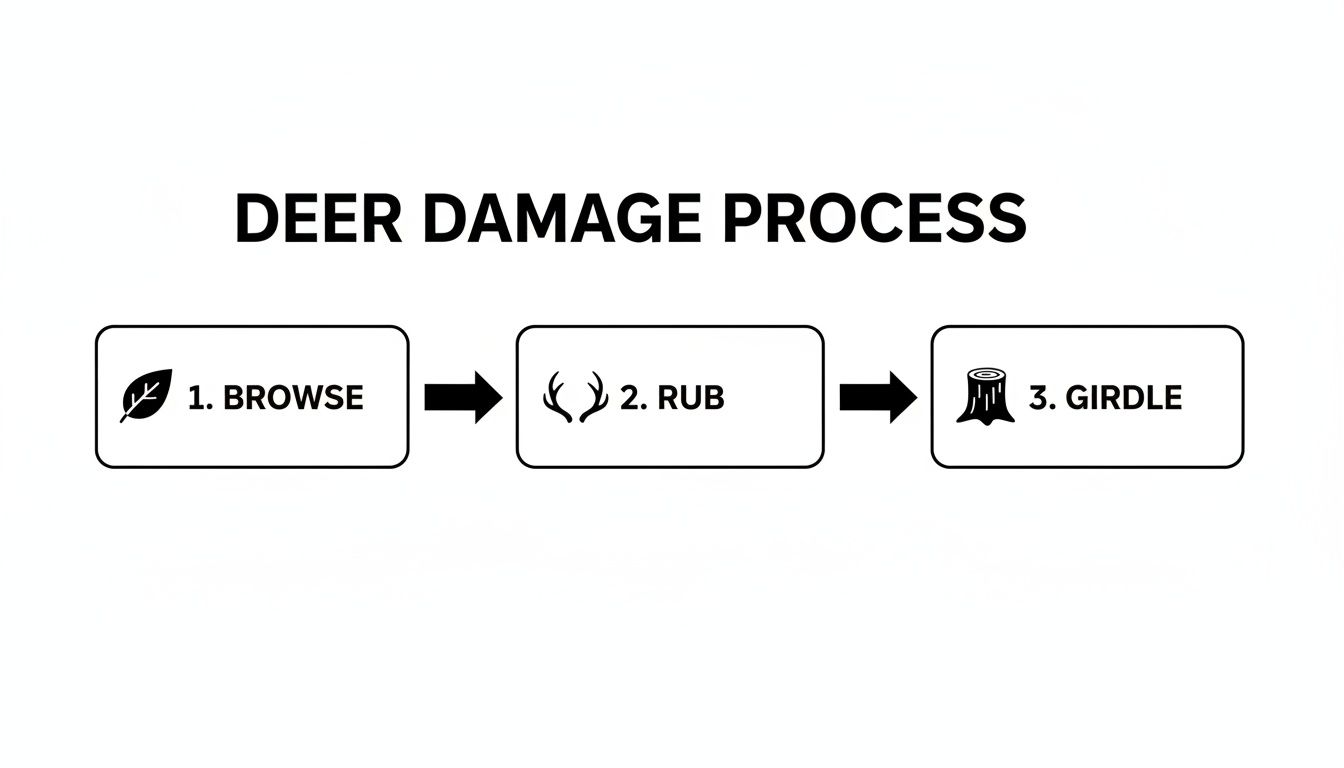
As you can see, what starts as minor leaf-nibbling can escalate to rubbing and girdling, which can easily kill a young tree. Early physical protection is the key to its survival.
For preventing antler rubbing, especially on smooth-barked trees like maples and young fruit trees, plastic trunk protectors are a lifesaver. These corrugated tubes or spiral wraps create a shield that a buck’s antlers can't penetrate. Just make sure to install them loosely enough to allow for trunk growth and airflow—you don’t want to trap moisture and invite disease. Plan on removing them after a few years once the bark has thickened up.
Comparing Physical Deer Barriers
Deciding between individual guards and a full fence can feel like a big decision. Here’s a quick breakdown to help you compare the most common physical barriers we see used around Atlanta.
| Barrier Type | Average Cost | Effectiveness Rating | Best Suited For |
|---|---|---|---|
| Plastic Trunk Guards | $2 – $5 per tree | ★★★☆☆ | Protecting young tree trunks from antler rubbing. |
| Wire Cages | $15 – $30 per tree | ★★★★☆ | Individual saplings and high-value small trees in open areas. |
| Polypropylene Mesh Fence | $8 – $12 per linear ft. | ★★★★☆ | Large residential lots, gardens, and properties where aesthetics are key. |
| Woven Wire Fence | $10 – $20 per linear ft. | ★★★★★ | Large properties, farms, and areas with very high deer pressure. |
Ultimately, the right choice comes down to the scale of your problem and your budget. For a few specific trees, caging is perfect. For total property protection, nothing beats a well-installed fence.
Investing in Perimeter Fencing for Full Protection
If you have a larger property or live in an area with heavy deer pressure—think properties bordering wooded areas in Milton or Forsyth County—perimeter fencing is the gold standard. Yes, it’s a significant upfront investment, but a properly installed deer fence is nearly 100% effective.
The biggest mistake I see homeowners make is underestimating just how athletic a whitetail deer is. They can clear a 6-foot fence from a standstill without breaking a sweat. If you want a fence to be a real deterrent, height and construction are everything.
You need a fence that is at least 8 feet tall. That height is just too intimidating for most deer to even try jumping. The material matters, too. Woven wire or polypropylene mesh are popular because they're strong but can blend into the landscape surprisingly well. For a deeper dive into your options, check out a complete guide to the best types of fences.
Common Mistakes to Avoid with Physical Barriers
Even the best barriers can fail if they aren't installed or maintained correctly. One of the most common slip-ups is leaving gaps. A deer can squeeze through an opening as small as 8-10 inches, so make sure your gates are secure and the bottom of the fence is flush with the ground.
Another classic mistake is installing tree guards too tightly. A trunk protector that can't expand will end up girdling the tree as it grows, causing the very damage you were trying to prevent. Always choose guards that can accommodate growth or make a point to check them each season.
Finally, don't wait until you see damage. The best time to put up a physical barrier is the day you plant a new tree. Being proactive ensures your landscape investment has the best possible shot at maturing into a strong, healthy tree, free from the stress and injury deer can cause.
Using Repellents and Scare Tactics Effectively
While physical barriers are the muscle in your tree protection strategy, repellents and scare tactics are all about psychological warfare. Think of it as playing mind games with the deer. Instead of a solid wall, you’re creating an invisible one built on bad smells, nasty tastes, and startling surprises.
This whole approach is designed to disrupt a deer's sense of security. Deer are creatures of habit. They love to browse where they feel safe. When you start introducing unpredictable and unpleasant things into their environment, you make your yard a much less appealing buffet.

Scent vs. Taste Repellents
Deer repellents pretty much fall into two camps, and understanding the difference is key to using them right. Each one targets a different sense to make your prized trees and shrubs a hard pass.
Scent-based repellents are your first line of defense. They work by creating odors that deer find either disgusting or downright scary. The most common active ingredients are things like:
- Predator Urine: A whiff of coyote or wolf urine screams "danger!" and triggers a deer's instinct to bolt.
- Putrescent Egg Solids: That’s just a fancy term for rotten eggs. The sulfur smell is similar to a decaying carcass, which deer naturally avoid.
- Garlic and Mint Oils: These strong, pungent smells can overwhelm a deer’s sensitive nose, making them feel vulnerable because they can't easily sniff out predators.
Taste-based repellents are what you use when a stubborn deer just won't take the hint. You apply these directly to the plant, and they make it taste awful. The go-to ingredient here is capsaicin—the stuff that makes hot peppers hot. A deer nips a leaf, gets a nasty surprise, and quickly learns that this particular snack isn't worth it.
The Power of Rotation and Unpredictability
Here’s the biggest mistake I see homeowners make: they find one repellent, and they stick with it all season long. Deer are incredibly adaptable. They'll eventually get used to a single smell or taste, a process called habituation. Once they figure out that rotten egg smell doesn’t actually come with a predator, they’ll start to ignore it.
The real secret to making repellents work long-term isn't finding one magic bullet. It's about keeping the deer guessing by constantly changing things up. An unpredictable environment makes them wary, and that's exactly what you want.
A much smarter strategy is to rotate between two or three different repellents. Maybe you use a predator urine spray for a few weeks, then switch to an egg-based one, and then maybe a garlic-mint formula. This simple rotation prevents deer from getting comfortable and makes your whole effort far more effective. This is a core concept behind what is integrated pest management.
Integrating Scare Tactics
To really layer on the unpredictability, you can mix in some scare tactics with your repellent schedule. These devices use sudden noise, movement, or water to startle deer and send them running.
- Motion-Activated Sprinklers: These are fantastic. A deer wanders into the sensor's range and gets a sudden, sharp blast of water. It's completely harmless but incredibly effective at teaching them to give that area a wide berth.
- Ultrasonic Devices: These gadgets emit high-frequency sounds that deer find annoying but are usually silent to us.
- Reflective Tape or Old CDs: Simply hanging shiny, moving objects from branches can create unexpected flashes of light that make deer nervous and hesitant to get closer.
Just like with repellents, you have to move these devices around. If that sprinkler stays in the same spot for two months, the deer will just learn its exact range and walk around it. Move it every week or two to keep that element of surprise alive.
Application Tips for the Georgia Climate
Here in North Georgia, our humidity and frequent rainstorms pose a real challenge. A good downpour can easily wash away your hard work, leaving your trees defenseless.
You have to plan on reapplying repellents after any significant rainfall. Most liquid products last 2-4 weeks in dry weather, but you’ll need to shorten that interval during our rainy seasons. When you do spray, be thorough. Get good coverage on everything, especially the tender new growth that deer find irresistible. By staying on top of reapplication and keeping the deer on their toes, these psychological tricks can become a powerful part of your tree protection plan.
Designing a Deer-Resistant Landscape
Instead of constantly fighting a losing battle, you can shape your landscape to naturally send deer packing. This is all about playing the long game—using smart plant selection and design to make your property the least interesting buffet on the block. It’s a proactive strategy that protects your trees by making your yard an unappealing place for deer to even stop.

The whole idea is to work with plants deer actively avoid. You’re essentially building a garden with its own built-in defense system, which means less time and money spent on sprays and fences down the road.
Choosing the Right Plants for North Georgia
The secret to a successful deer-resistant yard is picking trees and shrubs that not only love our North Georgia climate but are also, frankly, disgusting to deer. While their tastes can vary, deer generally turn their noses up at plants with a few key traits.
You'll find that deer often give a wide berth to plants with:
- Thorny or Prickly Textures: Think Barberry and hawthorn trees. Deer aren't fans of getting poked in the face while trying to eat.
- Strong, Pungent Scents: Deer have an incredible sense of smell they use to sniff out predators. Plants like Boxwoods and Russian Sage have powerful odors that can mask other scents, making deer nervous.
- Fuzzy or Hairy Leaves: Lamb's Ear is a perfect example. That fuzzy texture is just plain unpleasant in their mouths.
- Tough, Leathery Leaves: Plants like American Holly and Magnolia have foliage that’s too tough to chew easily, so deer usually decide it's not worth the effort.
A quick reality check: no plant is 100% deer-proof. If they're hungry enough—say, during a drought or a harsh winter—all bets are off. The real goal is to make your landscape the least appetizing option around.
Strategic Planting and Landscape Design
It’s not just what you plant, but where you plant it. Smart landscape design can create layers of defense that naturally guide deer away from your most valuable trees and shrubs.
I tell my clients to think of their property in zones. The areas right up against your house, patio, or main walkways are the safest. Plant your most vulnerable species here—your prized roses, tulips, or young fruit trees. The frequent human activity is often enough of a deterrent.
As you move away from the house, use deer-resistant plants to create a "barrier." A thick border of something like Boxwood or Juniper along your property line can act as a formidable first line of defense. Deer can be lazy browsers; if they have to shove through a dense, smelly hedge to get to the good stuff, they'll often just keep moving. If you need some ideas, you can explore some of the common types of trees that do well here and see how they stack up against deer.
Habitat Modification to Discourage Lingering
Your final layer of strategy is to make your yard a less comfortable place for deer to hang out. Deer are creatures of the "edge"—they love spots where the woods meet an open lawn because it offers food and a fast escape. You can make your property far less inviting with a few simple tweaks.
Try a few of these habitat modifications:
- Eliminate Hiding Spots: Prune the lower branches of shrubs and trees to remove the low-slung cover deer love to bed down in.
- Clean Up Windfall: Don't let fallen fruit from apple or pear trees sit on the ground. It's like ringing a dinner bell.
- Use Hardscaping: Weave gravel paths, low stone walls, or terraces into your yard. Deer find these surfaces awkward to walk on, and they break up the big, open patches of grass they find so inviting.
By combining smart plant choices with thoughtful design, you can build a beautiful landscape that defends itself. It’s a sustainable and incredibly effective way to protect your trees for years to come.
When to Call for Professional Tree Protection
While DIY repellents and basic tree guards are fantastic for managing a few curious deer, some situations just call for heavier firepower. Knowing when to bring in a pro can mean the difference between saving a prized tree and, well, paying to have it removed later.
Frankly, it's a smart investment that saves a lot of money and headaches down the road.
Think about it this way: if you have a large property in Forsyth County or are planning a major landscaping project, a professional consultation is a no-brainer. Large-scale fencing, for example, needs to be planned and installed perfectly to work. And if you're already seeing serious rubbing damage on your trees, a simple wrap might not be enough to save them.
When Professional Expertise Is Essential
Sometimes, the problem goes beyond simple prevention and you need someone with specialized knowledge. It's probably time to make a call if you're nodding along to any of these scenarios:
- Widespread or Severe Damage: You're seeing significant browsing or rubbing on multiple valuable trees. This isn't just one hungry deer; it's a pattern that needs an expert eye.
- High-Value Landscapes: Your property features mature, expensive, or sentimental trees and shrubs. The financial (and emotional) risk of losing them is just too high to gamble with.
- New Property Development: This is the perfect time to get ahead of the problem. A professional can help you design a deer-resistant landscape from the start.
An arborist won't just look at the deer damage; they'll assess the tree's overall health and develop a targeted plan. Understanding the details in an advanced guide to tree risk assessment shows just how complex this can be and why a pro's evaluation is so important for a tree's future.
Calling in a professional isn't giving up; it's scaling up your defense. An expert sees patterns in deer behavior and tree health that the average homeowner might miss, providing a strategy that protects your entire investment.
At the end of the day, an arborist brings a deep understanding of local deer habits and tree biology to the table. We've seen firsthand how different Atlanta neighborhoods face unique pressures.
For a thorough look at your trees and a protection plan that actually fits your property, you'll want an ISA Certified Arborist in Atlanta, GA. Their expertise is the key to putting the most effective solutions in place.
Frequently Asked Questions About Protecting Trees from Deer
Even with the best strategy, questions always come up when you're trying to keep deer away from your trees. Here are a few of the most common ones we get from homeowners all over the Atlanta area, from Marietta to Johns Creek.
So, Will Deer Eat a 'Deer-Resistant' Plant if They're Really Hungry?
You bet they will. There's really no such thing as a completely deer-proof plant.
When food gets scarce, especially during a harsh winter or a dry spell, a hungry deer will eat just about anything—even plants they'd normally turn their noses up at. Think of 'deer-resistant' as meaning it's just not their favorite thing on the buffet.
If you have a truly irreplaceable plant, like a special memorial tree or a prized Japanese maple, don't leave it to chance. A physical barrier like a simple wire cage is always your safest bet.
How Often Should I Reapply Deer Repellent?
That really hinges on two things: the product you're using and our wild Georgia weather. Most commercial sprays suggest reapplying every 2 to 4 weeks if it stays dry.
But let's be realistic—this is Atlanta. With our humidity and notorious pop-up thunderstorms, you’ll need to reapply after any heavy rain to keep it effective. The best advice is to read the label and follow the manufacturer's directions to a T.
A quick tip from our experience: Consistency is everything with repellents. It's far better to reapply right after a big storm than to just spray a heavy coat once a month and cross your fingers.
My Tree's Bark is Rubbed Off. Can It Still Be Saved?
It’s possible, but it all comes down to how bad the damage is. If a buck's antlers just scraped off the outer bark in a small spot, the tree can often heal itself without much trouble.
The real problem is something called girdling. This is when the damage goes all the way around the trunk, cutting off the vital cambium layer that moves water and nutrients up the tree. Girdling is almost always a death sentence.
If you see major bark damage on a tree you care about, the best thing to do is call an ISA Certified Arborist right away. They can assess the situation and give you a professional opinion on its chances for survival.
Battling deer can feel like a full-time job, especially when your beautiful trees are on the line. If you're tired of the fight or need help with a larger property, the team at Richmond Tree Experts GA has seen it all. Contact us today for a consultation and we'll help you figure out a plan that works.
Not sure what your tree needs? Richmond Tree Experts has worked on Marietta and Metro Atlanta trees since 1985, and every job is looked at by an ISA Certified Arborist before it is priced. Start with an ISA Certified Arborist evaluation, or see everything we do: tree removal, stump grinding and arborist services across Cobb, Fulton, Cherokee, Gwinnett and DeKalb counties (service areas).
Call (770) 974-3964, 7am to 11pm every day, or request an estimate online.

