

It's a common mistake to think "landscaper" and "tree removal specialist" are the same job, but that’s like mixing up your family doctor with a heart surgeon. While a landscaper keeps your garden looking sharp and healthy, a specialist is the one you call for the high-stakes, dangerous operations involving your property's biggest assets. Getting this distinction right is absolutely critical for the safety and value of your home.
Why a Tree Removal Specialist Is Not Just a Landscaper
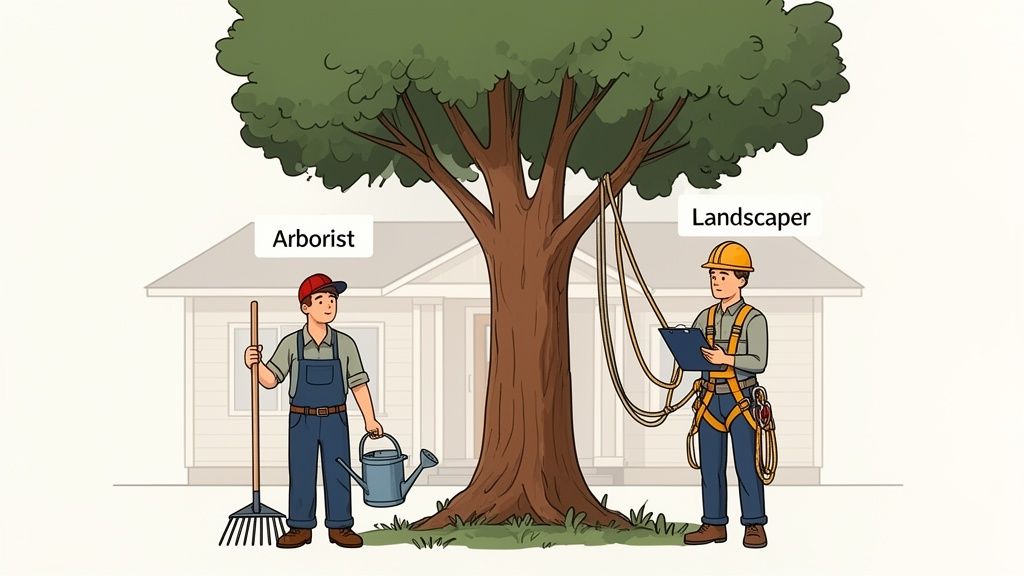
Let's put it this way: a landscaper is the general practitioner for your yard. They're fantastic at mowing, planting flowers, and general upkeep. Their world revolves around aesthetics and keeping smaller plants in good shape.
A tree removal specialist, especially an ISA Certified Arborist, is a surgeon. Their entire focus is on the complex biology, physics, and structural integrity of large trees. They perform delicate, technical procedures where a single wrong move could lead to catastrophic damage to your house, your neighbor's property, or worse.
The Critical Differences in Expertise
The real gap between them comes down to training and focus. A landscaper has a broad knowledge base covering all sorts of horticultural tasks. A specialist, on the other hand, has a deep, highly focused education on one thing: trees.
Here’s what sets them apart:
- Risk Assessment: A specialist is trained to spot the subtle signs of decay, disease, and structural weaknesses that most people, including landscapers, would walk right past. They don't just see a tree; they see how it might fail and plan every cut to prevent that.
- Specialized Equipment: We're talking heavy-duty machinery—cranes, bucket trucks, and industrial-grade wood chippers. More importantly, they have mastered the intricate use of rigging, ropes, and climbing gear, which is an art form in itself.
- Knowledge of Tree Physics: Safely dismantling a massive, multi-ton tree piece by piece requires a serious understanding of weight distribution and physics. They have to control the descent of every single section to avoid disaster.
A certified arborist brings a level of diagnostic precision and surgical skill that is simply outside the scope of general landscaping. This expertise is your primary defense against property damage and liability.
Why This Matters for Atlanta Homeowners
In communities like Cumming, Johns Creek, and Milton, with their gorgeous, mature tree canopies, this isn't just a technicality—it's a practical necessity. Those beautiful, older trees can hide deep-seated problems, and all it takes is one good Georgia storm to turn that majestic oak into a massive liability.
Hiring a generalist for a specialist's job is a huge gamble. An improperly felled tree can obliterate a roof, crush a car, or take out power lines for the whole block. If something goes wrong and they don't have the right insurance, the financial fallout can be devastating.
A true tree removal specialist carries extensive liability and workers' compensation insurance designed specifically for this high-risk work. That policy is what protects you from any potential accidents. At the end of the day, their expertise is what safeguards your property's value and ensures your family's safety.
Decoding the Warning Signs Your Tree Is a Hazard
That old oak tree leaning ever so slightly might just be a charming part of your landscape. But how can you tell if it’s a picturesque feature or a ticking time bomb? Knowing how to spot the subtle signs of a hazardous tree is one of the most important things a homeowner can learn. It’s the difference between a proactive phone call to a tree removal specialist and a catastrophic failure during a storm.
We’re not just talking about the obvious dead branches, either. Let’s dig into the real warning signs that a tree’s structural integrity is compromised.
Think of a healthy tree like a well-built structure. It needs a strong central support (the trunk), a deep and stable foundation (the roots), and a balanced frame that can handle the stress of wind and weather. When any piece of that system starts to fail, the whole thing is at risk.
Cracks and Cavities in the Trunk
The trunk is the tree’s backbone. Any serious damage here is a major red flag. Sure, minor cracks in the outer bark can be perfectly normal, but deep splits that dig into the wood itself? That’s another story entirely.
Keep an eye out for:
- Deep Cracks or Splits: These often run vertically up the trunk. They're a clear sign the tree is failing and could literally split in half.
- Large Cavities: Big hollow spots or visible decay mean the internal structure is rotting away. If more than one-third of the trunk's interior is gone, the tree is in serious trouble.
- Missing Bark or Cankers: Look for large patches where bark has fallen off or sunken areas (called cankers). These are open wounds that point to disease and decay, weakening the tree from the outside in.
Problems at the Base and With the Roots
A tree is only as strong as its foundation. Problems below ground or right at the soil line often mean a tree is unstable and a high-fall risk, especially when the next big storm rolls through.
One of the biggest giveaways is the presence of fungi, like mushrooms, growing on or around the base of the trunk. What you see on the outside is just the "fruit" of a much larger organism that's busy decaying the wood and roots inside. It's a classic sign of internal rot.
Another critical warning sign is heaving or cracking soil around the tree's base. This means the root system is failing and the tree is already starting to pull itself out of the ground. When evaluating your property, it's also a good idea to know about all the outdoor home features you need inspected, as tree roots can impact foundations, driveways, and more.
Signs of Disease and Structural Imbalance
A tree’s overall health and posture tell you a lot about its stability. A sudden, noticeable lean is an obvious danger, especially if you see the ground mounding up on the opposite side. That’s the root plate lifting.
You should also look for dead or dying branches clustered together, a condition known as crown dieback. If all the dead branches are on one side of the tree, it could signal root or trunk damage on that same side, creating a dangerous and unpredictable imbalance.
To help you get a better handle on what to look for, here's a quick checklist of common signs that a tree might be hazardous.
Hazardous Tree Identification Checklist
This quick-reference guide can help homeowners in the Atlanta area spot common tree-related risks before they become major problems.
| Warning Sign | What to Look For | Potential Risk |
|---|---|---|
| Trunk Damage | Deep vertical cracks, large hollows, missing bark. | Structural failure, splitting, collapse. |
| Leaning | A sudden or significant lean, especially with heaving soil. | Uprooting, catastrophic fall. |
| Root Zone Issues | Mushrooms at the base, cracked soil, exposed girdling roots. | Root rot, instability, toppling. |
| Dead Wood | Large dead branches, branches with no leaves in summer. | Falling limbs, property damage. |
| Crown Dieback | Thinning leaves at the top, dieback on one side. | Disease, root damage, imbalance. |
| Poor Structure | Multiple trunks joined with a weak "V" connection. | Splitting apart during high winds. |
Remember, this is just a starting point. Some of the biggest risks are things you can't easily see.
A professional tree hazard assessment goes far beyond a simple visual check. An arborist can identify risks that aren't visible to the untrained eye, offering a clear path to securing your property.
This kind of proactive care is more important than ever here in North Georgia. Across Atlanta's suburbs—from Roswell and Marietta to Forsyth County—our growing communities and aging tree populations are on a collision course. Arborist surveys show as many as 25% of mature trees in these areas pose potential safety risks.
If you spot any of these warning signs, don’t wait for the next storm to prove your suspicions right. The safety of your home and family is too important to leave to chance.
The Tree Removal Process From Assessment to Cleanup
Watching a large tree get taken down can look like a pretty intense operation, but for a professional tree removal specialist, it’s a carefully planned and executed process. It’s so much more than just firing up a chainsaw; it’s a methodical, step-by-step job designed from the ground up for safety and efficiency. Knowing what to expect can really demystify the whole thing and give you peace of mind.
The real work starts long before the first piece of equipment rolls up to your curb. It all kicks off with a detailed conversation and a thorough on-site evaluation by a certified arborist. This isn't just a quick look—it's a comprehensive risk assessment.
The Initial On-Site Assessment
First things first, an arborist will visit your property, whether you're in Alpharetta or Roswell, to get a good look at the tree in question. They're sizing up its health, structural integrity, size, and how close it is to buildings, power lines, or anything else it could potentially hit. This evaluation doesn't just confirm if removal is the right call; it helps map out the safest and smartest way to get it down.
During this visit, they'll figure out the best approach for the job, weighing factors like:
- Tree Location: Is it out in the open or wedged tightly between two houses?
- Structural Condition: Is the wood solid, or is it compromised by rot and decay?
- Equipment Access: Can they get a bucket truck or crane in close, or is this going to be a climbing job?
This initial assessment is basically the blueprint for the entire operation. From here, they’ll create a detailed plan and provide you with a clear, written estimate.
This flowchart highlights some of the first things an arborist looks for during an assessment—telltale signs like cracks, fungus, and root problems.
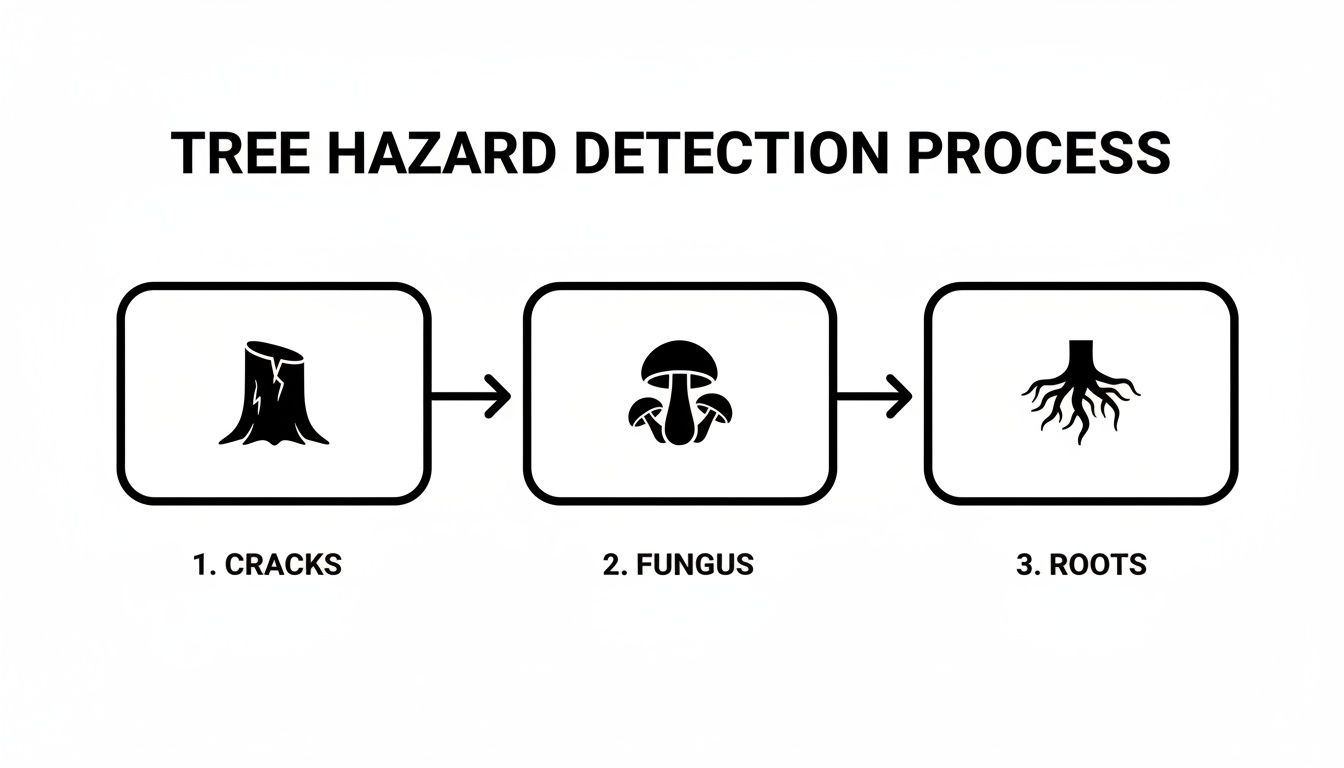
This kind of visual guide shows how different symptoms can point to deeper structural issues, helping the specialist build a complete picture of the tree's health and the risk it poses.
Site Preparation and Safety Protocols
Once you give the green light, the crew arrives to prep the site. This phase is all about setting up a secure work zone to protect your property and, of course, the team themselves. Everyone will be in their personal protective equipment (PPE), and the ground crew will mark out a clear "drop zone" where branches and logs will be safely lowered.
Safety isn’t just a buzzword; it’s the absolute core of the operation. Any patio furniture, cars, or planters are moved well out of the way. For really tricky removals, they might even lay down protective mats to keep heavy equipment or falling debris from tearing up your lawn.
The Technical Work of Dismantling the Tree
For most big trees near homes or other structures, the go-to method is piecemeal removal. This is where a skilled climber heads up the tree, secured with ropes and safety gear. They work from the top down, taking off branches one by one in a controlled sequence.
This isn’t just random hacking. Every single cut is planned.
A professional tree removal specialist uses a system of ropes and pulleys—what we call rigging—to control the descent of every single piece of the tree. This ensures that heavy limbs are gently lowered to the ground instead of just being dropped, which prevents any damage to your home, fences, or landscaping.
After the smaller branches are gone, the climber starts cutting the main trunk into more manageable sections. These bigger, heavier logs are also carefully rigged and lowered down. It's this level of precision and control that really separates a true professional from some guy with a saw.
Final Cleanup and Stump Grinding
After the last piece of the trunk is safely on the ground, the cleanup crew kicks into high gear. They work fast to chip the smaller branches and limbs, turning them into mulch. The larger logs are cut into rounds and hauled away, unless you've made arrangements to keep them for firewood.
The crew gives the site a thorough raking, clearing away all the debris and often leaving your yard looking even cleaner than when they started. The very last step, if you've opted for it, is stump grinding. A specialized machine is brought in to chew the leftover stump and its main roots into sawdust, taking it well below ground level.
This final step is important for a few key reasons:
- Aesthetics: It gets rid of the ugly stump, giving you back a flat, usable patch of lawn.
- Safety: No more tripping hazard for kids, pets, or your lawnmower.
- Pest Prevention: Old stumps are a magnet for termites, ants, and other pests you don't want near your home.
From that first expert assessment in your Johns Creek yard to the final sweep of the rake, the entire tree removal process is a testament to skill, careful planning, and a deep commitment to safety.
Navigating Costs, Permits, and Insurance in Georgia
Let's be honest—talking about budgets and paperwork isn't the most exciting part of owning property. But when it comes to tree removal, these details are what stand between you and a potential disaster. A single wrong move with cost, permits, or insurance can twist a simple project into a legal and financial mess. Getting this part right is the most important step you can take.
Think of it like building a house. You wouldn't pour the foundation without a solid budget, a building permit, and a contractor who’s fully insured. The very same logic applies when you're taking down a massive tree right next to your home. Each piece is a critical layer of protection for you, your property, and your wallet.
Breaking Down the Cost of Tree Removal
The first question just about every homeowner asks is, "So, what's this going to cost me?" The truth is, there's no flat rate, because every tree and every property is different. A real tree removal specialist doesn't just guess a price; they calculate it based on very specific factors tied to risk and labor.
Several key things will influence the final number:
- Tree Size and Height: This is the big one. A towering, 80-foot oak demands a whole different level of labor, equipment, and risk management compared to a small, 20-foot ornamental tree.
- Accessibility: Can the crew easily pull a bucket truck and heavy gear right up to the tree? Or is it tucked away in a tight backyard in Marietta, forcing a skilled climber to use complex rigging? Tough access always means a higher cost.
- Tree Health and Condition: A dead or decaying tree is a wildcard. It's far more unpredictable and dangerous to work on than a healthy one, and that extra risk means higher labor costs to keep the crew safe.
- Proximity to Structures: Is the tree hanging over your roof, a neighbor's fence, or a web of power lines? That job requires surgical precision. This careful, high-stakes work simply takes more time and skill.
The sticker shock from a suspiciously low offer often hides a dangerous truth: a lack of proper insurance, experience, or the right equipment. A professional quote reflects the true cost of getting the job done safely and correctly.
Understanding Georgia's Tree Removal Permits
Figuring out permit requirements can feel like navigating a maze, since the rules change from one city or county to the next. Across the Atlanta metro area, jurisdictions have their own specific tree ordinances. For example, removing a healthy, large-diameter hardwood in Roswell might require a permit, but taking down a dead pine of the same size in Cherokee County might not.
Never assume you don't need one. Illegally removing a protected tree can lead to some seriously hefty fines. A reputable tree removal specialist knows the local regulations for areas like Forsyth, Cobb, and Gwinnett counties inside and out. They'll guide you through the process or even handle the paperwork for you. You can get more specifics by checking out our guide on Atlanta's tree removal permit process.
The Non-Negotiable Role of Insurance
If you only take one piece of advice from this guide, make it this: never, ever hire a tree service that can't show you proof of both General Liability and Workers' Compensation insurance. This isn't just a suggestion—it's your single most important safeguard.
Here’s a quick breakdown of what each policy does:
- General Liability Insurance: This protects your property. If a heavy limb accidentally crashes through your roof or flattens your car, this policy is what pays for the repairs.
- Workers' Compensation Insurance: This protects you from personal liability. If a crew member gets hurt on your property, this insurance covers their medical bills and lost wages. Without it, you could be on the hook personally.
Always ask for a certificate of insurance sent directly from their insurance provider. This is the only way to confirm the policy is active and legitimate. For communities with HOAs, understanding these insurance details is just as vital for safety as other aspects of HOA common area maintenance.
This foresight is crucial as the tree care industry continues to grow. Globally, the tree services market is projected to hit $2.51 billion by 2029, and residential services make up over 31% of that. In booming markets like Atlanta, partnering with certified, insured pros not only ensures you’re following city codes but can also boost property values by up to 12%. You can explore more data on the growth of the tree services market at ResearchAndMarkets.com.
How to Vet and Choose Your Atlanta Tree Removal Specialist
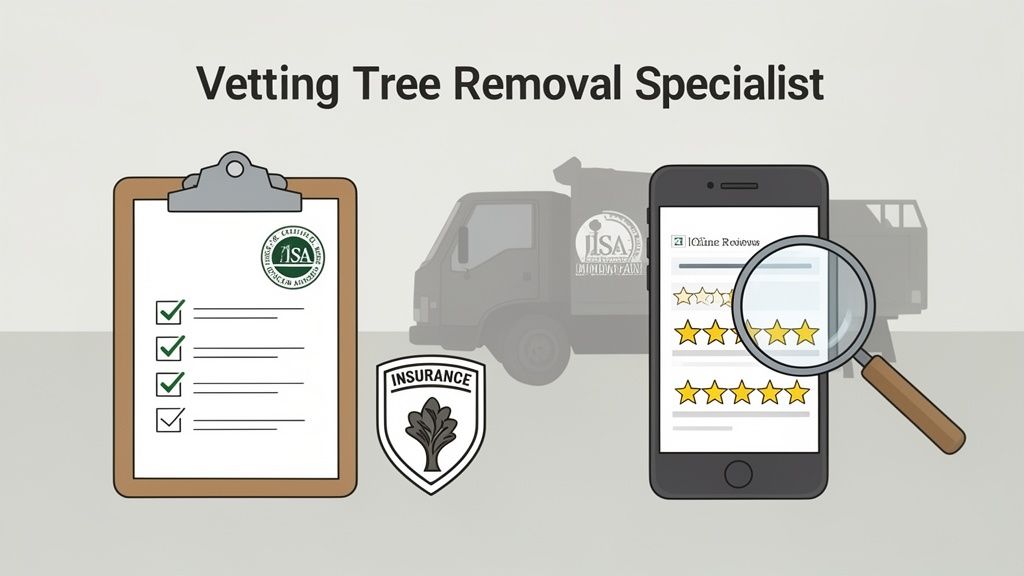
Let's be honest, not all tree services are created equal. The gap between a true professional and an unqualified operator can be absolutely staggering. Choosing the right tree removal specialist isn't about chasing the lowest bid; it's about finding a trustworthy partner to handle high-stakes work on your property.
This takes a little homework on your part, but it's the single best way to protect yourself from shoddy work, property damage, and serious liability. Think of it like hiring a surgeon—you wouldn't pick one from a flyer on your door or because they offered the cheapest price. You'd carefully check their credentials, track record, and reputation. The same level of care is crucial when you're selecting someone to dismantle a multi-ton tree hanging over your house.
The ISA Certification Gold Standard
If there's one credential that matters above all others, it's the ISA Certification. An ISA Certified Arborist isn't just a person with a chainsaw; they are a highly trained professional who has passed a comprehensive exam covering everything from tree biology to the physics of safe rigging.
This certification is your signal that the specialist has a deep, scientific understanding of tree care. You can—and should—always verify an arborist's credentials on the official ISA website. If you want a deeper dive, you can learn more about the role of a certified arborist in Atlanta in our dedicated guide.
Critical Questions for Your Shortlist
Once you've identified a few potential companies, it's time to ask some direct questions. How they answer will tell you everything you need to know about their professionalism.
- Can You Provide a Certificate of Insurance? This is a non-negotiable. Ask them to have proof of both general liability and workers' compensation insurance sent directly from their provider. This is the only way to confirm it’s valid and that you won’t be held liable for accidents.
- Do You Use Spikes to Climb Trees You Are Pruning? The answer should be a firm "no." A professional only uses climbing spikes (gaffs) on trees that are being removed. Using them on a tree you want to keep creates deep, damaging wounds that invite pests and disease.
- Will You Provide a Detailed, Written Estimate? A legitimate estimate will clearly break down all costs and the full scope of work, from the take-down to cleanup and stump grinding. Vague, verbal quotes are a massive red flag.
- What Safety Standards Do You Follow? They should be able to confidently explain their safety protocols, referencing industry standards like those set by the Tree Care Industry Association (TCIA).
A true tree removal specialist will welcome these questions and have clear, confident answers ready. Any hesitation or vague responses should give you serious pause.
To make this process easier, we've put together a simple checklist to guide you as you evaluate different companies.
Hiring a Tree Removal Specialist Vetting Checklist
Use this checklist to systematically compare potential tree care providers. A professional, reputable company will be able to check all these boxes without hesitation, giving you peace of mind that you're making the right choice.
| Qualification Check | Why It Matters | What to Look For |
|---|---|---|
| ISA Certified Arborist | Confirms expert knowledge of tree biology, health, and safety practices. | A valid certification number you can verify on the ISA website. |
| Proof of Insurance | Protects you from liability for property damage or worker injuries. | A certificate of insurance for both general liability and workers' comp. |
| Detailed Written Quote | Ensures transparency and prevents surprise costs. No handshake deals. | An itemized list of all services, including cleanup and stump removal. |
| Safety Protocol Adherence | Shows they prioritize the safety of their crew, you, and your property. | Mention of TCIA or ANSI Z133 standards. Use of proper safety gear (PPE). |
| Local References/Reviews | Proves a track record of quality work and customer satisfaction in your area. | Specific reviews from nearby towns like Cumming, Roswell, or Johns Creek. |
| Proper Equipment | The right tools for the job ensure efficiency and reduce risk of damage. | Well-maintained trucks, chippers, and safety rigging equipment. |
Making your way through this checklist will quickly separate the pros from the amateurs. A company that can't provide these basic assurances is not one you want working on your property.
Analyzing Online Reviews and Local Reputation
Don’t just glance at the star rating; dig into the actual reviews. You're looking for patterns. Do multiple homeowners in Alpharetta or East Cobb rave about their meticulous cleanup? Is there a history of successfully handling tricky removals in dense Marietta neighborhoods? A strong local reputation, built over years of consistent service, is often the most reliable indicator of who you can trust.
The tree services industry has exploded into a $39.5 billion market in the U.S., driven by growth in major hubs like Atlanta. While this means more options, it also means more unqualified players. ISA Certified Arborists use advanced equipment and techniques that can reduce job site risks by up to 90%. As storm frequency increases, these specialists are on the front lines, protecting our properties. By following this vetting process, you can confidently choose a professional who will get the job done right.
A Few More Questions We Hear Around Atlanta
Even with all the details sorted, most homeowners still have a couple of lingering questions before the crew shows up. It's completely normal. Getting straight answers to these practical concerns is the final step to feeling confident about your project. Here are some of the most common things we get asked by folks all over the Atlanta area.
These are the real-world, rubber-meets-the-road questions about timelines, property protection, and what to do with all that wood.
How Long Does a Typical Tree Removal Job Take?
This is a classic "it depends" situation, but I can give you a pretty good idea. The time it takes is tied directly to the same things that affect the price: the tree's size, its location, and how tricky the job is. A small, straightforward tree in the middle of an open yard? We could be in and out in just a few hours.
But if we're looking at a huge, hazardous oak crammed between two houses in a tight Milton neighborhood, that's a different story. That could easily be an all-day job, sometimes even longer. Any good tree removal specialist will walk you through the timeline during their first visit so you know exactly what to plan for.
How Do You Protect My Lawn and Property?
Making sure your property looks just as good after we leave as it did when we arrived is a huge priority. A professional crew isn't just focused on the tree; they're focused on protecting everything around it. We have a few key methods for this.
- Protective Matting: If we need to bring in the big guns like a bucket truck or crane, we don’t just drive it onto your lawn. We lay down specialized ground protection mats first. These spread out the machine's weight, preventing ugly ruts in your grass or cracks in the driveway.
- Controlled Rigging: As we talked about earlier, nothing just gets dropped. Every single branch and piece of the trunk is carefully roped, cut, and lowered to the ground. This precision is what keeps heavy logs from smashing into your lawn, garden beds, or the roof of your house.
- Strategic Drop Zones: The crew on the ground sets up a specific, safe "drop zone." We often put down tarps here to catch the smaller debris, which makes the final cleanup much faster and minimizes any impact on the turf.
What Is the Best Time of Year for Tree Removal in Georgia?
While a dangerous tree has to come down now—no matter the season—there’s definitely an ideal time for non-emergency removals. Here in Georgia, that sweet spot is usually during the late fall or winter when the trees have gone dormant.
Think of it this way: when a tree is dormant, the ground is usually harder and less soggy, which helps prevent soil compaction from our equipment. Plus, with all the leaves gone from deciduous trees, we can see the entire branch structure clearly. That visibility makes the whole process safer and more efficient for everyone.
Can I Keep the Wood for Firewood?
You bet! A lot of homeowners love the idea of using the wood from their own tree. Just give your tree removal specialist a heads-up when you're planning the job. The crew will be happy to cut the trunk and larger branches into firewood-length rounds for you.
We’ll even stack it neatly for you wherever you’d like on your property. It’s a fantastic way to give the tree a second life. Just remember, fresh wood needs to season (which just means dry out) for at least six to twelve months before it will burn well in your fireplace.
Ready to talk to a team that puts safety, clear communication, and your peace of mind first? Contact Richmond Tree Experts GA today for a professional look at your trees and a free, no-pressure estimate from our certified arborists. Let us show you what real expertise looks and feels like. Find out more and schedule your consultation.
Need a tree taken down safely? Richmond Tree Experts has worked on Marietta and Metro Atlanta trees since 1985, and every job is looked at by an ISA Certified Arborist before it is priced. Start with tree removal, or see everything we do: tree removal, stump grinding and arborist services across Cobb, Fulton, Cherokee, Gwinnett and DeKalb counties (service areas).
Call (770) 974-3964, 7am to 11pm every day, or request an estimate online.

