

Your trees are more than just scenery; they're a serious investment in your property's value and a key part of Atlanta's urban canopy. Hiring a certified arborist is the single best way to protect that investment. You're ensuring your trees get expert care based on science, not just someone's best guess. This goes way beyond simple branch trimming—it's about partnering with a trained specialist who understands the life of a tree.
Why You Need a Certified Arborist in Atlanta
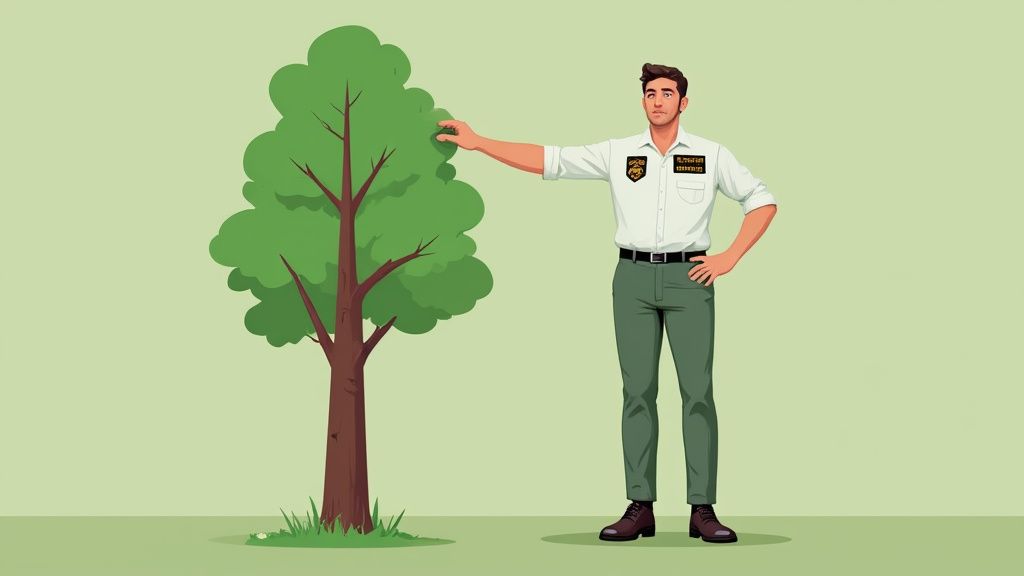
It’s tempting to think that any company with a chainsaw can handle tree work, but that’s a risky gamble. An unqualified person can cause damage that you can’t undo. Bad pruning can weaken a tree's entire structure, and they often miss the subtle signs of disease or pests that are common here in Georgia. Those mistakes can lead to huge problems down the road, including total tree failure and serious damage to your home.
A certified arborist, on the other hand, brings a completely different level of expertise to the table. These are trained professionals who have passed a tough, comprehensive exam and are required to keep up with their education to stay certified. That commitment is what truly sets them apart.
The Professional Difference in Tree Care
The easiest way to think of an arborist is as a "tree doctor." Their whole approach is rooted in tree biology. They know exactly how each cut will impact the tree's long-term health and how to manage the unique stresses our Atlanta climate throws at them, from brutal summer heat to those sudden, violent storms.
A certified arborist atlanta ga provides a whole suite of services that go far beyond what a basic tree trimmer can offer.
- Disease Diagnosis and Treatment: They can spot problems like root rot or insect infestations early on and map out an effective treatment plan.
- Structural Pruning: This is all about making precise cuts to encourage strong, stable growth, which drastically reduces the risk of limbs breaking off during high winds.
- Risk Assessment: An arborist can evaluate a tree’s stability and identify potential hazards before they turn into a middle-of-the-night emergency.
- Plant Health Care: This covers everything from soil management to creating a custom fertilization plan just for your trees.
This professional standard is championed by organizations like the International Society of Arboriculture (ISA), which has awarded over 35,900 ISA Certified Arborist credentials worldwide—the undisputed gold standard in the industry. A certified pro offers a wide range of skills, including professional tree trimming services, which is fundamental to a tree's health and your safety.
The real value of a certified arborist isn't just in the work they do today, but in the costly problems they help you avoid tomorrow. Proactive care is always cheaper and less stressful than an emergency removal.
When you hire a certified professional, you’re making a smart investment in the long-term health and safety of your property. For a deeper look into what that process involves, our guide on a complete tree care consultation can give you some valuable insights.
Verifying an Arborist's Credentials
Anyone with a pickup truck and a chainsaw can call themselves a tree guy. But when the health of your trees and the safety of your property are on the line, you need a true professional, and that's where credentials make all the difference.
In our world, the gold standard is the ISA Certified Arborist credential. This isn't just a fancy title. It means the person you’re trusting with your trees has passed a comprehensive exam covering everything from tree biology to soil science and safe work practices.
Think of it this way: earning that certification is a serious commitment. Arborists have to stay on top of the latest science and techniques through continuing education, and they're bound by a strict code of ethics. They’re relying on proven arboricultural science, not just old habits.
Beyond the Basics: Advanced Qualifications
While an ISA Certified Arborist is perfect for most jobs, some situations in Atlanta call for a higher level of expertise. You might see a few other acronyms, and it's good to know what they mean.
- Board Certified Master Arborist (BCMA): This is the Ph.D. of the tree world. It’s the highest level of certification from the ISA and recognizes an elite group with extensive experience and knowledge. You'd typically bring in a BCMA for complex diagnostics, legal cases, or municipal consulting.
- Tree Risk Assessment Qualification (TRAQ): Arborists holding this credential are the specialists you call when you're worried about a tree failing. They are trained in a standardized, systematic process to evaluate tree risk and give you clear, actionable recommendations to keep people and property safe.
Knowing the difference helps you hire the right pro for the job. You don’t need a Master Arborist for routine pruning, but you absolutely want a TRAQ-qualified expert to assess that massive oak leaning over your house.
To help you keep these straight, here's a quick rundown of the key credentials.
Key Arborist Credentials at a Glance
This table breaks down what each level of certification means, so you can quickly match an arborist's qualifications to what your trees actually need.
| Credential | What It Means | When You Need It |
|---|---|---|
| ISA Certified Arborist | The industry benchmark for professional knowledge in tree care, biology, and safety. | Routine pruning, tree health evaluations, removals, and general tree care. |
| Board Certified Master Arborist (BCMA) | The highest level of certification, indicating extensive experience and top-tier expertise. | Complex diagnostic challenges, expert witness testimony, or large-scale municipal projects. |
| Tree Risk Assessment Qualification (TRAQ) | Specialized training in a systematic process for identifying and assessing tree hazards. | Evaluating a specific tree you're concerned might fail or pose a risk to property or people. |
Ultimately, these credentials are your assurance that you're hiring someone who has invested in their craft and is committed to upholding the highest standards of the profession.
How to Check Credentials Yourself
Don't just take their word for it—verify it. This is a simple but non-negotiable step. The International Society of Arboriculture provides an easy-to-use online verification tool where you can search by name or certification number. This lets you confirm in seconds that the certified arborist in Atlanta, GA, you’re considering is legitimate and in good standing.
You also need to ask for proof of insurance. Make sure they have both general liability and workers' compensation coverage. This is your shield; it protects you from being held financially responsible if an accident happens on your property.
A true professional will have zero problem showing you their credentials and insurance documents. If you get hesitation or excuses, that's a giant red flag. Just walk away.
Putting in this little bit of effort upfront pays off in huge ways.
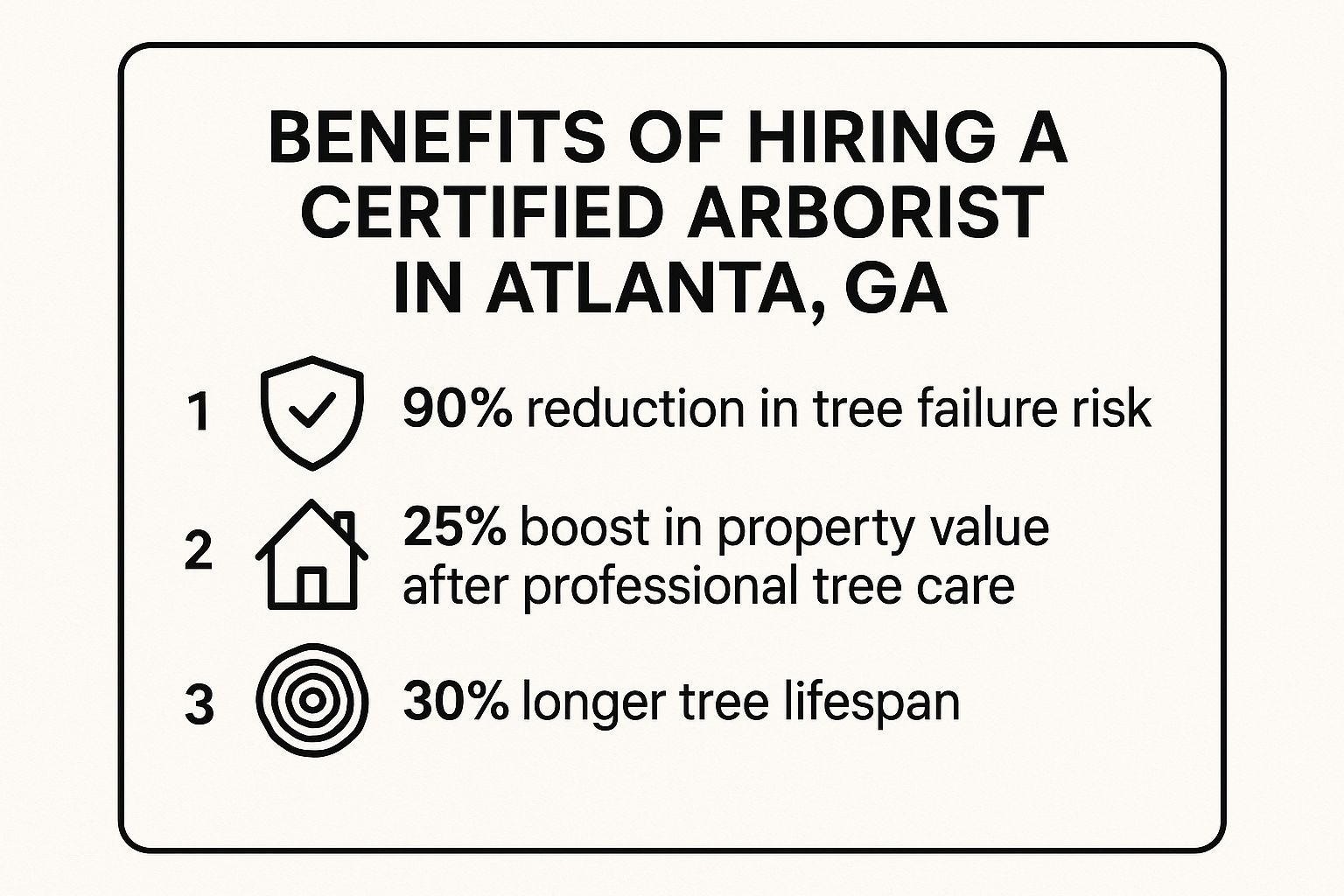
As you can see, hiring a certified pro isn’t just about getting the job done right—it leads to a safer property, healthier trees, and even a higher home value. These are the experts who can spot problems early and offer proactive solutions, like specific tree prescriptions that can nurse a struggling tree back to vibrant health.
Here in Georgia, we're fortunate to have strong local organizations that champion these high standards. The Georgia Arborist Association (GAA) has been a cornerstone of our local industry since 1972. For over 50 years, they have advocated for professionalism and promoted the ISA Certified Arborist credential as the benchmark for expertise across the state. You can learn more about their incredible history and mission on the GAA's website.
Smart Questions to Ask Before Hiring
Alright, you’ve got a few names and numbers. That first call or on-site meeting is your golden opportunity to see who you’re really dealing with. Don’t just jump straight to the price—that’s what everyone does. Instead, use this time to dig a little deeper.
A few well-placed questions can quickly separate a true professional from a guy with a chainsaw who might cut a few too many corners. Your goal here is to get a feel for their entire process, from how they see the tree to how they’ll leave your yard. This conversation will tell you everything you need to know.
Probing Their Approach and Philosophy
Let’s start with how they actually plan to work on your trees. A seasoned arborist's answers will be thoughtful and grounded in real arboriculture standards. Someone less qualified? Their answers will likely be vague, or worse, concerning.
A great place to start is their pruning philosophy. Go ahead and ask them directly: "Can you explain your approach to pruning this specific tree?"
Listen closely to their response. You want to hear phrases like "structural pruning," "crown cleaning," or "thinning for light penetration." A pro will explain their goal, whether that’s removing dangerous deadwood, encouraging a strong central leader on a young tree, or improving the overall structure.
Here's the biggest red flag you can get: any mention of "topping," "hat-racking," or "lion's tailing." These are destructive, outdated practices that can permanently damage or kill a tree. A true certified arborist in Atlanta, GA, would never, ever suggest them. If you hear these words, thank them for their time and show them the door.
Next, get into the nitty-gritty of their methods. Ask, "Do you use climbing spikes or spurs to prune live trees?"
The only acceptable answer is a hard no—unless, of course, the tree is being removed entirely. Spikes leave nasty wounds all over the trunk, creating entry points for pests and disease. A professional knows this is a cardinal sin of tree care.
Questions About Safety and Property Protection
A legitimate tree care company lives and breathes safety. It’s not just a buzzword; it’s a non-negotiable part of every single job. How they talk about protecting your property and their crew will tell you a lot about their experience and professionalism.
Don't be shy about asking these critical safety questions:
- How will you protect my lawn, driveway, and landscaping? A pro will have a ready answer. They’ll talk about using ground protection mats for heavy equipment, rigging down large limbs with ropes instead of just letting them drop, and having a clear plan to avoid crushing your garden beds or sprinkler heads.
- What safety standards does your crew follow? Look for them to mention ANSI Z133 standards. This is the safety bible for the arboriculture industry. They should also talk about daily safety briefings and the mandatory use of personal protective equipment (PPE) like helmets, chaps, and eye protection.
- What does your site cleanup and debris removal process look like? Get specific. Does their price include hauling away every stick and leaf? Will they rake the area and use a leaf blower for a clean finish? You don't want to be left with a messy yard and an unexpected bill for debris hauling.
Their answers should sound practiced and confident, not like they're making it up on the spot. "We'll be careful" is not a plan. You want to hear about the specific, concrete steps they take to run a safe, clean, and professional job site. An arborist who has this stuff down pat is one who respects your property as much as you do.
Navigating Atlanta's Tree Removal Permit Rules
Dealing with local regulations is often the least glamorous part of owning a home, but when it comes to trees in Atlanta, it's something you absolutely can't skip. The city is famous for its incredible tree canopy, and there are strict rules in place to protect it. Trying to sidestep them can land you with some hefty fines and serious legal headaches.
This isn't just about red tape; it's about preserving what makes Atlanta so green and beautiful. A professional certified arborist in Atlanta, GA, lives and breathes these local ordinances. They don’t just show up with a chainsaw—they first figure out if a permit is needed and then handle the entire application for you. This is a huge part of their service and a key difference between a real expert and a random person with a truck who might suggest doing the work "off the books."
When a Tree Removal Permit Is Required
So, when do you actually need to get the city involved? Atlanta’s rules are pretty specific. Generally, a permit is required to remove any hardwood or pine tree that’s six inches or more in diameter when measured at breast height (a term we call DBH).
But the city also gets that some trees are a genuine risk. While a permit is almost always required, the city’s main concern is safety. You can typically get a permit approved without much fuss for trees that are:
- Dead or Dying: Trees that have no realistic chance of recovery.
- Hazardous: Trees with major structural problems that make them a direct threat to people or property. We’re talking about deep cracks, significant decay, or a dangerous lean that's just waiting for the next storm.
An arborist's professional opinion is absolutely critical here. They'll provide the city with all the necessary documents and justification to get your permit application approved smoothly.
A reputable arborist will never suggest you skip the permit process to save a little time or money. That’s a massive red flag. Following the rules protects you, protects the arborist, and protects our community's incredible urban forest.
Understanding the City's Role
In Atlanta, the Arborist Division of the City Planning Department is the group in charge of enforcing these tree rules. They're tasked with the important job of protecting the city’s massive tree canopy, especially on private property. Their team reviews building and removal plans, issues permits for things like hazardous trees, and even conducts inspections to make sure everyone is following the rules. You can find out more about their work on the official City of Atlanta website.
A good certified arborist basically acts as your guide through this whole process. They know the paperwork, they know the people, and they know the system, turning what could be a confusing ordeal into a straightforward part of the job.
For a closer look at the actual steps involved in getting a tree down safely and legally, take a look at our guide on professional tree removal in Atlanta. We break it down so you know everything is being handled correctly from start to finish.
How to Compare Quotes and Understand Arborist Costs
Getting a few different quotes for your tree work is a great start, but it’s all too easy to let your eyes jump straight to the bottom-line price. The real skill is learning to compare the value each company brings to the table. In the tree care world, the cheapest bid is almost always a warning sign, not a bargain.
Think about it. An unusually low price means corners are being cut somewhere critical. Maybe they don't carry the proper insurance, which puts all the liability squarely on your shoulders. Or perhaps they lack the right equipment for the job, risking serious property damage and unsafe work practices. A professional quote from a certified arborist in Atlanta GA is built on a careful assessment, not a wild guess.
Decoding the Details of a Professional Estimate
When a quote from a reputable arborist lands in your inbox, it should look like a detailed plan, not just a number scribbled on a business card. This transparency is one of the clearest signs of professionalism you can look for. A well-run arborist service will practice efficient job and cost tracking, and you'll see that reflected in the clarity of their estimates.
Here’s what you should expect to see clearly laid out:
- A Detailed Scope of Work: The estimate needs to spell out exactly what's being done. It should specify which trees and even which limbs are part of the job. Vague lines like "prune oak tree" just aren't good enough.
- Proof of Insurance: It should explicitly state that they carry both general liability and workers' compensation insurance. Don’t hesitate to ask for a copy of their insurance certificates—a pro will have them ready.
- Equipment and Methods: For bigger jobs, the quote might mention the specific equipment they plan to use, especially if it involves cranes or complex rigging setups.
- Cleanup and Debris Removal: A professional quote will always clarify whether complete cleanup and hauling away all debris is included. This simple line item prevents a lot of arguments and surprise charges later on.
- A Clear Timeline: It should give you an estimated start date and a realistic idea of how long the work will take, factoring in potential weather delays.
Major Factors Influencing Tree Service Costs
The price of tree work isn't just pulled out of thin air; it’s a careful calculation of risk, labor, and the equipment needed to do the job safely. Once you understand these factors, it becomes much clearer why one quote might be higher than another for what seems like the same job.
The biggest cost drivers almost always boil down to risk and accessibility. A tree leaning precariously over your house is an entirely different beast than one standing alone in an open field.
Several key variables have a direct impact on the final cost:
- Tree Size and Condition: It’s simple math—bigger, taller trees demand more time, more crew members, and often specialized gear like a crane. That all adds to the cost. A dead or decaying tree also ups the price because it's more hazardous and unpredictable to work on.
- Location and Accessibility: Is the tree in a tight backyard boxed in by fences, sheds, and power lines? That's a much tougher job than a tree with easy access from the street. The crew will have to spend significantly more time carefully rigging down every single piece to avoid damage.
- Job Complexity: A straightforward pruning job will always be less expensive than a full-scale removal that requires technical expertise and intricate rigging. The more complex and dangerous the work, the higher the price tag.
Common Questions About Hiring an Atlanta Arborist
Even after you've done your homework, a few practical questions almost always come up when it’s time to bring in a tree care professional. Getting straight answers to these common concerns is the best way to move forward with confidence, making sure your trees get the expert care they need.
These are the questions we hear all the time from Atlanta homeowners. Think of it as a quick guide for handling the final details before the work gets started.
How Often Do My Trees Need an Inspection?
For healthy, mature trees, having a certified arborist in Atlanta GA do a proactive check-up every three to five years is a great rule of thumb. This gives them a chance to catch potential issues, like subtle structural weaknesses or the first signs of disease, long before they turn into major headaches.
That said, some situations call for an immediate inspection. You should get an arborist out right away if:
- A major storm just passed: High winds and heavy rain can cause hidden damage that you simply can't see from the ground.
- You spot signs of stress: This could be anything from dead branches and discolored leaves to cracks forming in the trunk.
- Fungus appears at the base: Seeing mushrooms or other fungal growth near the roots can signal significant decay inside the tree.
What Is the Difference Between Topping and Pruning?
This is one of the most critical things every homeowner should understand. Tree topping is an outdated and incredibly harmful practice where a tree's main branches are cut back to random stubs. It creates huge, open wounds that practically invite disease and decay. The new growth that sprouts from these cuts is weak, poorly attached, and far more dangerous than the original limbs ever were.
A professional arborist will never suggest topping a tree. Proper pruning, on the other hand, is all about making selective, scientific cuts to improve a tree's health, safety, and structure without compromising its long-term survival.
Is Stump Grinding Included with Tree Removal?
In almost every case, stump grinding is not included in the standard price for tree removal. They are two separate services. Tree removal usually just covers cutting the tree down as close to the ground as possible and then hauling away all the wood and branches.
If you want the stump gone, it will be listed as a separate line item on your estimate. Always clarify this with your arborist when you're reviewing the quote. It’s a simple step that avoids any surprise costs after the main job is done and keeps everything clear and upfront.
For a professional assessment of your trees or to get answers to any other questions you may have, the ISA Certified Arborists at Richmond Tree Experts GA are ready to help. Contact us today for a consultation and experience the highest standard of tree care in Atlanta. Visit us online at https://richmondtree.com.
Not sure what your tree needs? Richmond Tree Experts has worked on Marietta and Metro Atlanta trees since 1985, and every job is looked at by an ISA Certified Arborist before it is priced. Start with an ISA Certified Arborist evaluation, or see everything we do: tree removal, stump grinding and arborist services across Cobb, Fulton, Cherokee, Gwinnett and DeKalb counties (service areas).
Call (770) 974-3964, 7am to 11pm every day, or request an estimate online.

