

A solid front yard landscaping plan is where every great outdoor transformation begins. Think of it as the essential blueprint for turning your home's exterior into a space that's not just beautiful, but also functional and adds real value. A well-thought-out plan guides every single decision, from which plants go where to laying down a new walkway, making sure the final result is a cohesive look that seriously boosts your curb appeal.
Honestly, this planning phase is what saves you time, money, and a whole lot of headaches by preventing those costly do-overs down the line.
Why a Great Front Yard Starts with a Smart Plan
Your front yard is so much more than a patch of grass—it’s the first impression your home makes on everyone. It sets the entire tone for your property. The real secret to unlocking your yard's potential is moving beyond just randomly sticking plants in the ground and embracing a truly intentional design. A strategic plan considers everything, from how the sun hits your yard in Alpharetta to the specific clay soil we often see in Marietta. This is how you create a landscape that doesn't just look stunning but actually thrives.
Good, thoughtful planning is the bedrock of any successful and sustainable outdoor space. Of course, a huge part of any front yard plan is to make your home look its best, which is why it's so important to understand how to improve curb appeal and boost home value. Without a plan, it's easy to fall into common traps, like picking a tree that will completely overwhelm its spot in five years or creating a design that just feels "off" with your home's architecture.
The Value of Intentional Design
A well-crafted landscaping plan delivers benefits that go way beyond just looking pretty. It's a real investment in your property, setting you up for longevity and cutting down on maintenance frustrations for years to come.
So, what goes into a successful plan? A few key things:
- Purposeful Plant Selection: This means choosing species that love the Atlanta metro climate, need similar amounts of water, and keep things interesting through all four seasons.
- Cohesive Style: You want to make sure your plants, pavers, and overall layout feel like they belong with your home, whether it’s a classic Roswell colonial or a sleek, modern Milton estate.
- Functional Flow: It's all about designing clear, welcoming pathways and defining different areas in a way that’s practical for everyday life but also easy on the eyes.
- Budget Management: A plan lets you get smart about your spending. You can tackle the big, foundational pieces first and then layer in the details as your budget allows.
A great landscape plan is like a business plan for your yard. It defines your goals, outlines your resources, and provides a clear path to success, preventing impulse buys and ensuring every dollar is spent wisely.
It's clear that homeowners are seeing their yards as valuable extensions of their homes, not just an afterthought. This growing focus on outdoor living is a huge trend, and the numbers back it up. The U.S. landscaping services industry was valued at a massive $153 billion in 2024 and is expected to keep climbing. You can dig into more insights on this industry's growth over on Precedence Research. This boom really highlights what we've known for years: a beautiful, well-planned front yard is one of the most worthwhile and rewarding investments you can make in your home.
Analyzing Your Site and Defining Your Goals
Before you even think about falling in love with a plant at the nursery or sketching out that perfect stone walkway, we need to talk about the single most important step: getting to know your property. I mean really know it. This isn't just about grabbing a tape measure; it's about becoming an expert on your own yard, understanding its unique personality, quirks, and challenges.
Jumping straight into the fun part—the design—is a recipe for disappointment. Trust me, I've seen it happen. You end up with sun-loving plants gasping for life in a shady corner or a beautiful new patio that turns into a pond every time it rains in Cumming. A little bit of homework now prevents those costly and frustrating mistakes later, ensuring your plan is not only beautiful but actually works.
Mapping Your Canvas
First things first, let's create a simple base map of your front yard. This doesn't need to be some professional architectural drawing. A rough sketch on graph paper is all you need. The goal here is just to get a bird's-eye view of your space.
Start by measuring the big stuff and getting it down on paper.
- Property Lines: Mark the boundaries of your front yard.
- House Footprint: Sketch the outline of your home. Don't forget to mark where the doors, windows, and outdoor faucets are.
- Existing Hardscape: Note any driveways, sidewalks, porches, or retaining walls already in place.
- Utility Locations: Find and mark where your meters, utility boxes, and septic tank lids are. You’ll need to keep these accessible.
A little pro tip: Don't fight the flow. Watch how people naturally walk across your yard. The shortcut your mail carrier takes every day or the path your family carves from the driveway to the front door—those are often the most logical and comfortable spots for a formal walkway.
This whole process is about simplifying things, moving from assessment to design to the final choices without the guesswork.
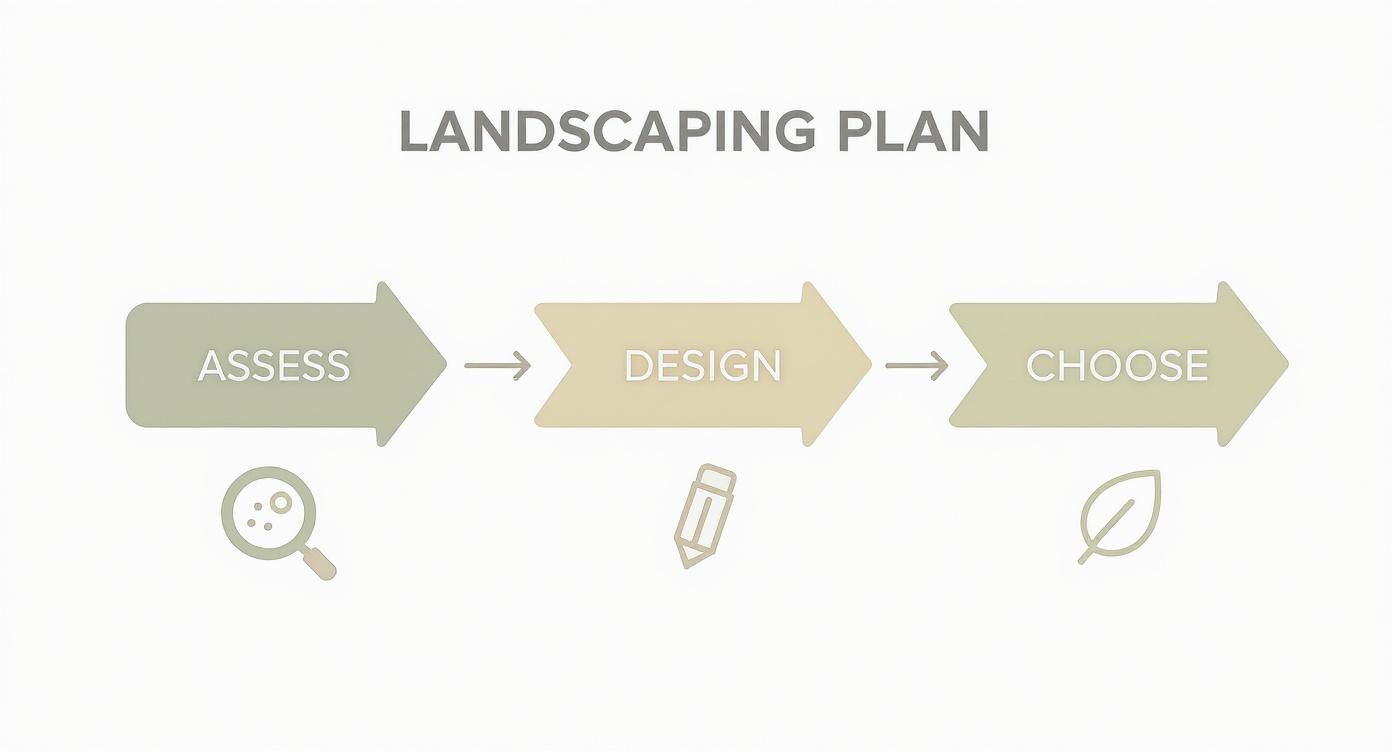
As you can see, a thoughtful plan starts with understanding what you have, moves to the creative part, and finishes with making informed decisions.
Understanding Your Environment
With your base map done, it's time to add the environmental details. This is the information that will tell you which plants will thrive versus which ones will just, well, survive. Take a few days to observe your yard at different times—morning, noon, and late afternoon—and start layering these notes onto your map.
Sun Exposure Analysis
Figure out which spots get full sun (6+ hours), which are in partial shade (4-6 hours), and which are in full shade (less than 4 hours). A south-facing yard in Roswell is a completely different world from a north-facing, tree-covered lot in East Cobb. I like to use different colors or symbols to create a quick "sun map."
Water and Drainage Patterns
Next time there's a heavy rain, go outside and watch. Where does water pool up? Where does it seem to run off in a hurry? Identifying those soggy spots or erosion-prone slopes will guide everything from your plant choices to whether you might need a drainage solution like a French drain.
Soil Conditions
Most of us in the Atlanta metro area are dealing with that infamous red clay. It's great at holding moisture, but it can also get compacted and drain poorly. A simple soil test is a fantastic investment. It'll tell you about the pH and nutrient levels, so you know exactly what amendments, like compost, you might need to add.
Defining What Success Looks Like
The last piece of this puzzle is all about you. What does your perfect front yard even look like? A beautiful yard is completely subjective, and your vision might be the polar opposite of your neighbor's. Thinking through these questions now will give your design a clear direction.
Ask yourself these key questions to nail down your vision:
- What's the main goal here? Are you going for pure curb appeal? Do you want a little seating area for your morning coffee? A play space for the kids? Or maybe a habitat for local pollinators?
- How much work are you really willing to do? Be honest. If you don't love spending weekends gardening, you'll want to focus on a low-maintenance design with drought-tolerant native plants and less lawn to mow.
- What's your style? Do you lean toward a formal, symmetrical look with clean lines, or is a more natural, whimsical cottage-garden aesthetic your vibe? Start gathering inspiration photos that feel right with your home's architecture.
- Are there any problems that need solving? Maybe you need to screen an unsightly view of your neighbor's RV, create more privacy from the street, or fix that erosion problem on the slope by the driveway.
When you combine a detailed site analysis with clear, personal goals, you're no longer just dreaming. You're creating an actionable blueprint. This groundwork is absolutely essential to making sure your final front yard landscaping plan is a perfect fit for your property, your lifestyle, and your vision.
Applying Design Principles to Your Layout
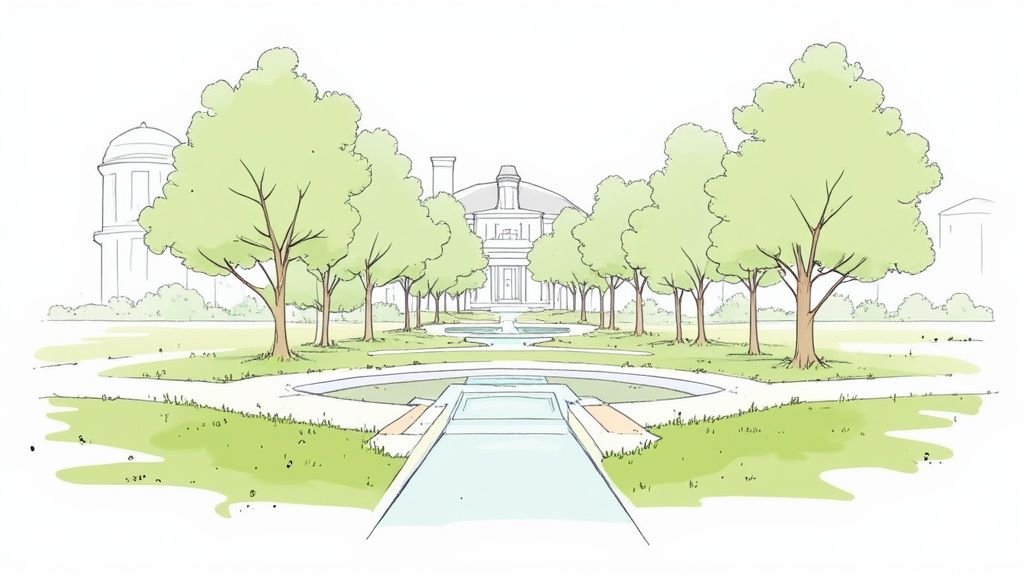
With a solid grip on your site's quirks and potential, we get to the fun part—turning that vision in your head into a tangible plan. This is where you graduate from lists and measurements to actually sketching out a front yard that just feels right.
The secret here is leaning on a few core design principles that landscape pros use every day. Don't worry, this isn't complicated art theory. These are simple, intuitive concepts like balance, rhythm, and unity that bring a sense of order and beauty, ensuring your final design looks intentional and perfectly complements your home.
Creating Balance and a Focal Point
Every great landscape design needs an anchor for your eyes—something we call a focal point. It's the element that says, "Look here first!" This could be anything from a stunning specimen tree or a charming birdbath to your front door painted a bold, welcoming color.
Once you’ve established that star of the show, you build the rest of the design around it using balance. You’ve got two main ways to go here:
- Symmetrical Balance: Picture a classic colonial home in Roswell. It’s formal, orderly, and everything on one side of the front door is a mirror image of the other. This style loves straight lines, geometric shapes, and perfectly paired plantings.
- Asymmetrical Balance: This is a much more relaxed, natural approach. Instead of mirroring identical items, you’re balancing the visual weight. For instance, you might balance a single large, mature oak on one side of the yard with a grouping of three smaller dogwoods and a cluster of boulders on the other.
Asymmetrical balance tends to feel more dynamic and works beautifully for ranch-style homes or properties with the rolling landscapes you see all over Forsyth County.
Here's a common mistake I see: creating too many focal points. When everything is screaming for attention, the yard just feels cluttered. Pick one primary star—like a magnificent Japanese Maple—and let everything else play a supporting role. You'll create a much calmer, more pleasing experience.
Establishing Rhythm and Unity
Rhythm in a landscape is all about creating a visual flow that gently guides your eyes through the space. You get there through repetition—using the same plants, colors, or materials in different spots. Imagine clumps of a specific ornamental grass repeated along a curving pathway. It creates a pleasing, predictable pattern that feels natural.
Unity is the ultimate goal, where every single element feels like it belongs. You can achieve this by:
- Limiting your plant palette: Instead of getting one of everything at the nursery, choose a handful of powerhouse plant varieties and repeat them throughout the design.
- Sticking to a color scheme: Pick a few complementary colors for your flowers and foliage and stick with them.
- Using consistent materials: If you choose flagstone for the main walkway, consider using that same stone to edge your garden beds.
This thoughtful repetition is what ties your entire front yard together, making it feel like a single, cohesive, and professionally designed space.
Exploring Popular Layout Concepts
Okay, let's bring these principles to life with some popular layout styles you can adapt for your own front yard landscaping plans. A fantastic way to start sketching is with "bubble diagrams." You just draw simple circles on your base map to represent different zones: "entry path," "main planting bed," "privacy screen," and so on.
From those rough bubbles, you can start refining them into a more defined style:
| Layout Style | Key Characteristics | Best For |
|---|---|---|
| Symmetrical Formal | Clean lines, geometric shapes, mirrored plantings. | Traditional, colonial, or stately homes. |
| Asymmetrical Natural | Curved lines, organic shapes, balanced groupings. | Ranch homes, properties with natural slopes, cottage style. |
| Modern Minimalist | Strong geometric shapes, limited plant palette, focus on texture. | Contemporary or modern architecture. |
Choosing a style early on helps you make consistent decisions down the road. For instance, considering how various trending wooden fence styles could complement a modern or natural layout helps define the space and adds serious architectural interest.
Recent trends are also pushing toward landscapes that work harder for us. More and more homeowners are designing for privacy, with research showing 22% now prioritize features like fences and hedges. At the same time, front yard veggie gardens are becoming incredibly popular, blending beauty with function in a way that’s both sustainable and rewarding.
Choosing the Right Plants and Materials
With a solid layout sketched out, it's time for the fun part: picking the actual stars of the show. We're talking about the plants and materials that will take your front yard landscaping plan from lines on paper to a living, breathing space that welcomes you home.
This is where your vision truly comes to life. But it’s about more than just grabbing pretty flowers at the local nursery. It's about making smart choices that are perfectly suited for your specific corner of the Atlanta metro, ensuring your landscape doesn't just survive, but thrives.
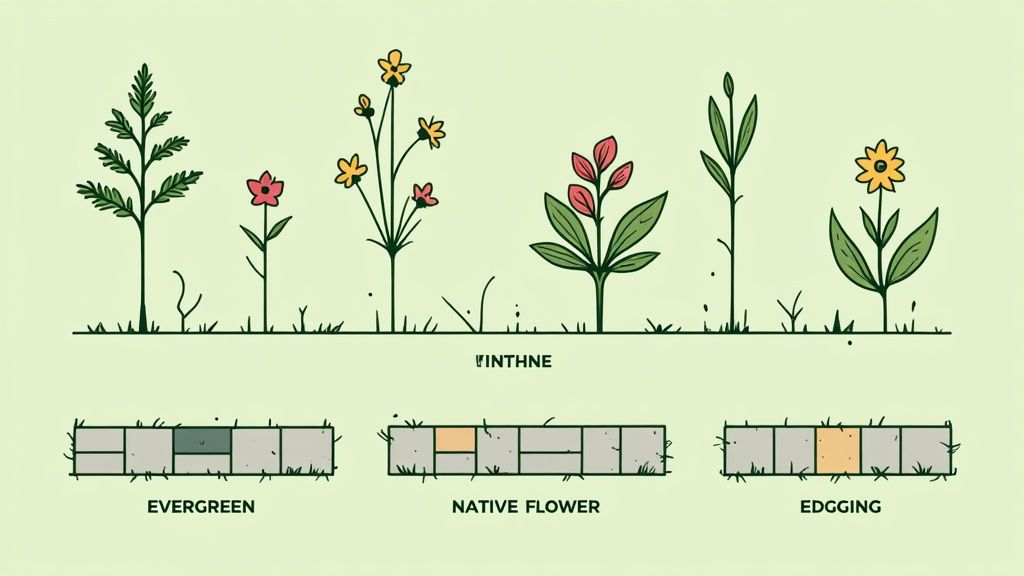
Building Your Plant Palette
Here in Georgia, there's one golden rule that trumps all others: right plant, right place. A gorgeous hydrangea that loves a shady, moist corner in Milton is going to cook in a sun-drenched yard in East Cobb. That site analysis you did earlier? It’s your new best friend, pointing you toward plants that will genuinely love the home you can give them.
A fantastic place to start is with native plants. Species like Oakleaf Hydrangea, Georgia Aster, and Serviceberry are already battle-tested for our climate. They’re built for our clay soil and humid summers, which means they’ll generally need less water, fertilizer, and fuss once they're established. It's a win for you and a win for the local ecosystem.
But a great yard doesn't just look good in May. A truly thoughtful front yard plan delivers year-round visual appeal. You can achieve this "four-season interest" by layering different types of plants:
- Evergreens: These are the bones of your landscape. They provide structure and a splash of green even in the dead of winter. Think boxwoods for classic hedges or compact hollies to anchor your foundation plantings.
- Deciduous Shrubs & Trees: These plants bring the drama with their seasonal changes. A Japanese Maple can set your yard ablaze with fiery fall color, while a dogwood offers those iconic, delicate spring blossoms.
- Perennials: The workhorses of the garden, perennials come back year after year. By choosing plants with staggered bloom times—like Coneflowers for summer and Black-eyed Susans for late summer—you can create a continuous wave of color.
- Annuals: They may only last a season, but annuals are perfect for dropping into pots and along borders for a guaranteed, vibrant pop of color exactly where you want it.
One of the most common mistakes I see is people underestimating a plant's mature size. That cute little evergreen you bought at the nursery can easily grow to block a window or swallow a walkway in just a few years. Always, always read the plant tag and plan for its full, grown-up dimensions.
Selecting Hardscape Materials
Hardscaping refers to all the non-living elements in your design—the walkways, patios, edging, and retaining walls. These components give your landscape structure, define different "rooms," and guide people through the space. The materials you choose should complement your home's architectural style while also fitting your budget.
For walkways and patios, two of the most popular options we see in the Johns Creek and Alpharetta areas are pavers and natural flagstone. They each bring something different to the table.
Comparing Common Hardscape Materials
| Material | Pros | Cons | Best For |
|---|---|---|---|
| Concrete Pavers | Durable, uniform, huge variety of colors and styles, cost-effective. | Can look manufactured, colors may fade over time. | Formal, modern, or high-traffic walkways and driveways. |
| Natural Flagstone | Unique, natural beauty, excellent durability, permeable surface. | More expensive, installation is labor-intensive, uneven surface. | Naturalistic, rustic, or cottage-style paths and patios. |
| Decomposed Granite | Inexpensive, permeable, creates a soft, natural look. | Can be messy and track indoors, requires occasional refreshing. | Informal garden paths and secondary walkways. |
Beyond the main walking surfaces, don't sweat the small stuff—it makes a huge difference. Edging is absolutely critical for creating those clean, crisp lines between your lawn and garden beds. You can use anything from affordable plastic or metal strips to more decorative brick or stone that ties back to your home's facade. It’s a simple touch that instantly makes your landscape look polished and professional.
Caring for Trees and Knowing When to Call an Arborist
Mature trees are the backbone of a great front yard. They provide shade, structure, and a sense of history that you just can't replicate overnight. But they aren’t just part of the scenery; they're living things that need a watchful eye to stay healthy and safe. Weaving tree care into your front yard landscaping plans isn't just about looks—it's a crucial investment in your property's safety and overall value.
Learning to spot the difference between a minor hiccup and a major problem is a skill every homeowner in the Atlanta area should have. A few yellowing leaves in late summer might just be heat stress. But if you see major branches dying back or mushrooms popping up at the base of the trunk, you could be looking at a serious issue brewing below the surface. A good habit is to do a quick walk-around and inspect your trees after every big storm.
When to Watch and When to Act
Most of us can handle a little light pruning on small branches we can reach from the ground. But some symptoms are clear red flags, waving you down to tell you it's time for a professional opinion. Waiting on these things can turn a manageable fix into a dangerous—and much more expensive—emergency.
Here are the specific signs that mean you should stop guessing and get a certified arborist on the phone:
- Large Dead Branches: Spotting leafless, brittle branches thicker than your arm is a major warning. These are what we call "widow-makers" for a reason, and they pose a significant falling risk.
- A Sudden Lean: If a tree starts leaning when it was straight before, pay close attention. If the ground around the base looks like it's heaving or cracking, it could be a sign of root failure.
- Trunk Damage: Look for deep cracks, hollow cavities, or big patches of bark falling off. These all compromise a tree's structural integrity and its ability to withstand the next storm.
- Fungal Growth: Mushrooms, shelf fungi, or other growths on the trunk or major roots are often the most visible sign of serious internal decay.
Ignoring a struggling or structurally compromised tree isn't just a risk to your roof; it's a liability. A certified arborist provides a detailed risk assessment, giving you clear options to protect both the tree's health and your family's safety.
Why Professional Arborists Are Essential
Some jobs are absolutely not for the weekend warrior. High-risk tree removals, especially those looming over your house or tangled in power lines, demand specialized equipment, extensive training, and the right insurance. The same goes for stump grinding—it's the only truly effective way to get that stump gone and reclaim your yard for new plantings.
An ISA Certified Arborist from a trusted local company like Richmond Tree Experts GA brings a scientific understanding that a general landscaper just can't match. They diagnose diseases, recommend specific treatments, and can execute a technical removal with surgical precision. It’s no surprise that 65% of landscaping businesses earn over $1 million annually; the demand for specialized, professional skill is high. You can learn more about the scale of the industry from these landscaping statistics. When it comes to the biggest, most valuable parts of your landscape, making the call to an expert is always the smartest move.
Of course. Here is the rewritten section, crafted to sound like an experienced human expert and match the provided examples.
Common Questions About Front Yard Landscaping
Starting a new landscaping project always stirs up a lot of questions. I get it. From figuring out the budget to knowing when to call for help, getting a handle on these common concerns can make the whole process of planning your front yard a lot smoother and far more successful. Let’s tackle some of the most frequent questions we hear from homeowners around the Atlanta area.
How Much Should I Budget for a Project?
Putting a number on your landscaping dream is usually the first big step. A good rule of thumb I've seen hold true over the years is to plan on investing somewhere between 5% and 15% of your home's total value into your entire landscape. Naturally, that's a huge range, and where you land depends entirely on how big you want to go.
A simple front yard refresh—think new plants and a fresh layer of mulch—could be a DIY project for a few hundred to a couple of thousand dollars. But if your vision is a bit more ambitious, the costs will start to add up.
- Professional Design: A real, thought-out plan from a landscape designer is an upfront cost, but it's the foundation for everything that follows.
- Hardscaping: This is a big one. New walkways, retaining walls, or even just some nice stone edging can really move the budget needle.
- Irrigation Systems: Putting in a new sprinkler or drip system is a significant, but frankly, worthwhile investment for protecting your other investments.
- Mature Plants: Starting with larger trees and shrubs gives you instant impact, but it costs more than being patient with smaller plants.
When you start adding these pieces together, a professionally installed front yard in places like Milton or Alpharetta can easily run from $5,000 to $20,000, and sometimes more. My advice? Create your complete master plan first, then get pricing for each part. That way, you can phase the project to fit your budget without ever losing sight of the finished product.
What Are the Biggest Mistakes in Front Yard Design?
Even when you have the best intentions, a few common slip-ups can really undermine all your hard work. Just knowing what to watch for is half the battle. One of the absolute biggest errors I see is people buying plants on a whim without any plan. It's so tempting at the nursery, but it almost always leads to a jumbled, chaotic look.
Another classic mistake is underestimating how big plants will get. That cute little shrub looks great now, but in a few years, it could be blocking a window or swallowing its neighbors, creating a constant pruning headache. A solid plan helps you sidestep these all-too-common problems.
The best front yard landscaping plans I’ve ever seen all have one thing in common: they focus on the "bones" of the landscape first. That means getting the pathways right, having healthy trees, and placing key evergreens. Flowers and seasonal color are just the accessories you add later, but a strong foundation gives you curb appeal all year long.
Other frequent missteps include:
- Forgetting Year-Round Interest: It's easy to design a yard that looks incredible in May but is totally bare and sad in January.
- Ignoring Scale: Tiny flowers and shrubs in front of a big two-story house just look out of place and disproportionate.
- Neglecting Cohesion: Focusing on individual plants you like instead of how they all work together to create one unified, beautiful picture.
Can I Implement My Landscaping Plan in Phases?
Absolutely! In fact, for most homeowners, it's the smartest way to tackle a big project. Breaking it down into phases makes it feel much less overwhelming, both for your wallet and your weekend schedule. Your detailed plan becomes the roadmap, making sure every phase builds logically toward the final vision.
A typical sequence for a phased project starts with the heavy lifting and foundational work.
- Phase 1 – The Foundation: This is when you handle the messy stuff. We're talking major grading, solving any drainage problems, putting in hardscaping like walkways, and getting critical tree work done—like removals or major pruning.
- Phase 2 – The Structure: With the "hard" elements in place, you can now define the main garden beds and bring in the largest plants. This includes your shade trees and the big shrubs that will form the backbone of your design for years to come.
- Phase 3 – The Details: The final phase is the fun part. This is for filling in the beds with perennials, groundcovers, and annuals for seasonal color. It's also the perfect time to add finishing touches like mulch, landscape lighting, or container gardens.
This approach lets you spread the cost over several seasons—or even a few years—while making sure the final result is exactly what you planned from the very beginning.
When Should I Hire a Professional?
There’s a ton of satisfaction in a good DIY project, but it’s just as important to know your limits. Doing it yourself is perfect for smaller jobs like planting perennials, spreading mulch, or building a simple garden bed, especially if you genuinely enjoy being out there.
However, some jobs just demand the experience and heavy-duty equipment that only a pro brings to the table. You should always call in a professional for large-scale grading, fixing serious drainage issues, or installing complex hardscaping like patios and retaining walls. The same goes for irrigation systems; there’s a real science to designing and installing them correctly.
Most importantly, any major work on large, mature trees is a job for a certified arborist. Period. The risks of property damage—or worse, serious personal injury—from trying to remove a large tree or its major limbs yourself are just far too high.
When your trees need that expert attention, trust the ISA Certified Arborists at Richmond Tree Experts GA to handle the job with the safety and professionalism it deserves. Whether it's a detailed inspection, a high-risk removal, or efficient stump grinding, we have the expertise to protect and improve your landscape. Contact us today to set up a consultation in Cumming, Johns Creek, Marietta, or anywhere across the Atlanta metro area.

