

That old tree stump sticking out of your yard is more than just an ugly bump you have to mow around. It’s actually a ticking time bomb for bigger problems. From inviting destructive pests right up to your door to creating hidden safety hazards for your family, understanding the real risks makes it clear why getting it removed is a smart move.
Uncovering The Hidden Dangers Of A Tree Stump
When a tree comes down, the stump left behind can look pretty harmless. But what you see on the surface is only half the story. If you let it be, that stump can quietly start causing some serious issues for your home, your family, and even your property value. Think of it as a slowly rotting welcome mat for all sorts of trouble.
One of the first problems to show up is almost always pests. Decaying wood is basically a buffet for termites, carpenter ants, beetles, and other wood-boring insects. Once they set up shop in the stump, it's just a short crawl to your home’s foundation, deck, or siding. That's when you start looking at seriously expensive structural damage.
More Than Just An Eyesore
Besides being a magnet for critters, that stump is a genuine safety risk. It sits just low enough to be a major tripping hazard, especially for kids running around the yard or guests who don't know it's there. The old roots just under the surface can also push up the ground over time, creating an uneven lawn that’s just asking for a twisted ankle.
This infographic lays out the main hazards that come with leaving a tree stump on your property.

As you can see, the mix of attracting pests and creating physical dangers is why dealing with a stump is a key part of responsible homeownership.
Protecting Your Property’s Foundation And Future
The trouble doesn't just stop at the surface, either. A stump's root system can stay alive and kicking long after the tree is gone. Those stubborn roots can keep growing and spreading underground, creating a whole new set of problems for your property's infrastructure.
Here are just a few ways those lingering roots can cause headaches:
- Cracked Pavement: Roots have no problem pushing up against sidewalks, driveways, and patios, causing them to crack and buckle.
- Foundation Damage: In some situations, aggressive root systems can work their way into your home’s foundation, leading to repairs that cost a fortune.
- Plumbing Issues: Roots are naturally drawn to moisture, which means they can easily invade and clog up your underground plumbing and septic lines.
Dealing with a stump is really about being proactive. Taking care of it now helps you avoid the hassle, expense, and potential dangers it could cause later on, making sure your yard stays safe and usable for everyone.
More and more homeowners are recognizing these risks, which is why the demand for professional stump services has shot up. The global market for these services is growing, thanks to increasing urbanization and a bigger focus on property safety. You can learn more about what’s driving the stump removal industry on MarketReportAnalytics.com. By getting that stump removed, you're not just making your yard look better—you're actively protecting your biggest investment.
Comparing Your Stump Removal Options
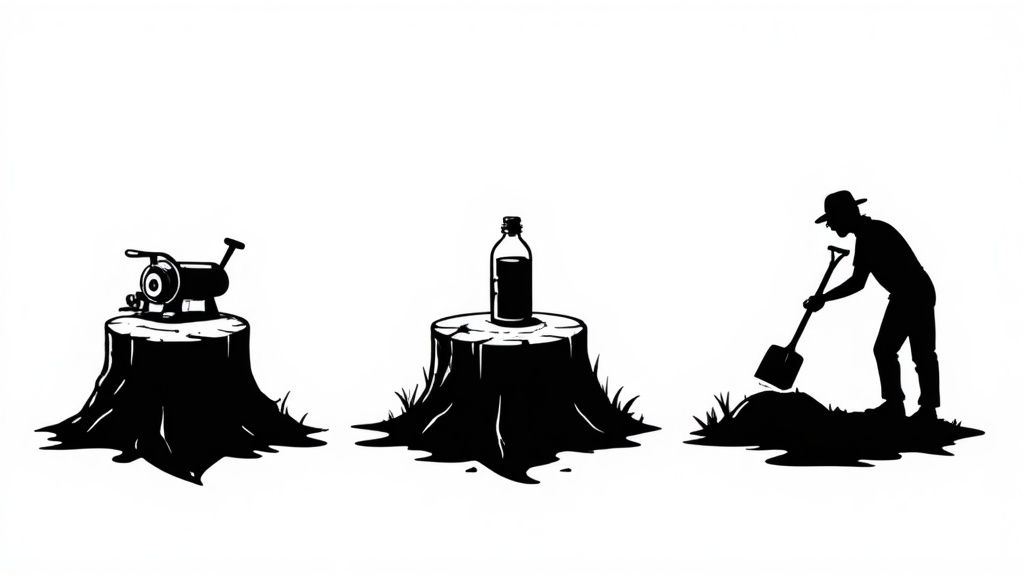
Once you've decided that stump has to go, the next big question is how. There isn't a single "best" way to tackle it; the right choice really boils down to your budget, how quickly you need it gone, and how much sweat you're willing to put in.
Let's walk through the three main paths homeowners take when they're looking up "tree stump removal near me": bringing in the pros for stump grinding, trying the DIY chemical route, and the good old-fashioned manual digging approach. Each has its place, but they are definitely not created equal.
Professional Stump Grinding: The Fast and Final Solution
For most people, this is the way to go. Professional stump grinding uses a powerful, specialized machine to literally chew the stump and its major roots into small wood chips, grinding everything down well below the surface of your lawn. It’s the clean slate you're looking for.
This method is incredibly efficient. A job that might take you an entire weekend of back-breaking labor is often wrapped up in less than an hour by an experienced crew. They handle all the safety gear and the cleanup, leaving you with nothing but a level patch of ground ready for some fresh topsoil and grass seed.
The machinery is the real game-changer here. The stump grinder market is a serious industry, projected to be worth around USD 100 million globally by 2025. This growth isn't just from homeowners; land clearing for new construction makes up about 57% of the demand. That's a lot of stumps! You can dig deeper into the stats on this equipment from Business Research Insights.
DIY Chemical Removal: The Waiting Game
If you're not in any rush and want a low-effort, budget-friendly option, chemical stump removers might catch your eye. The process involves drilling several holes into the stump and pouring in chemicals (usually potassium nitrate) to speed up the natural rotting process.
But here's the reality check on this method:
- It takes a long, long time. We're not talking weeks. You won't see real results for months, and it can easily take over a year for the stump to get soft enough to break apart with an axe.
- It demands patience. This is a slow burn, sometimes literally. Once the wood is rotted, some methods suggest using kerosene to burn out what's left—a step that comes with its own safety risks and might not even be allowed in areas like Cumming or Milton.
- It’s not entirely "hands-off." You still have to do the initial drilling and come back much later to hack away and remove the softened, rotted wood.
While chemical removal is cheap upfront, it ties up a piece of your yard for a very long time. It’s a viable option only if you have no immediate plans for the area and are comfortable with the lengthy timeline.
Manual Removal: The Ultimate DIY Challenge
The third route is rolling up your sleeves and removing the stump by hand with tools like a shovel, axe, and a digging bar. Let's be clear: this approach is the most physically demanding by a landslide and is only practical for very small, shallow-rooted stumps from something like a small shrub.
Trying to manually remove a mature tree stump is an exhausting battle. You'll spend hours, maybe even days, digging a huge trench around the stump just to expose the roots. Then you have to chop through them one by one before trying to pry the whole thing out of the ground. You'll save money on a pro or chemicals, but you'll pay for it in sweat and time.
Thinking about renting heavy equipment yourself? It's important to know what you're getting into. For a closer look, check out our guide on stump grinding equipment rental to see what's involved.
To make the decision a bit easier, let's put these methods side-by-side.
Comparing Your Stump Removal Method Options
| Method | Average Time | Typical Cost | Effort Level | Best For |
|---|---|---|---|---|
| Professional Grinding | 1-3 hours | Moderate to High | Low | Large stumps, fast results, and ensuring complete removal below ground level. |
| Chemical Removal | 6-12+ months | Low | Low (but requires patience) | Small stumps in non-critical areas where time is not a factor. |
| Manual Removal | 1-2+ days | Very Low (tool cost only) | Very High | Very small, shallow-rooted stumps for those who don't mind intense physical labor. |
Ultimately, comparing these methods should clarify which path best aligns with your goals for getting your yard back.
How Professional Stump Grinding Works
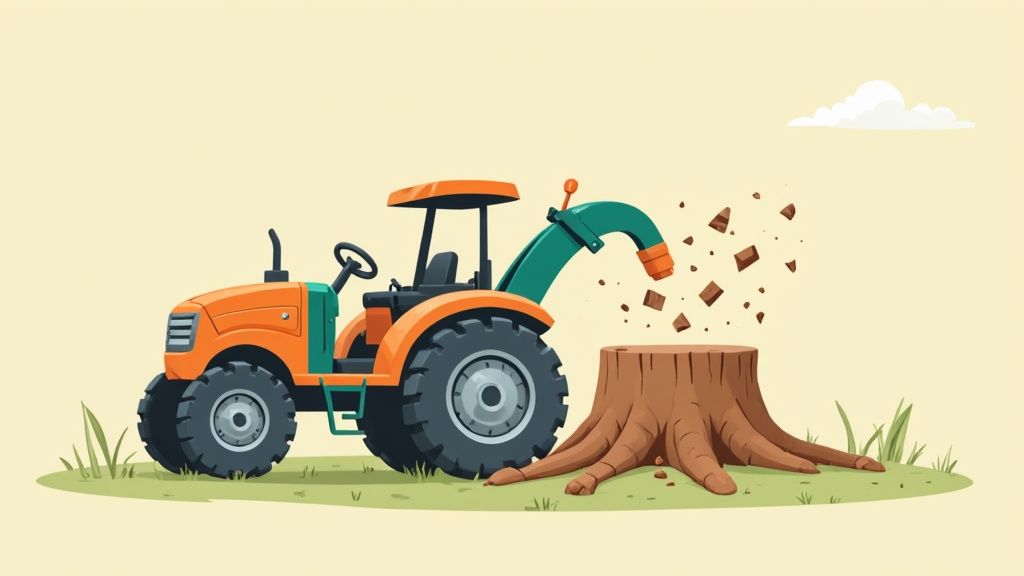
For most homeowners, bringing in a professional crew is the fastest, cleanest way to reclaim their yard from that lingering stump. It's a surprisingly quick process, but knowing what to expect from start to finish can give you real peace of mind.
Let's pull back the curtain on how the pros get it done. The entire experience is designed to be as simple and non-disruptive as possible, starting with a simple call for a quote.
The Initial Consultation And Site Prep
Before a single wood chip flies, any reputable tree service will start with a thorough assessment. We're not just looking at the stump itself; we're evaluating the whole picture. An expert from a team like Richmond Tree Experts GA will walk the property to check access points, ensuring they can get their equipment in without tearing up your lawn or garden beds.
A non-negotiable first step is locating and marking all underground utility lines. Hitting a buried gas, water, or electrical line is more than just an inconvenience—it's a serious safety hazard. That's why professional services always coordinate with the 811 "Call Before You Dig" service to have every line flagged or painted.
This safety-first approach is an absolute must. An experienced crew will never start grinding without knowing exactly where every underground line is. It's about protecting their team, your home, and your property.
This planning phase is what makes the actual grinding day go off without a hitch. In fact, this commitment to safety and efficiency is a big reason the professional tree services industry is projected to hit $39.5 billion by 2025.
The Grinding Process In Action
On the day of the job, the crew rolls in with a serious piece of machinery: a high-powered stump grinder. This machine has a rapidly spinning cutting wheel armed with incredibly tough carbide teeth.
The operator skillfully guides this wheel back and forth across the stump, methodically chewing away at the wood layer by layer.
But they don't just take it down to ground level. The industry standard is to grind the stump and its main anchor roots down to a depth of 6 to 12 inches below the surface. This is deep enough to completely remove the hazard and prepare the ground for whatever you have planned next.
What’s left is a pile of fresh wood chips mixed with soil right where the stump used to be. For a typical stump, this whole process often takes less than an hour.
Cleanup And Your Yard's New Beginning
Once the stump is gone, the final step is cleanup. The leftover mix of wood chips and soil—often called "grindings"—naturally fills the hole. A good crew will then rake the area level, leaving you with a smooth, tidy surface.
You've got a couple of choices for what to do with the leftover wood chips:
- Use them as mulch: These fresh grindings are perfect for spreading around your garden beds or trees. They help hold in moisture and keep weeds down.
- Have them hauled away: If you don't have a use for the mulch, most companies offer a haul-away service. This usually comes as an optional add-on, so just be sure to ask for it in your quote.
After the crew packs up and leaves, the spot is ready for a fresh start. You can immediately cover it with topsoil and grass seed, plant a new flower bed, or just enjoy the extra space.
By hiring a pro, you skip all the back-breaking labor and get a clean, usable patch of your yard back in just a few hours. For a deeper dive into the equipment and methods we use, check out our guide on professional stump grinding services.
So, What Does Stump Removal Actually Cost?
When you're staring at an ugly stump in your yard and typing "tree stump removal near me" into your phone, the big question is always about the price. How much is this really going to set you back? The honest answer is: it depends. There’s no magic, one-size-fits-all price tag for stump removal.
Think of it like calling a mechanic—they can't give you a firm price until they pop the hood. In the same way, we need to look at a few key things about your specific stump before we can give you a solid, fair estimate. A quick, simple job might only be around $100, but a massive, stubborn stump could push the cost closer to $500 or even more.
What Drives The Price Of Stump Grinding
The number one factor that shapes your quote is, you guessed it, the size of the stump. Most tree service companies, including ours, base the price on the diameter of the stump at its widest point right at the ground. A little 12-inch pine stump is a walk in the park compared to a monster 48-inch oak that's been putting down roots for half a century.
But it’s not just about size. The type of tree is a huge deal. Hardwoods like oak, maple, and hickory are incredibly dense and put up a real fight against the grinder. Softwoods, such as pine or sweetgum, are much easier to chew through. Grinding a hardwood means more time on the job and more wear and tear on our equipment, which naturally bumps up the price.
It's a common mistake to think all stumps are the same. We've seen old, gnarled hardwood stumps take double the time to grind compared to a softwood stump of the exact same size. That difference in effort is always reflected in the final cost.
Another thing we always have to consider is accessibility. How easy is it for us to get our heavy-duty grinder to the stump? If it's sitting out in the open in an Alpharetta front yard, that's simple. But if it’s tucked into a tight corner of a Roswell backyard, behind a narrow gate and surrounded by prized rose bushes, that’s a different story. That kind of job requires a lot more finesse, time, and careful maneuvering.
Other Services That Can Affect Your Quote
The standard stump grinding service will take the stump down below the surface, but a few other services can be added on, which will adjust the final bill. Knowing what these are helps you get exactly the service you need without paying for things you don't.
- Grinding Depth: We typically grind down 6-8 inches below the soil line. That’s plenty deep for growing grass. But if you’re planning to plant a new tree or a garden with deep roots, you might need us to go down 12 inches or more. That extra depth takes more time and adds to the cost.
- Surface Root Grinding: Those big, ugly roots snaking across your lawn are often treated as a separate task. Grinding them down in addition to the main stump is extra work, so it will be itemized on your quote.
- Chip Haul-Away: Grinding creates a big pile of wood chips. A lot of our clients love to use this as free mulch for their garden beds. But if you don't want to deal with the cleanup, we can haul all of it away for you for an additional fee.
To make it even clearer, here's a quick look at the variables that go into building your stump removal quote.
Key Factors That Influence Your Stump Removal Quote
| Cost Factor | Description | Impact on Price (Low/Medium/High) |
|---|---|---|
| Stump Diameter | The width of the stump measured at its widest point. This is the biggest driver of cost. | High |
| Wood Type | Dense hardwoods (like oak) take much longer to grind than softer woods (like pine). | Medium |
| Site Accessibility | How easy it is to maneuver the grinding machine to the stump. Fences, slopes, or tight spaces increase the cost. | Medium |
| Chip Removal | The optional service of having us clean up and haul away the wood chips after grinding. | Low to Medium |
| Root Grinding | Grinding down large surface roots that extend from the main stump across your yard. | Low to Medium |
By keeping these factors in mind, you can look at an estimate from a company like Richmond Tree Experts GA and know exactly what you’re paying for. It gives you the power to ask the right questions and feel confident you’re getting a fair price for a job done right.
Hiring The Right Local Tree Service
Once you’ve decided that professional grinding is the way to go, your next big step is finding the right crew for the job. A quick Google search for "tree stump removal near me" will pull up plenty of options, but that's just the start. Honestly, choosing the right local company is the single most important decision you'll make for a smooth, safe, and headache-free experience.
The gap between a seasoned pro and a fly-by-night operator is massive. One leaves your yard looking fantastic and ready for whatever's next, while the other can cause a whole new set of problems, from a torn-up lawn to unexpected fees on the final bill. Taking a little extra time to check out your options will pay off, believe me. It gives you the peace of mind that your property is in good hands.
Your Vetting Checklist: The Non-Negotiables
Before you even start comparing prices, there are a few things that any legitimate tree service should have, no questions asked. Think of these as the absolute baseline qualifications. If a company gets cagey about any of these, just move on to the next one on your list.
Here’s what you need to verify:
- Proof of Insurance: This is the big one. The company absolutely must have liability insurance to cover any damage to your property and workers' compensation in case one of their crew gets hurt on your land. Ask to see the actual insurance certificate—don't just take their word for it.
- Professional Credentials: You want to see signs of real expertise. A huge green flag is having an ISA (International Society of Arboriculture) Certified Arborist on the team. This isn't just a fancy title; it shows a serious commitment to the craft and a deep understanding of tree health and safety.
- Recent Online Reviews: See what people in your area, whether it's Marietta or Johns Creek, are saying. Check out recent reviews on Google and Yelp. They'll give you an unfiltered look at how a company operates—their punctuality, professionalism, and how well they clean up.
Any company that’s proud of its work will be completely transparent about its credentials and insurance. If you get any pushback or vague answers when you ask for proof, that’s a major red flag.
The Power Of A Written Estimate
A quote over the phone is fine for a ballpark figure, but it’s not a binding agreement. A true professional will always insist on coming out to see the stump in person before giving you a detailed, written estimate. This document is your best protection against misunderstandings and surprise costs down the road.
That written estimate should spell out every single detail of the job. It needs to specify which stump (or stumps) they're grinding, how deep they're going, if they're tackling surface roots, and whether hauling away the wood chips is included in the final price. This clarity protects both you and the company, making sure everyone is on the same page. It's a standard practice for reputable teams, and you can see more about how we handle things on our local tree services near me page.
Asking The Right Questions
With a written estimate in hand, you’re in a great position to make a smart choice. But before you give the final okay, it’s worth asking a few more questions. The answers can tell you a lot about their process and how much they care about doing quality work.
Try asking these practical questions:
- "What kind of equipment will you be using?" This is important. If you have a narrow gate or delicate landscaping, you need to know if their grinder can actually get to the stump without causing damage.
- "How will you protect my lawn and surrounding landscape?" An experienced crew has a plan for this. They often use protective mats or specific techniques to keep your grass and garden beds from getting torn up.
- "What does your cleanup process involve?" A good company doesn't just grind and go. They should rake the area, manage the wood chips according to your agreement, and leave your yard looking tidy.
When you're searching for tree stump removal near me, you also want to make sure the company actually serves your specific area. For example, a quality business like Fulton Junk Removal's Atlanta service area clearly shows the neighborhoods they operate in. The same goes for tree services. A company that's truly local and knows your area—whether it's Roswell or Forsyth County—is almost always a better bet. These extra steps will help you sidestep the unqualified operators and hire a pro you can trust to get the job done right the first time.
Common Questions About Stump Removal
So, you've decided it's finally time to deal with that old stump in the yard. It's a common project, but one that brings up a lot of questions. You're not just searching for "tree stump removal near me"; you want to know what the job actually involves, how long it takes, and what your yard will look like afterward.
To give you a better picture, we've pulled together the most frequent questions our team at Richmond Tree Experts GA gets from homeowners. Getting these answers upfront will help you know exactly what to expect.
How Long Does Professional Stump Grinding Take?
This is the first thing most people ask, and the answer is usually a pleasant surprise. Many homeowners imagine a huge, all-day project, but that’s rarely the case.
For an average-sized stump—let's say between 12 and 24 inches across—our crew can typically have the entire job wrapped up in 30 to 90 minutes. Even those big, stubborn hardwood stumps are usually gone in just a couple of hours. The whole process is incredibly efficient, designed to get in and out with minimal disruption to your day.
What Happens To The Wood Chips After Grinding?
Once the stump is ground down, you'll have a pile of wood chips and soil where it used to be. You’ve got a few great, practical options for what to do with them.
- Free Garden Mulch: Those fresh wood chips make fantastic organic mulch for garden beds or around other trees. They do a wonderful job of holding in moisture and keeping weeds down.
- Compost Booster: The chips are a perfect "brown" material for your compost pile, adding valuable carbon to balance out "green" stuff like grass clippings and kitchen scraps.
- We'll Haul It Away: If you’d rather not deal with the chips, no problem at all. We offer a haul-away service to clear everything out, leaving your yard completely tidy. Just let us know, and we can add it to the job.
Will A Stump Grinder Damage My Lawn?
That’s a completely fair question—the last thing you want is a torn-up lawn. A professional crew knows that protecting your property is just as important as removing the stump.
While the equipment is heavy, experienced operators know how to minimize the impact. We often lay down protective mats to shield the turf and keep the work contained right around the stump. After the grinding is done, we backfill the hole and level the area, leaving you with a clean slate that’s ready for a bit of topsoil and grass seed. Any minor disturbance fades away quickly as new grass grows in.
Our goal is always to leave your yard looking better than when we arrived. A clean job site with minimal impact on the surrounding lawn is the mark of a true professional.
Should I Grind The Stump Or Remove The Whole Root System?
For pretty much every homeowner, stump grinding is the way to go. It's faster, more affordable, and far less destructive to your yard. Grinding takes the stump well below the surface, which is all you need to plant grass, flowers, or even a small shrub in its place.
Digging out the entire root system is a massive excavation project. Think backhoes and a whole lot of digging. It’s really only necessary for construction sites where a new foundation is being poured. For a residential yard, grinding gives you all the benefits without the huge mess and expense. The leftover roots simply rot away naturally underground over time, causing no harm.
Ready to finally get rid of that stump and reclaim your yard? The team at Richmond Tree Experts GA has the experience and equipment to handle any job safely and efficiently. Contact us today for a free, no-obligation quote.
Have a stump you want gone? Richmond Tree Experts has worked on Marietta and Metro Atlanta trees since 1985, and every job is looked at by an ISA Certified Arborist before it is priced. Start with stump grinding, or see everything we do: tree removal, stump grinding and arborist services across Cobb, Fulton, Cherokee, Gwinnett and DeKalb counties (service areas).
Call (770) 974-3964, 7am to 11pm every day, or request an estimate online.

