

When people ask me for the single most important piece of tree pruning advice, my answer is always the same: it's all about the timing. You can have the best tools and the perfect technique, but if you prune at the wrong time of year, you're working against the tree, not with it.
The absolute best time to prune most trees is during their dormant season in late winter or early spring, right before the new season's growth begins to emerge. Pruning during this window minimizes stress on the tree, drastically reduces the risk of disease, and actually encourages a burst of healthy, vigorous growth once the weather warms up.
Think of it like this: pruning is a type of surgery for a tree. You wouldn't want to perform a major procedure on someone while they're running a marathon. You’d wait until they are resting and have the resources to heal properly. It’s the exact same principle for trees.
Understanding Your Tree's Annual Clock
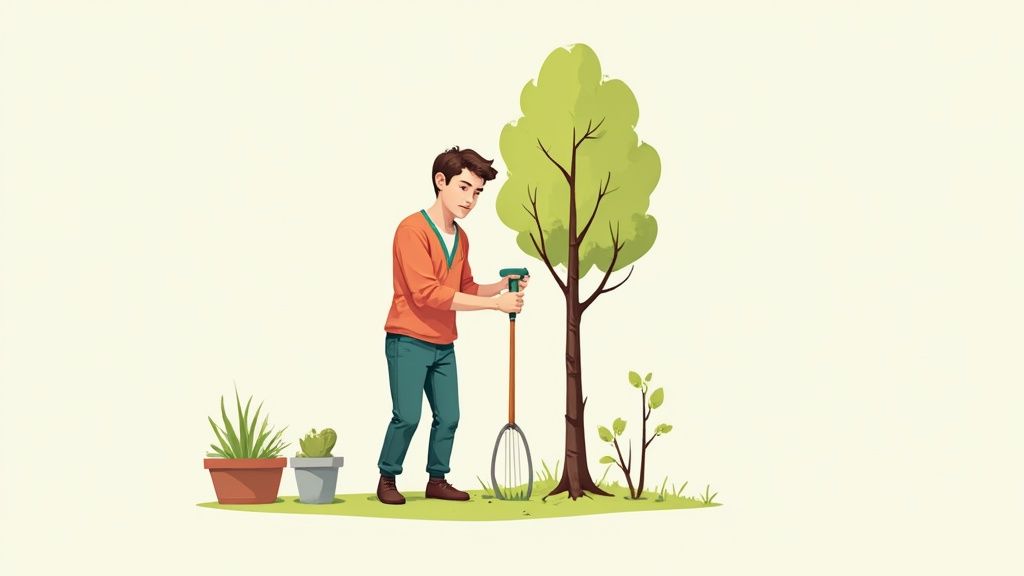
Before you even think about picking up a pair of loppers, it's crucial to get in sync with your tree's natural rhythm. Every tree operates on an annual cycle of growth and rest, and the secret to successful pruning is to work with that cycle.
At the heart of this cycle is dormancy—nature’s "safe mode" for trees during the cold winter months. Picture a tree as a busy factory. In spring and summer, that factory is churning out leaves, flowers, and fruit at full tilt. But in the winter, it wisely shuts down production to conserve energy and wait out the cold. This is its state of deep rest.
The Power of Dormant Pruning
Making your cuts while a tree is dormant is like performing that surgery while the patient is under anesthesia. It allows you to do significant work with minimal stress and shock to the system. The tree's sap flow is way down, which means fresh cuts "bleed" less and can start the healing process much more cleanly.
This timing gives you a few major advantages:
- Reduced Stress: Since the tree isn't actively trying to produce leaves or flowers, it can pour all its stored energy into healing those pruning wounds as soon as spring arrives.
- Lower Disease Risk: Most of the nasty fungi, bacteria, and insects that love to attack fresh tree wounds are completely inactive in the cold. You're essentially closing the door on potential infections.
- Clear Visibility: On deciduous trees, the bare branches give you an unobstructed view of the tree's entire structure. It's so much easier to spot and remove dead, damaged, or crossing limbs without a canopy of leaves in the way.
This isn't just a local tip; it's a global standard. Arborists and forestry experts everywhere agree that the dormant season is prime time for pruning most species. This window, which typically falls between January and early April in our climate, is the safest bet because pests and pathogens just aren't a threat in the cold.
A proper cut made during dormancy sets the stage for a powerful burst of growth in the spring. The tree responds to the pruning by pushing energy into the remaining buds, resulting in healthier, more robust branches and foliage.
Ultimately, getting this one concept right empowers you to make cuts that will strengthen your tree for years to come. It’s a foundational principle of great tree care.
Of course, a beautiful yard is more than just well-pruned trees. For more diverse landscaping tips, visit our blog.
Why Late Winter Is the Prime Pruning Season
If there's a gold standard for tree care, it's pruning during the dormant season. Making those precise cuts in late winter, just before the big spring growth spurt, is like giving your tree a strategic head start for the year ahead. It sets the stage for vigorous health and resilience.
The timing works perfectly with the tree's natural energy cycle. All winter, a tree's energy reserves are bunkered down in its root system, just waiting for the signal to push out new growth. When you prune during this quiet period, you’re essentially telling the tree where to send that energy—straight to healing the fresh cuts and producing strong new wood come spring.
Gaining a Clear Structural Advantage
One of the best, most practical reasons for winter pruning is the view. Once a deciduous tree drops its leaves, its entire underlying structure is on full display. This "x-ray" vision makes it incredibly easy for a professional to spot and correct problems that would be completely hidden otherwise.
You can finally see the tree's "bones," which allows for targeted improvements:
- Removing Crossed Limbs: It’s easy to spot branches that are rubbing against each other, creating wounds that are an open invitation for disease.
- Correcting Weak Joints: You can identify and remove branches with those narrow, V-shaped attachments that are notorious for failing under the weight of summer leaves or heavy storm winds.
- Eliminating Dead Wood: Dead or damaged branches stick out like a sore thumb without any foliage and can be removed to boost the tree's overall health and safety.
This kind of detailed structural work is often the main focus of professional tree trimming in Atlanta GA because it builds the foundation for a tree that is both safe and beautifully shaped for years to come.
Promoting Health and Vigor
Beyond just looking good, late winter pruning is a powerful tool for preventing disease and stimulating new growth. Fresh cuts made in cold, dry weather are far less appealing to the pests and fungal pathogens that are so active in the warmer, more humid months. This gives the tree plenty of time to start sealing its wounds before those threats wake up.
By making cuts before the buds break, you are essentially telling the tree exactly where to invest its spring energy. This results in a more robust canopy, better air circulation, and a stronger defense against common ailments.
This isn't just theory; we see it in the results. A controlled study on conifers showed that trees pruned in late winter had 15-25% higher shoot elongation and better needle retention than those pruned in the summer. Unfortunately, getting the timing wrong can have serious consequences. Improper pruning schedules are estimated to account for a staggering 30% of tree decline cases in urban settings. Proactive, well-timed care not only strengthens your trees but also helps you avoid costly problems down the road.
Navigating Spring and Summer Pruning Exceptions
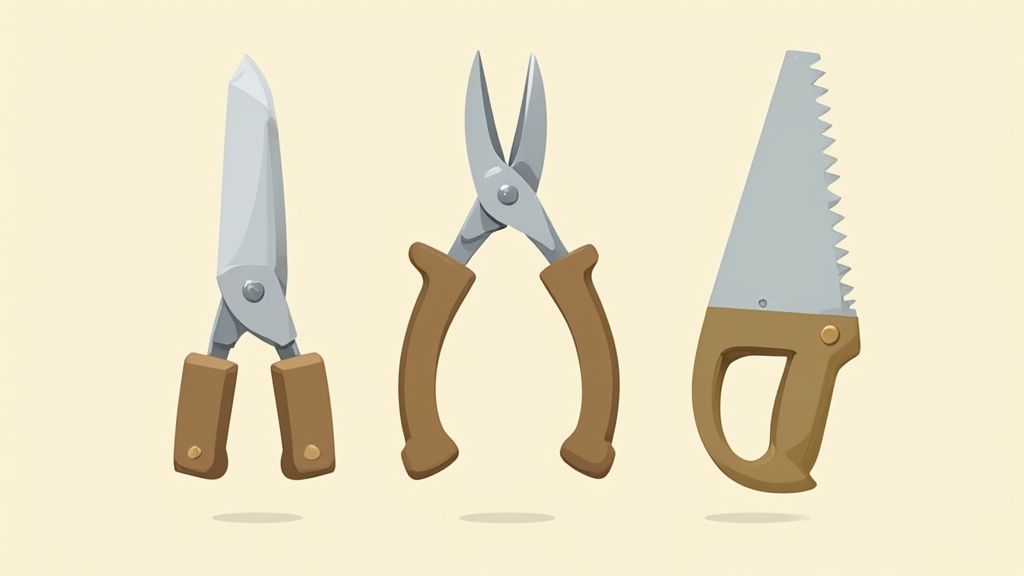
While late winter is the undisputed champion for major structural pruning, some rules are made to be broken—or at least adjusted. The best time to prune isn't always during dormancy, especially when you're trying to preserve a spectacular spring flower show or rein in wild summer growth.
Understanding these exceptions is the key to getting the results you want without accidentally harming your trees. Pruning during the active growing season requires a lighter touch and a clear goal, shifting from heavy structural work to strategic, targeted trimming.
Protecting Spring Blossoms
Ever wonder why some flowering trees, like lilacs, forsythias, or magnolias, should be pruned right after they put on their big show? The answer is all about where they form their flower buds. These trees are what we call "old wood" bloomers, which means they set the flower buds for next year's blooms during the previous summer or fall.
- The Golden Rule: If you prune these trees in the winter, you’re unknowingly snipping off all of next spring’s beautiful blossoms. It's a common and heartbreaking mistake.
- The Right Timing: The best approach is to prune them within a few weeks after their flowers have faded. This gives the tree the entire growing season to recover and produce the new wood that will carry the following year's blooms.
By waiting until after the floral display is over, you get to enjoy the full beauty of your tree and still have plenty of time to shape it up for the season ahead.
Strategic Summer Pruning
Summer pruning is less about structure and more about control and refinement. During this high-energy season, a tree is working overtime to produce as much leafy growth as it can through photosynthesis. A little light pruning can help direct all that energy where you want it to go.
This approach is perfect for a few specific tasks:
- Removing Unwanted Growth: Summer is the perfect time to get rid of suckers (those pesky shoots popping up from the base of the tree) and vigorous water sprouts (the fast-growing vertical shoots on branches). These growths are energy thieves and can be easily snipped off.
- Light Shaping: You can also do some minor shaping on young trees to guide their growth. This is often better than winter pruning, which can sometimes stimulate an overly aggressive growth spurt you didn't want.
But you have to be careful here—moderation is critical. Removing more than 10% of a tree's canopy in the summer can seriously hinder its ability to make food, leading to stress and weakness. Think of it as a light haircut, not a major overhaul. Summer cuts should always be minimal and purposeful.
A Pruning Guide for Different Tree Types
A one-size-fits-all approach to pruning just doesn't work. Think about it—just as different plants need specific amounts of sun and water, various tree types have their own unique schedules for when they respond best to a trim. Applying the right technique at the right time is the real secret to a healthy, beautiful, and productive tree.
This guide breaks down pruning strategies by tree type, giving you the confidence to make the right cuts.
Deciduous Shade Trees
Deciduous trees like oaks, maples, lindens, and elms are best pruned during their dormant season in late winter. With their branches completely bare, it’s much easier to see the tree’s entire structure. This makes it the perfect time to spot and fix problems like crossed limbs or weak V-shaped junctions before they become a bigger issue.
Winter pruning also encourages a burst of vigorous new growth in the spring. This helps the tree heal its wounds quickly and develop a strong, full canopy for the summer.
Fruit Trees
For trees like apples, pears, and cherries, you'll want to schedule your pruning for late winter or very early spring, right before they start to bud. When you prune during dormancy, you’re essentially directing the tree's stored energy into producing high-quality blossoms, which leads to a bigger, healthier fruit harvest.
This isn’t just a hunch; it's backed by decades of horticultural practice. Landmark European studies found that winter pruning fruit trees could boost yields by up to 30% compared to trimming them in the summer. You can read more about these horticultural findings and see how they’ve shaped modern tree care standards.
By making precise cuts in the winter, you're not just shaping the tree; you're setting the stage for a more abundant and delicious harvest later in the year.
Flowering Ornamental Trees
Flowering trees can be a bit trickier because their pruning schedule depends entirely on when they bloom. They generally fall into two main categories:
- Trees that bloom on old wood (like magnolias, dogwoods, and forsythias) form their flower buds on last year's growth. To avoid cutting off all those beautiful blooms, you should prune these trees immediately after they finish flowering in the spring.
- Trees that bloom on new wood (like crape myrtles and Rose of Sharon) produce their flowers on the current season's growth. These can be safely pruned in late winter or early spring before they really start growing.
Evergreen and Conifer Trees
Evergreens such as pines, spruces, and firs typically need much less pruning than their deciduous cousins. The main goal here is usually just to maintain their natural form and snip out any dead, damaged, or diseased branches.
Light pruning can be done almost anytime, but the best window for minor shaping is late winter or early spring before new growth kicks in. You’ll want to avoid heavy pruning, though, as many conifers can't regrow from old wood if you cut back too far.
To help you keep track, here's a quick reference table for some of the most common trees.
Pruning Calendar by Tree Type
| Tree Type | Best Pruning Time | Key Considerations |
|---|---|---|
| Deciduous Shade Trees (Oak, Maple) | Late winter (dormant) | Easy to see branch structure; promotes strong spring growth. |
| Fruit Trees (Apple, Cherry) | Late winter/early spring | Boosts fruit yield and quality by directing energy to buds. |
| Early-Blooming Ornamentals (Magnolia) | Spring, after flowering | Pruning before they bloom will remove the season's flowers. |
| Late-Blooming Ornamentals (Crape Myrtle) | Late winter/early spring | Blooms on new growth, so winter pruning is safe and effective. |
| Evergreens & Conifers (Pine, Spruce) | Late winter/early spring | Requires minimal pruning; avoid cutting back into old wood. |
This calendar should give you a solid starting point for planning your pruning tasks throughout the year.
The infographic below offers a great visual comparison of the biological impacts of pruning during a tree's dormant season versus its active growing season.
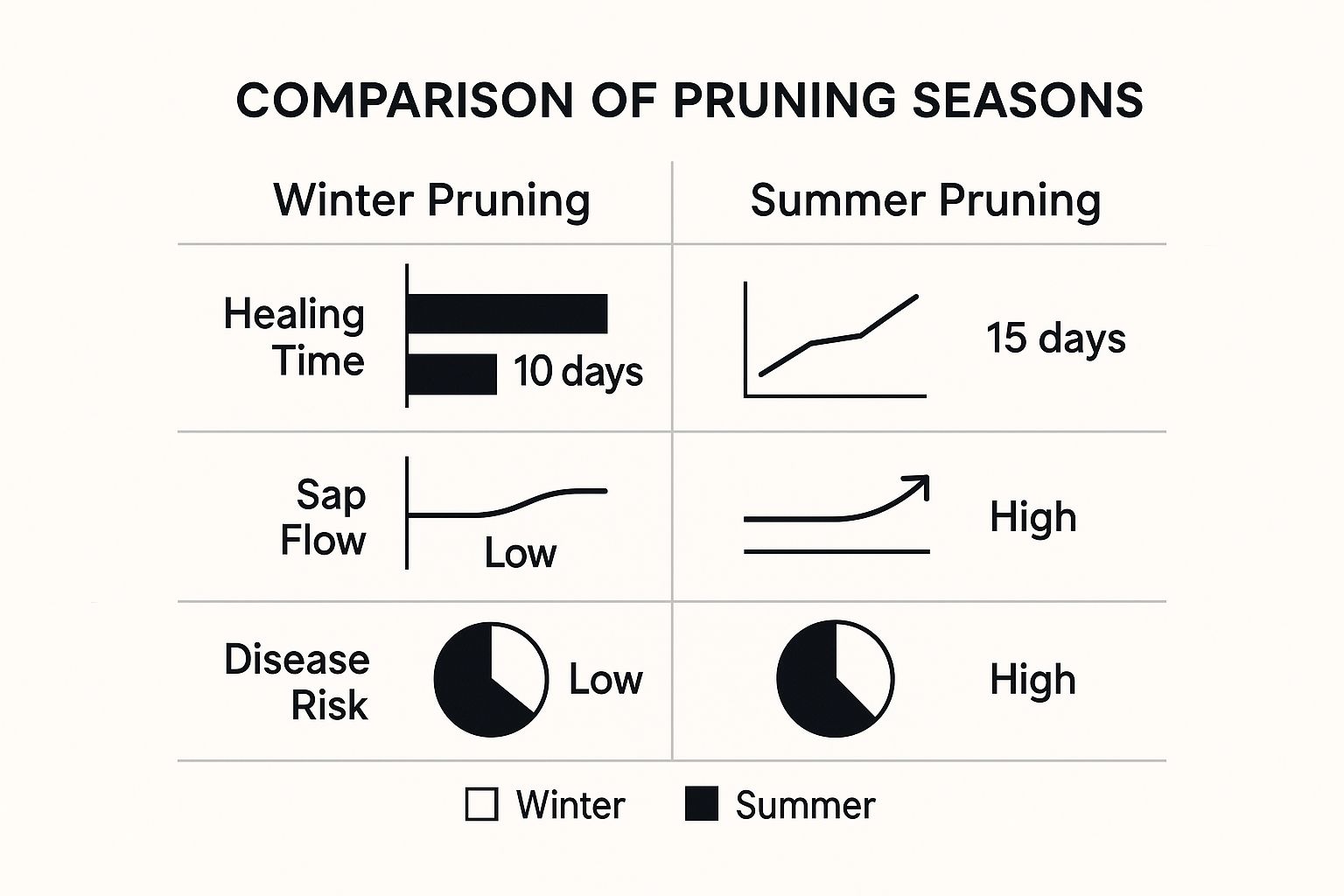
As you can see, winter pruning gives trees a clear advantage by promoting faster healing while minimizing sap loss and the risk of disease.
Common Pruning Mistakes That Harm Trees
Knowing when to prune is a massive step, but knowing what not to do is just as important. Even if your heart is in the right place, a few bad cuts can cripple a tree for years, roll out the welcome mat for disease, or even turn a sturdy tree into a yard hazard.
Let's dive into the mistakes we see all too often.
The Disaster of Tree Topping
One of the worst things you can do to a tree is topping. It’s a drastic, damaging practice where the entire top of a tree is indiscriminately chopped off, usually to shrink it down. It might seem like a quick fix for a tree that’s gotten too big for its space, but the results are disastrous.
Topping forces the tree to sprout a mess of weak, vertical shoots right below the cut. These shoots grow incredibly fast, but they're terribly attached to the main limb. Come the first big storm, they're far more likely to snap off and cause damage than the original branches ever were. It creates a bigger problem than it solves.
Death by a Thousand (Bad) Cuts
Beyond the brute force of topping, the way you make even a single cut can have huge consequences. Two very specific mistakes can leave a tree unable to heal itself, opening the door for pests and rot to move in.
- Leaving Stubs: When you cut a branch too far out from the trunk, you leave a little peg or stub behind. The tree has no way to seal over that wound, so the stub just sits there and rots. That decay doesn't stop at the stub, either—it can creep right down into the trunk, compromising the entire tree's structure over time.
- Making Flush Cuts: On the other end of the spectrum, cutting a branch perfectly flush against the trunk is just as bad. Doing this slices right through the branch collar—that slightly swollen ring of tissue where the branch meets the trunk. This collar is packed with specialized cells the tree needs to close off the wound. Without it, the healing process is crippled.
A proper pruning cut is a work of precision. The sweet spot is just outside the branch collar, giving the tree everything it needs to form a protective seal and heal cleanly.
The Problem with Overdoing It
A little too much enthusiasm can lead to another common mistake: over-pruning. As a hard and fast rule, you should never remove more than 25% of a tree’s foliage in one year. Taking off too many leaves is like taking away a factory's power supply—it hobbles the tree's ability to photosynthesize and create food.
This can jolt the tree into a state of shock, weakening its natural defenses and making it an easy target. Those pruning wounds, especially if they're not made correctly, become gaping entry points for all sorts of pathogens. You can learn more about what to look for in our tree disease identification guide.
By steering clear of these common pitfalls, you can ensure your pruning efforts actually help your trees, rather than accidentally hurting them.
Your Frequently Asked Pruning Questions
Even after you get the hang of seasonal timing, it’s normal to have a few more questions pop up when you’re standing there, shears in hand. Getting a straight answer to these common concerns is the last step to pruning with real confidence.
We get these questions all the time from homeowners, so let’s clear them up with some quick, expert advice.
Can I Prune a Tree in the Fall?
It might seem like the perfect time to tidy up the yard, but we strongly advise against pruning most trees in the fall. Making fresh cuts as a tree is heading into dormancy can actually signal it to push out a late burst of new growth.
That tender new foliage has no chance to "harden off" before the first freeze hits, which almost always leads to winter damage. On top of that, many types of decay-causing fungi love the cool, damp conditions of autumn and release their spores then. A fresh pruning wound is like an open door for infection. It’s always safer to wait until the tree is fully dormant in late winter.
Think of it this way: fall is when trees need to be storing energy for winter, not trying to heal from fresh wounds. A little patience pays off big time for your tree's health.
How Much Can I Safely Prune at Once?
This is a huge one, and the cardinal rule is to not get carried away. As a solid rule of thumb, you should never remove more than 25% of a tree’s living canopy in a single year. Taking off more than that can cripple the tree's ability to make food through photosynthesis, sending it into a state of shock.
For a mature, established tree, you need to be even more conservative—sticking closer to 10-15% is best. If a tree needs a major structural overhaul, the only right way to do it is to spread the work out over a few years. This gradual approach lets the tree recover and adapt without being pushed to its limits.
Should I Apply Pruning Sealer to the Cuts?
We hear this question a lot, and it’s usually based on some old-school advice that’s been passed down for generations. But modern tree science gives us a very clear answer: no. Research has shown that pruning sealers, tars, and wound paints are not just a waste of money—they can actually hurt the tree.
These products are supposed to seal the wound, but what they really do is trap moisture right up against the wood. This creates a dark, damp environment under the sealer, which is the absolute perfect breeding ground for fungal decay and disease.
Trees have their own amazing, built-in system for healing. They form a protective barrier of cells called a callus, which naturally seals off the wound from any threats. The best thing you can do is make a clean, proper cut just outside the branch collar and let the tree take care of itself.
For any pruning job that feels too big to handle, you can trust the certified arborists at Richmond Tree Experts GA to get it done right. Contact us today for a professional assessment of your trees.
Need a tree taken down safely? Richmond Tree Experts has worked on Marietta and Metro Atlanta trees since 1985, and every job is looked at by an ISA Certified Arborist before it is priced. Start with tree removal, or see everything we do: tree removal, stump grinding and arborist services across Cobb, Fulton, Cherokee, Gwinnett and DeKalb counties (service areas).
Call (770) 974-3964, 7am to 11pm every day, or request an estimate online.

