

For homeowners anywhere from Marietta to East Cobb, learning how to mulch trees correctly is one of the most powerful things you can do to protect your landscape investment. When done right, mulching conserves moisture through our blistering Georgia summers, insulates roots against sudden winter freezes, and helps break down that tough red clay over time. If your property in Marietta needs more than just mulch, Richmond Tree Experts offers professional tree services to keep your landscape safe and healthy.
Why Proper Mulching Matters for Marietta Trees
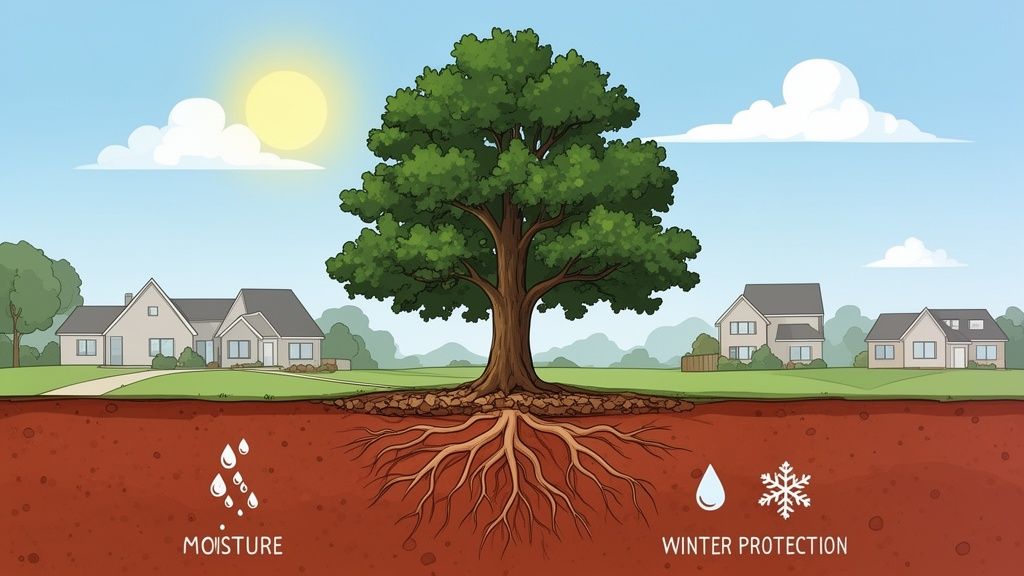
Mulching is far more than a cosmetic touch to make your yard look tidy—it’s a critical part of tree health, especially here in Cobb County. Our local conditions, from the heavy Georgia clay soil to the intense summer heat, put a lot of stress on the mature hardwoods and tall pine trees that give our neighborhoods their character. A proper mulch layer is your first line of defense against tree decline.
Think of a proper mulch layer as a protective blanket for a tree’s root system. It creates a stable, healthy environment where roots can thrive, shielded from the extreme temperature swings we get here in the Metro Atlanta area. For homeowners from Smyrna to Acworth, a good layer of mulch is one of the best proactive steps you can take for your trees' health.
The Dangers of Georgia Clay Soil in Marietta
Our region is famous for its dense, heavy Georgia clay. While it holds some minerals, this soil compacts incredibly easily, which can choke off a tree's access to the oxygen and water it needs to survive a Marietta summer. During a dry spell, that clay bakes into a brick-like state; during our summer thunderstorms, it can become a waterlogged mess that drowns roots.
A layer of organic mulch solves both problems. As it slowly breaks down, it adds crucial organic matter back into the soil, improving its structure and aeration. This process gradually makes the clay more hospitable for the fine feeder roots that absorb nutrients. It’s also a key strategy to prevent soil drying out too fast, ensuring your trees have a consistent source of moisture.
Benefits You’ll See in Your East Cobb Yard
When you apply mulch the right way, you’ll see tangible benefits for the trees on your East Cobb property. It’s not just about aesthetics; it directly boosts a tree’s vitality and resilience against storm damage.
Here’s what you can expect when you get it right:
- Improved Moisture Retention: Mulch acts like a lid, reducing evaporation from the soil surface. This means you'll need to water less, even in the middle of a hot Roswell summer.
- Weed Suppression: A solid two-to-three-inch layer of mulch blocks sunlight, stopping many common weeds from sprouting and competing with your tree for resources.
- Temperature Regulation: It keeps the soil cooler in the summer and warmer in the winter, protecting delicate roots from temperature shock common in Georgia.
- Protection from Damage: A mulch ring creates a clear visual "no-go zone," preventing nicks and wounds from lawnmowers and string trimmers—one of the most common injuries our arborists see in Vinings and Powder Springs subdivisions.
Ultimately, knowing how to mulch trees is a fundamental part of responsible homeownership in our area. It’s a direct investment in the health, safety, and beauty of your entire landscape.
Choosing the Right Mulch for Your Trees in Cobb County
Walking into a garden center can feel overwhelming. You’re faced with a wall of options, from deep brown hardwood to bright pine straw. For homeowners here in Marietta and across Cobb County, picking the right one isn't just about what looks best—it’s about what will genuinely help your trees thrive in our dense Georgia clay soil.
The right mulch makes a world of difference for the mature oaks, maples, and towering pines that define our local canopy.
Why Organic Mulch Is Best for Georgia Soil
The best choice for Marietta properties is almost always an organic mulch. This means it comes from a natural source and will break down over time, feeding the soil as it does. This process is critical for improving yards from Kennesaw to Smyrna, as the added organic matter helps aerate and enrich that compacted red clay.
Organic mulches act like a slow-release fertilizer, delivering nutrients right to the root zone. They also create a fantastic environment for beneficial microorganisms and earthworms—the tiny engines that build healthy soil. For our local trees, this is a long-term investment in their strength and vitality.
Here are a few of the most effective and popular choices we see in our area:
- Shredded Hardwood Bark: This is a fantastic, all-purpose mulch for most of the deciduous trees in East Cobb, like oaks and hickories. It’s heavy enough to stay put during our summer thunderstorms and does a great job of holding in moisture.
- Pine Straw: As anyone living in Northwest Atlanta knows, pine straw is everywhere. It’s the perfect choice for acid-loving species like pine trees, magnolias, and dogwoods. Its light, airy texture prevents soil compaction, and the needles interlock nicely, making it ideal for the sloped yards you see all over Roswell and Woodstock.
- Arborist Wood Chips: These are the unsung heroes of the mulching world. Made up of leaves, twigs, and wood, these chips are a nutritional powerhouse. They might not look as uniform as bagged mulch, but nothing beats them for improving long-term soil health for mature trees.
Expert Insight: Arborist wood chips are one of the best things you can possibly put over the root system of a large, established tree. They perfectly mimic the natural decomposition process you'd find on a forest floor, creating a rich, thriving environment that our native Georgia trees are built to love.
Comparing Common Mulch Types for Marietta, GA Trees
To help you make a confident choice, we’ve put together a straightforward comparison of the most common mulch options you'll find. Think about your specific trees, your landscape's needs, and our region's heavy clay soil.
If you’re trying to figure out where to source your materials, learning more about the best price on mulch can give you some great starting points.
Here’s a quick breakdown:
| Mulch Type | Best For | Pros | Cons |
|---|---|---|---|
| Pine Straw | Pines, Azaleas, Acid-Loving Trees | Lightweight, decomposes slowly, great for slopes, abundant in Georgia. | Can be too acidic for some plants, may need fluffing to prevent matting. |
| Shredded Hardwood Bark | Oaks, Maples, General Landscaping | Retains moisture well, stays in place, adds rich nutrients to clay soil. | Can compact over time, may harbor some pests if applied too thick. |
| Arborist Wood Chips | Large, mature trees, natural areas | Extremely high in nutrients, superb for long-term soil health, often low-cost. | Less uniform appearance, can temporarily tie up nitrogen if not aged. |
| Cypress Mulch | General Use | Repels some insects, decays very slowly. | Can be unsustainably sourced, may form a water-repellent crust. |
Picking the right material is the foundation of mulching properly. Your choice directly impacts your tree’s health, your soil’s future, and how much maintenance your yard will need down the road.
The Correct Mulching Technique for Marietta Yards
Getting your mulching technique right is just as crucial as picking the right material. For years, our certified arborists at Richmond Tree Experts have seen the fallout from improper application in yards all over Marietta and East Cobb. The good news? The correct method is straightforward and easy to remember once you get the hang of it.
Following the right steps ensures your trees get all the benefits of mulch without any of the damaging side effects we’re often called out to fix. It's all about working with our local environment, not against it, to support the health of your mature oaks, pines, and maples.
Prepare the Mulch Bed
Before you even think about spreading mulch, you need to prep the area around the base of your tree. A common shortcut we see in neighborhoods from Smyrna to Powder Springs is just dumping mulch on top of existing grass and weeds. This only creates problems down the line.
That grass and those weeds will just keep competing with your tree for water and nutrients, and they'll eventually poke right through the new mulch layer.
- Remove Turf and Weeds: Start by clearing a circle around the tree trunk. For a young tree, a 3-foot radius is a good start. For a massive, mature oak in a Roswell yard, you’ll want a much wider ring, extending as close to the tree’s drip line (the edge of its canopy) as you can. Use a spade or garden hoe to gently scrape away the turf, but be careful not to dig too deep and damage the tree's surface roots.
- Create a Clean Edge: Defining the edge of the bed gives your yard a clean, professional look and, more importantly, helps keep the mulch contained. A simple shallow trench dug along the perimeter is all it takes.
- Do Not Use Landscape Fabric: It’s tempting, but laying down landscape fabric to stop weeds often does more harm than good in our heavy Georgia clay. Over time, it compacts the soil, blocking the vital flow of water and oxygen to the roots. As the tree grows, the fabric can even end up girdling the trunk and weakening the tree before the next storm hits.
Apply the Donut, Not the Volcano
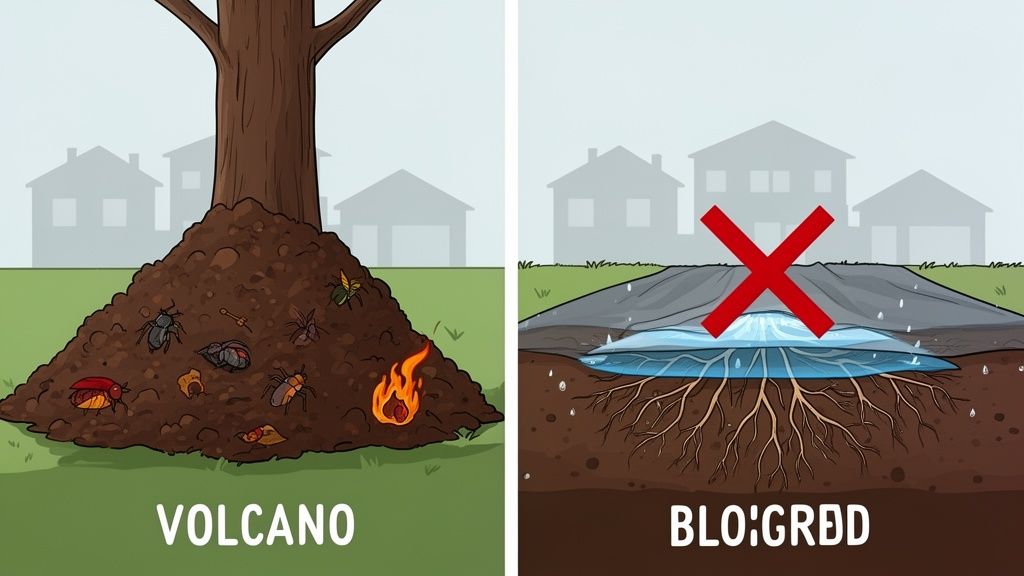
If you remember only one thing, make it this. We’ve all seen it: a huge cone of mulch piled high against a tree’s trunk, looking exactly like a volcano. While it might be a common sight, this practice is incredibly harmful and can lead to the slow decline and death of a tree.
The right way is to create a flat, wide ring that looks more like a donut than a cone. The center of the donut hole should be completely empty, leaving a clear space around the trunk. This simple technique is what protects the tree while delivering all the benefits you want from mulching.
Richmond Tree Experts Warning: The "mulch volcano" is one of the most destructive landscaping practices we see in Cobb County. It traps moisture right up against the bark, creating the perfect environment for trunk rot, fungal diseases, and insect infestations. It also encourages girdling roots to grow up into the mulch pile, which can eventually strangle the tree.
This simple process flow shows the top choices for our local trees.
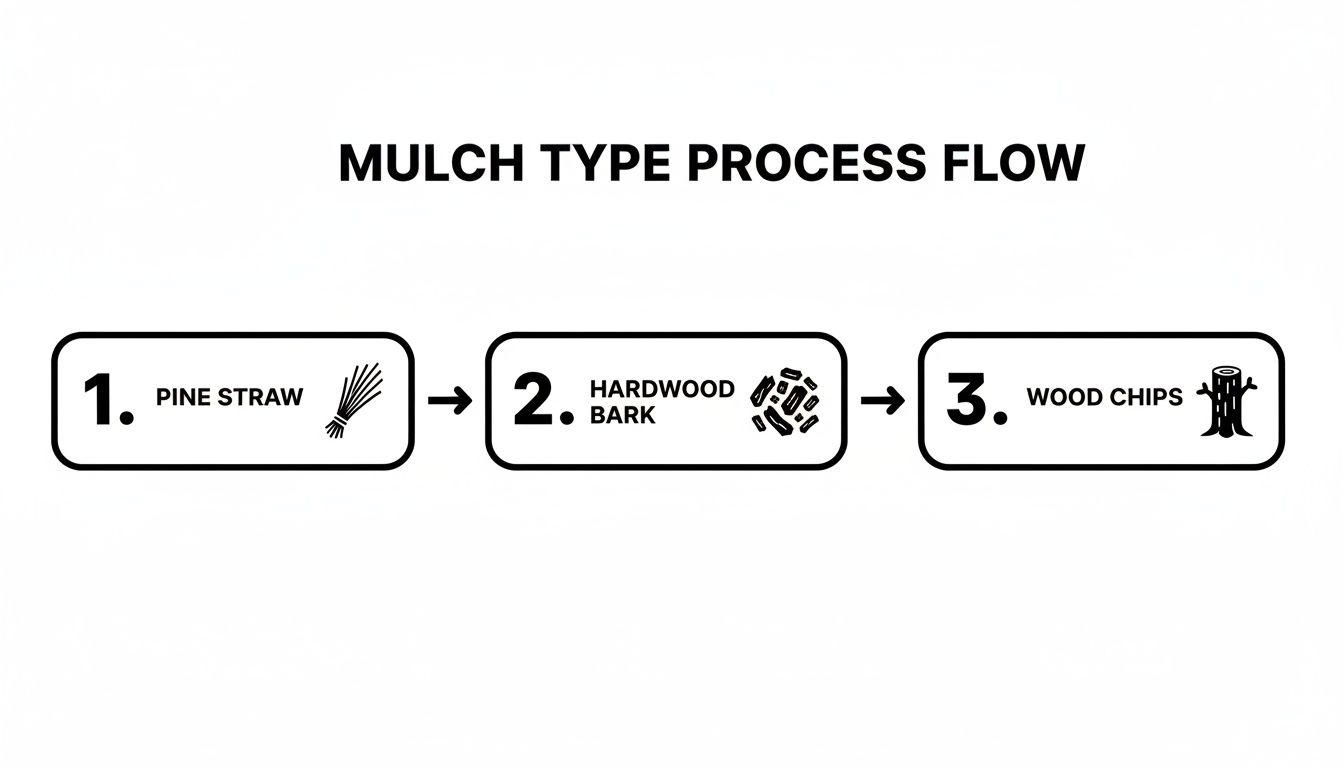
This visual guide highlights the most effective organic mulch options that our arborists recommend for enriching the dense clay soil common in Marietta and East Cobb.
The 3-3-3 Rule for Perfect Mulching in Marietta
To make things easy to remember, our team developed what we call the 3-3-3 Rule. It’s a simple guideline that works for just about every tree in yards across the Metro Atlanta area, from Acworth to Vinings.
- 3 Inches Deep: Apply a consistent layer of mulch that is no more than 3 inches deep. Any thinner, and it won't do a good job suppressing weeds. But go much deeper than 3-4 inches, and you can suffocate the roots by cutting off air and water, which is a major risk in our heavy clay soils.
- 3 Feet Wide (Minimum): For young trees, the mulch ring should extend out at least 3 feet from the trunk in all directions. For larger, established trees, a wider circle is always better. The goal is to cover as much of that critical root zone as you can.
- 3 Inches Away from the Trunk: This is the non-negotiable "donut hole." Pull all mulch back to leave a 3-inch gap between the mulch and the tree's trunk flare (where the trunk widens at the ground). This breathing room allows the bark to stay dry, preventing decay.
Applying mulch correctly is a small job that pays huge dividends for the health and longevity of your trees. If you're exploring different looks for your landscape, our guide on black wood chips offers some great ideas. By avoiding the dreaded mulch volcano and sticking to these simple rules, you’ll create a stable, beneficial environment that helps your trees stand strong for years to come.
Common Mulching Mistakes We See in Metro Atlanta
When our arborists are driving through neighborhoods in Marietta, East Cobb, or Roswell, we see the same things over and over again. They’re well-intentioned mistakes, but they’re slowly killing the beautiful mature trees that make our communities so special.
Honestly, knowing how to mulch trees properly is less about what you should do and more about what you absolutely shouldn't.
These aren’t just small cosmetic issues. From Powder Springs to Woodstock, we get called out for emergency tree removal that started with a simple bag of mulch—everything from severe trunk decay to a complete failure of the root system. Getting it right from the start saves a lot of headaches and money down the road.
The Dreaded "Mulch Volcano"
This one is, without a doubt, the most common and damaging mistake we see. You know the look: a huge cone of mulch piled high against the tree's trunk. Some landscapers think it looks neat and tidy, but it’s a death sentence for the tree.
Piling mulch against the bark traps a ton of moisture, which is a huge problem in Georgia’s already humid climate. The bark is meant to stay dry, but when it’s constantly damp, it starts to soften and rot. This creates the perfect entry point for wood-boring insects and fungal diseases that can compromise the tree’s entire structure.
The fix is simple: always pull the mulch away from the trunk. You want to see the "root flare" where the trunk widens at the ground. We recommend leaving a 3-to-6-inch gap between the base of the trunk and the start of your mulch ring. Think flat, wide donut, not a cone. This tiny change makes a massive difference by allowing air to circulate, keeping the bark healthy and dry.
Piling the Mulch On Too Deep
When it comes to mulch, more is definitely not better. We often see homeowners in Kennesaw and Roswell laying down a heavy blanket of mulch 6 to 8 inches deep, thinking they’re giving their trees some extra insulation. What they’re really doing is suffocating the roots.
Our heavy Georgia clay soil already has issues with drainage and aeration. A thick layer of mulch just makes it worse by blocking oxygen and water from reaching the fine feeder roots that need them most. This can lead to root rot, where the roots literally drown. It also tricks the roots into growing upward into the mulch itself, creating a weak, unstable root system that’s vulnerable to drying out in the summer heat.
Local Insight: For most properties in Cobb County, a mulch depth of 2 to 3 inches is perfect. That’s all you need to suppress weeds and hold in moisture without smothering the tree in our compacted soil.
How do you know if you have too much? Just use a rake or your hands to check the depth. If you’ve moved into a home with years of built-up, decomposed mulch, take the time to gently remove the excess. Your trees will thank you for it.
Using Landscape Fabric Under Mulch
It sounds like a great idea for permanent weed control, right? Wrong. Putting landscape fabric down before you mulch is a major long-term problem that our teams are constantly having to fix in yards from Smyrna to Vinings.
While it might block weeds for a season, it also blocks everything else. The fabric prevents organic mulches from breaking down and enriching the soil, which is one of the main benefits of mulching.
Worse, it acts as an impenetrable barrier, restricting the natural flow of oxygen and water into the root zone. Over time, roots will grow into and through the fabric, creating a tangled, girdled mess that’s impossible to fix without seriously damaging the tree.
Just skip the fabric entirely. A proper 2-to-3-inch layer of organic mulch is a fantastic natural weed barrier on its own. If you have some stubborn spots, a little bit of manual weeding is a far safer and more effective strategy for the long-term health of your trees.
A Seasonal Mulching Calendar for the Marietta Climate
A lot of folks think mulching is a one-and-done job. You spread it once and forget about it. But to really protect the mature oaks and towering pines we love in Marietta and East Cobb, your approach needs to be in sync with our distinct North Georgia seasons.
The timing of your mulch application makes a huge difference in how well your trees handle our heavy summer thunderstorms, humid heat waves, and the occasional surprise winter freeze. Thinking about mulching on a calendar basis helps you stay ahead of the game. It’s a proactive strategy that keeps the root systems of your landscape stable and healthy, from the subdivisions in Roswell to larger properties in Cobb County.
The Ideal Time for Spring Mulching in Marietta
For homeowners all across Cobb County, late spring is the perfect time for a fresh application of mulch. We’re talking about that sweet spot, usually in April or early May, right after the ground has warmed up but before the real summer heat kicks in.
Putting down a fresh, 2-to-3-inch layer during this window does a few critical things all at once:
- Locks in Moisture: It traps the spring rain in the soil, creating a reservoir your trees can tap into when the long, dry days of July and August hit.
- Keeps Roots Cool: That layer of mulch acts like insulation, shielding the soil from the intense Georgia sun and keeping the critical root zone from baking.
- Suppresses Weeds: A new layer smothers spring weed growth before it gets a chance to take hold and start competing with your tree for water and nutrients.
For the heavy Georgia clay soil we see everywhere from Smyrna to Acworth, a spring mulch application is non-negotiable. It stops the soil from turning into a hard, impenetrable brick during a dry spell, making sure water can still get down to the roots where it's needed most.
A Fall Checkup for Winter Protection
As the summer heat finally breaks and we head into fall, it’s time for a quick mulch checkup. You probably won't need to do a full reapplication, but a little maintenance in October or November will pay dividends when that first cold snap hits Metro Atlanta.
Take a walk around your property and really look at the mulch around your trees. Has it gotten compacted and matted down? Has it thinned out over the summer?
This is the perfect time to:
- Rake and Fluff: Grab a hard rake and gently fluff up any compacted mulch. This simple step helps restore its insulating properties and gets air circulating to the soil again.
- Top Off if Needed: If the mulch layer has worn down to less than 2 inches, go ahead and add a light top dressing to bring it back up to the right depth. This ensures the roots are insulated against sudden temperature drops and winter freezes.
This fall refresh is especially important for younger trees or newly planted specimens in areas like Kennesaw and Woodstock. Their root systems are less established and much more vulnerable to cold damage. By following this simple seasonal calendar, you give your trees the consistent, year-round support they need to thrive in our demanding Marietta climate.
When to Call a Professional for Your Marietta Tree Care
Knowing how to properly mulch your trees is a fantastic skill for any homeowner in Marietta. It’s a hands-on project that genuinely contributes to the health of your landscape. But mulching, as important as it is, is just one piece of the bigger tree care puzzle.
There are times when even the most perfect mulch ring can't fix a deeper issue. That’s the moment you need a professional, certified tree service. Big-time tree health diagnostics, dangerous tree removal, or storm damage cleanup aren't DIY jobs—they demand specialized equipment and an expert understanding of how our local trees react after the severe thunderstorms we get in Cobb County.
Situations Demanding an Expert in Marietta
Some tree care situations are just plain dangerous, putting your home and family at risk. These are the times when picking up the phone is the smartest, safest move you can make.
- Hazardous Tree Removal: Got a massive pine tree leaning a little too close to your house in a tight East Cobb subdivision? Or maybe a mature oak with heavy, dead branches looming over your driveway? This is absolutely not a DIY scenario. Our crews are equipped with the cranes and rigging needed to dismantle dangerous trees safely and precisely.
- Storm Damage Cleanup: After a classic Metro Atlanta thunderstorm or the remnants of a hurricane blows through, you can be left with a real mess—fallen limbs, split trunks, and trees that are dangerously unstable. We specialize in emergency storm response and are available 24/7 to get your property secured quickly.
- Structural Pruning: It takes an expert to correctly prune a large tree for better structure, remove hazardous limbs, or create safe clearance from power lines. Making the wrong cuts can cause permanent damage and create new hazards down the road.
For homeowners in Marietta, a crucial step in finding reliable experts involves understanding how reputable businesses connect with their community. Learning about strategies like local SEO for home services can help you identify established, trustworthy companies.
You can handle the mulch, but please let us handle the major risks. If you ever feel uncertain about a tree’s health or stability, our team of certified arborists can provide a thorough, honest assessment. We’ll help you understand the difference between routine care and a situation that requires professional intervention. To learn more, check out our insights on working with a certified arborist in the Atlanta area.
For professional tree removal, pruning, and health assessments in Marietta, call Richmond Tree Experts now.
FAQs: How to Mulch Trees in Marietta, GA
We get a lot of questions about mulching from homeowners all over Marietta and East Cobb. Doing it correctly makes a huge difference for your trees. Here are answers to some of the most common questions we hear, tailored specifically for our North Georgia environment.
How much does tree mulching cost in Marietta, GA?
The cost of professional mulching in Marietta depends on the number of trees and the size of the mulch beds. A simple top-off for a few trees might be a few hundred dollars, while a complete installation for a large property with mature oaks could be more. Richmond Tree Experts provides clear, upfront estimates for all our tree care and mulching services.
Is pine straw or wood mulch better for trees in East Cobb?
Both are excellent choices for East Cobb yards. Pine straw is perfect for acid-loving trees like pines and dogwoods, and it stays put on slopes. Hardwood mulch is better for enriching our heavy clay soil and benefits trees like oaks and maples. The best choice depends on your specific trees and landscape design.
When is the best time to apply mulch in Georgia?
The ideal time to apply a fresh layer of mulch in the Marietta and Metro Atlanta area is in late spring (April-May). This timing helps lock in spring moisture before the intense summer heat arrives. A light top-off in the fall can also provide crucial insulation for tree roots against winter freezes.
Can volcano mulching actually kill my tree in Marietta?
Yes, absolutely. Piling mulch high against a tree’s trunk in that "volcano" shape is one of the most damaging things you can do, and we see it in neighborhoods all over Cobb County. It traps moisture against the bark, leading to rot, disease, and insect infestations that can eventually kill the tree.
How much mulch do I need for a large oak tree?
For a mature oak tree in a Marietta yard, create a mulch ring that extends out at least 6-8 feet from the trunk, but keep the mulch only 2-3 inches deep. Most importantly, pull all mulch 3-6 inches away from the base of the trunk itself to prevent rot.
For any tree care needs beyond mulching, from storm damage cleanup to hazardous tree removal in Marietta, Richmond Tree Experts has the professional experience and equipment to protect your property. Request a free estimate online or call our team today for fast, reliable service.
Not sure what your tree needs? Richmond Tree Experts has worked on Marietta and Metro Atlanta trees since 1985, and every job is looked at by an ISA Certified Arborist before it is priced. Start with an ISA Certified Arborist evaluation, or see everything we do: tree removal, stump grinding and arborist services across Cobb, Fulton, Cherokee, Gwinnett and DeKalb counties (service areas).
Call (770) 974-3964, 7am to 11pm every day, or request an estimate online.

