

To effectively treat tree fungus, you first have to know what you're up against. It all starts with accurate identification, followed by smart pruning, good sanitation, and finally, applying the right fungicide if needed. For homeowners here in North Georgia, getting familiar with common local threats like powdery mildew or Armillaria root rot is that crucial first step.
Spotting Common Tree Fungus in Your Atlanta Yard
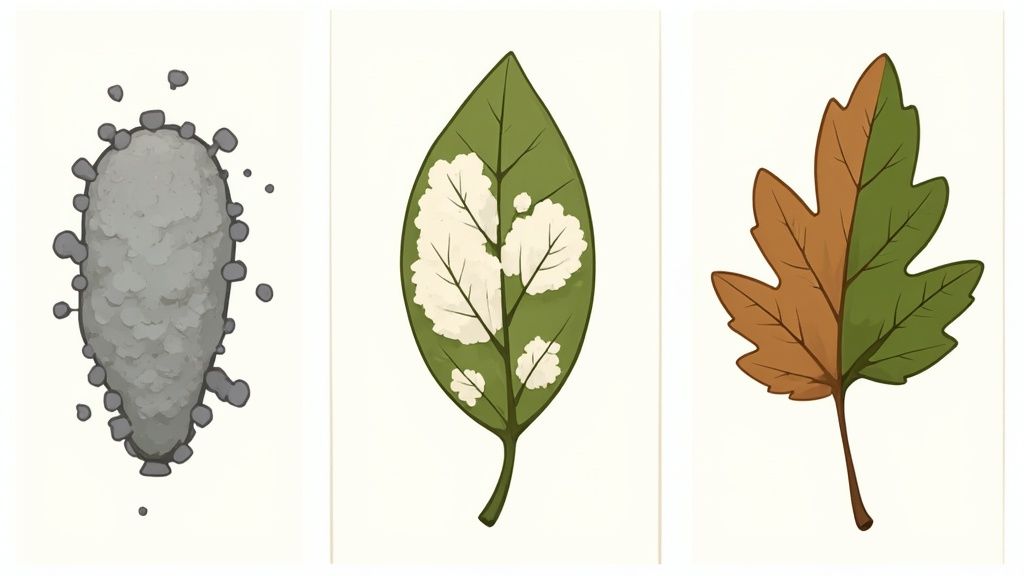
Before you can figure out how to treat a fungus, you need to put on your detective hat. Different fungi demand completely different game plans. A wrong guess can waste your time and money, all while the real problem gets worse. And let's be honest, Georgia's humid climate, especially around Forsyth and Gwinnett Counties, is basically a five-star resort for fungal diseases.
Your first job is to separate a real threat from a harmless visitor. I get calls all the time from worried homeowners in Alpharetta and Roswell who see greenish, flaky stuff on their tree trunks and assume the worst. More often than not, this is just lichen—a perfectly harmless organism that isn't hurting your tree one bit.
A real fungal infection, on the other hand, will cause clear signs of distress.
Key Signs of a Fungal Problem
You have to keep a sharp eye out for the specific clues that point to a bigger issue. Fungal diseases rarely pop up overnight; they usually start with subtle symptoms that build over time. Knowing what to look for is your best defense.
- Weird Leaf Spots or Discoloration: This could be anything from a powdery white film (think powdery mildew on your dogwoods) to dark, almost tar-like splotches (a classic sign of anthracnose on oaks).
- Wilting or Dying Branches (Dieback): A major red flag is when one whole section of your tree’s canopy starts dropping leaves and looking dead while the rest of the tree looks fine.
- Mushrooms or Fungal Growths at the Base: Seeing a cluster of honey-colored mushrooms around the trunk is often a dead giveaway for Armillaria root rot, a very serious fungus that lives in the soil.
- Sunken Cankers: These are dead, sunken patches of bark on the branches or main trunk. Sometimes they even ooze a dark, sticky liquid.
Fungal diseases are a massive global problem for trees. They cause billions of dollars in damage annually and are responsible for roughly 70% of tree mortality across North America. Catching it early is everything. Treatment success can be over 90% when you spot an infection early, but that number plummets to below 50% for advanced cases.
Common Tree Fungi in the Greater Atlanta Area
To help you narrow it down, I've put together a quick guide to some of the usual suspects we see everywhere from Marietta to Milton. Learning to spot these specific threats is a game-changer for any treatment plan. If you want a deeper dive with more pictures, our comprehensive tree disease identification guide is a fantastic resource.
Here’s a quick reference table to help you identify what might be going on in your own backyard.
Common Tree Fungi in the Greater Atlanta Area
| Fungus Name | Visual Signs | Common Host Trees in GA | Risk Level |
|---|---|---|---|
| Powdery Mildew | White, dusty coating on leaves and stems. | Dogwood, Crape Myrtle, Lilac | Low to Moderate |
| Anthracnose | Dark, sunken spots on leaves, twigs, and fruit. | Oak, Sycamore, Dogwood | Moderate |
| Armillaria Root Rot | Clusters of honey-colored mushrooms at the base; canopy dieback. | Oak, Pine, many hardwoods | High |
| Sooty Mold | Black, powdery coating on leaves, often sticky. | Magnolia, Gardenia, Crape Myrtle | Low (Indirect) |
| Hypoxylon Canker | Gray, tan, or black crusty patches on bark that flakes off. | Oak, Hickory, Pecan | High (Often fatal) |
Recognizing these signs early gives you the best shot at saving your tree. Each fungus has its own tell-tale signature, and matching the sign to the disease is the first step toward a healthy landscape.
Pro Tip: Sooty Mold is a bit of a trickster. It's not a true tree disease but a fungus that feeds on the sugary waste (called "honeydew") left behind by sap-sucking insects like aphids. To get rid of sooty mold for good, you have to treat the bug problem first.
When you spot what looks like a fungal infection on one of your trees, it's easy to feel a bit of panic. But what you do in the next few hours can make all the difference. Think of it as horticultural first aid—your goal is to stop the bleeding and contain the problem before it gets out of hand.
Taking a few smart, decisive steps right away can keep a small issue in your East Cobb yard from becoming a neighborhood-wide problem.
Isolate and Sanitize Everything
Fungi are masters of travel. Their spores can ride the wind, splash from leaf to leaf in a classic Georgia downpour, or even hitch a ride on your gardening tools. That’s why your first move should be all about containment.
Your pruning shears, loppers, and even your gloves can turn into disease vectors. If you prune an infected branch and then move to a healthy tree without disinfecting your tools, you’re basically giving that fungus a free ride to its next victim. It's one of the most common ways homeowners accidentally spread tree diseases.
To break the cycle, you need to get serious about sanitation.
- Sterilize Your Tools: Mix up a solution of one part household bleach to nine parts water. After every single cut on an infected tree, dip or wipe your blades in this solution. Let them sit for at least 30 seconds before making the next cut. It might feel tedious, but it's non-negotiable.
- Clean Up Debris Immediately: Fungal spores love to hang out in fallen leaves, twigs, and other yard waste. Rake up everything from under and around the infected tree. This isn't just about looking tidy; you're actively removing the fungus's breeding ground.
A critical pro-tip: Never, ever add diseased plant material to your compost pile. Home compost piles often don't get hot enough to kill stubborn fungal spores. If you do, you risk re-infecting your entire garden the next time you use your compost. Bag all that infected debris securely and throw it out with your regular trash.
The Critical Importance of Air Circulation
Fungi thrive in still, damp, humid places—which perfectly describes the inside of a dense, overgrown tree canopy, a common sight in Cherokee and Forsyth County. When air can't move freely, moisture hangs around on leaves and bark, creating the ideal incubator for fungal growth.
Improving air circulation is a powerful, chemical-free way to fight back.
Here’s what you can do right now:
- Prune for Airflow: Look for a few branches in the interior of the tree's canopy that you can remove to open things up. At this stage, you're not trying to remove all the infected parts. You’re just creating channels for air and sunlight to get in.
- Clear the Understory: Trim back any shrubs or overgrown plants crowding the base of the tree. This helps get air moving around the lower trunk and the root flare, a spot that’s especially vulnerable to root rot fungi.
By combining meticulous sanitation with better airflow, you're building a powerful first line of defense. These initial steps disrupt the fungus's life cycle and buy you precious time to figure out exactly what you're dealing with. This is how you start to treat tree fungus for good—and it's often what separates losing a single branch from losing the entire tree.
Practical Fungus Treatment Methods That Work
Once you've contained the immediate threat, it's time to shift from defense to offense. Figuring out how to treat tree fungus the right way involves a lot more than just grabbing a random spray and hoping for the best. A smart, effective approach combines the physical removal of the disease with targeted treatments that tackle the fungus on the surface and from within the tree itself.
This is the hands-on phase where you can really make a difference. By being strategic, you can not only get rid of the current infection but also give your tree a fighting chance against future attacks.
Strategic Pruning to Remove Infection
The most direct—and often most effective—first step is what I call surgical pruning. This isn't your average spring tidying-up; it's a careful procedure to physically cut out the diseased parts of your tree. The goal is simple: remove the fungus's ability to produce more spores and spread to healthy tissue.
When you're pruning away fungal infections, precision is everything. A sloppy cut can damage the tree even more or, worse, leave part of the infection behind.
- Make Your Cut in Healthy Wood: Always cut at least 6-12 inches below the last visible sign of the fungus. Why? Because the fungal growth, called hyphae, often extends inside the branch far beyond what you can see on the outside.
- Cut at a Branch Collar: When taking off an entire limb, look for the slightly swollen ring of bark where the branch meets the trunk—that's the branch collar. Cut just outside of it. This allows the tree's natural defense mechanisms to seal the wound properly and quickly.
- Angle Your Cuts: For smaller branches, angle the cut away from any buds. This is a small detail, but it prevents water from sitting on the fresh cut, which would be an open invitation for a new infection to start.
After a serious pruning session, you’re going to have a pile of infected branches and leaves. Proper disposal isn't just a suggestion—it's non-negotiable for preventing a comeback. After treating and pruning, you need a solid plan for getting that material off your property; you might even consider using skip hire services for garden waste to make sure it's gone for good.
This flow chart gives a great visual of the workflow you should follow to keep fungus from spreading.
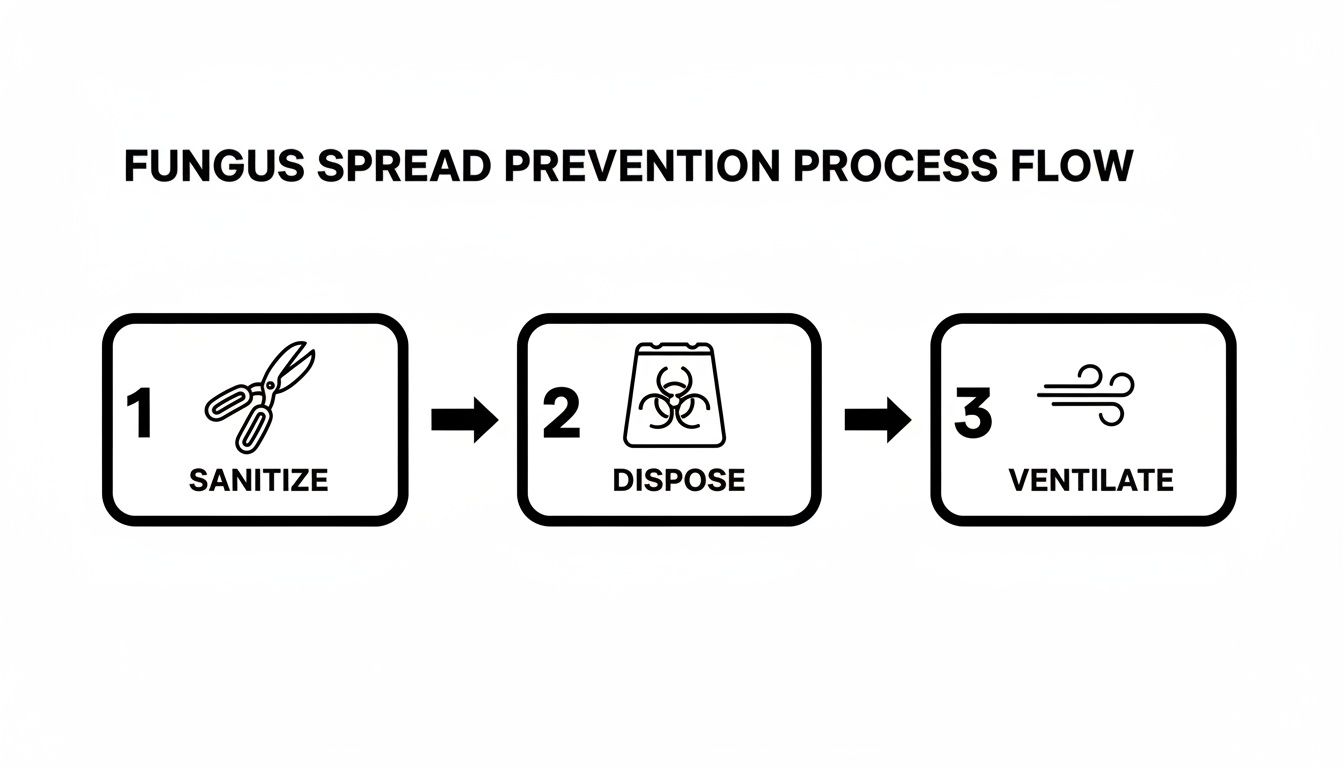
As it shows, proper sanitation of your tools, safe disposal of diseased material, and improving air circulation are the three pillars of a successful fungus management plan.
Demystifying Fungicides for Homeowners
Sometimes, pruning alone won't cut it. That's when fungicides come into play. But walking down the aisle at a garden center can be overwhelming. Choosing the right one is critical, and it depends entirely on the specific fungus you're fighting and whether it's on the surface or inside the tree.
There are two main types of fungicides you'll find.
Key Insight: Fungicides work best as a preventative measure or at the very first sign of trouble. They are much less effective once an infection is advanced and has caused major damage. With fungicides, timing is everything.
Contact vs Systemic Fungicides
| Fungicide Type | How It Works | Best For | Example |
|---|---|---|---|
| Contact | Coats the plant's surface, creating a protective barrier. Kills fungus on contact but gets washed off by rain or irrigation. | Surface-level issues like powdery mildew or sooty mold. Great for preventative spraying before a known disease season starts. | Copper-based fungicides, horticultural oils, sulfur. |
| Systemic | Absorbed by the plant and moves through its vascular system, almost like medicine. It fights the infection from the inside and is rain-resistant once it dries. | Fungi that have already gotten inside the plant tissue, like anthracnose or certain cankers. | Propiconazole, Myclobutanil. |
Always, always read the product label. Make sure the fungicide is approved for your type of tree and targets the fungus you've identified. Using the wrong product won't just be a waste of money—it could actually harm your tree.
Healing from the Ground Up with Soil Care
Many of the most destructive fungal diseases, like the infamous Armillaria root rot, start their attack underground. You can treat the leaves and branches all day long, but it's pointless if the real problem is festering in the soil around the roots. A tree's best defense is a healthy, robust root system.
Improving your soil's health can completely change the game in your tree's favor.
Improve Drainage Immediately
Fungi like Armillaria absolutely love soggy, low-oxygen soil. If you have the heavy clay soil common in parts of Cobb and Gwinnett Counties, or just poor drainage around the base of your tree, you’ve basically rolled out the welcome mat for root rot.
Here are a few things you can do right now:
- Root Collar Excavation: This is a game-changer. Carefully remove the soil and any excess mulch from the base of the trunk until you expose the root flare—the part where the trunk widens out into its main roots. Just keeping this area dry and open to the air is incredibly effective at slowing down root rot.
- Amend the Soil: Spread a layer of high-quality compost over the soil under the tree's canopy. This does more than just add nutrients; it introduces beneficial microbes that compete with harmful fungi. In fact, research shows certain beneficial fungi like Trichoderma actively attack Armillaria, and they thrive in well-aerated, organic soil.
- Rethink Your Watering: Give your trees a deep, thorough soaking, but do it less often. This encourages the roots to grow deeper to find moisture and allows the soil surface to dry out between waterings, creating an environment where fungus can't get a foothold.
By combining these hands-on treatments—pruning the visible problem, applying the right fungicide, and fixing the underlying soil issues—you create a powerful, multi-pronged strategy. This is how you go beyond just treating a symptom and start building a stronger, healthier tree for years to come.
Building a Fungus-Resistant Landscape

It’s a great feeling to knock out a fungal infection on one of your trees, but the real win is preventing the next one before it ever gets started. The goal isn’t to just react to problems as they pop up; it’s to build a landscape that's naturally resilient to them. This long-term mindset shifts your focus from treatment to smart, proactive care that keeps your trees strong from the ground up.
This approach is a game-changer here in North Georgia. Our humid climate, from Marietta all the way to Johns Creek, is often the perfect breeding ground for fungal outbreaks. By making a few key adjustments to your yard care routine, you can create an environment where fungus just can't get a foothold, saving you a ton of time, stress, and money. It’s all about working with nature, not constantly fighting against it.
Fortify Your Soil The First Line of Defense
A tree’s health is a direct mirror of the soil it lives in. If the soil is weak, compacted, or starved of nutrients, the tree will be stressed—making it an easy target for opportunistic fungi. On the flip side, rich, well-aerated soil that’s full of life gives a tree everything it needs to build a strong natural immune system.
One of the smartest first steps is to get a soil test. This takes all the guesswork out of the equation by showing you exactly what your soil is missing. You might find out you’re low on a key nutrient like nitrogen or potassium, which you can then fix with the right kind of fertilizer. A balanced diet is just as vital for a tree as it is for us.
Beyond just nutrients, the structure of your soil is critical. The heavy clay soil common in Gwinnett and Forsyth Counties can be a real problem. It holds onto water, creating soggy, low-oxygen conditions where root rot fungi absolutely thrive. Amending this kind of soil with organic matter like high-quality compost does two incredible things at once: it massively improves drainage and introduces a whole ecosystem of beneficial microbes.
Key Takeaway: Think of your soil as a living community. When beneficial bacteria and fungi are thriving, they actively outcompete and suppress the harmful, disease-causing ones. You're basically recruiting a microscopic army to defend your trees' roots.
Smart Watering and Mulching Techniques
How you water and mulch has a huge effect on fungal pressure in your yard. So many homeowners in places like Alpharetta and Roswell make the common mistake of frequent, shallow watering. This encourages weak, shallow roots and keeps the soil surface constantly damp—a perfect recipe for fungal growth.
The right way to do it is with deep, infrequent watering. Give your trees a good, long soak so the moisture penetrates deep into the root zone. Then, let the top few inches of soil dry out completely before you even think about watering again. This encourages a deep, resilient root system and makes the surface a much less inviting place for fungus.
Proper mulching is the other piece of this puzzle.
- Avoid "Volcano Mulching": Never, ever pile mulch directly against the trunk of a tree. It's a classic mistake that traps moisture right against the bark, which can lead to decay and invite fungal diseases.
- Maintain a 2-3 Inch Layer: A thin, even layer of mulch is all you need. This helps hold in soil moisture, keep weeds down, and regulate soil temperature without smothering the roots.
- Keep the Root Flare Clear: Make sure to pull mulch back 3-6 inches from the base of the trunk. This area, called the root flare, needs to stay dry and be able to breathe.
Harnessing Nature for Long-Term Health
The most advanced way to create a landscape that resists fungus is by embracing biological controls. This is all about intentionally using beneficial organisms to manage the harmful ones, a core principle of what's known as Integrated Pest Management. By cultivating a healthy soil food web, you can dramatically cut back on the need for chemical fungicides.
Recent studies have shown just how powerful this approach can be. Using beneficial fungi as biological controls has had incredible success in fighting tree diseases. In some agricultural tests, biofungicides have been shown to reduce certain canker lesions by 85%. Inoculating trees with helpful fungi can also boost their natural immunity by 40-60%. You can learn more about how fungi are being used to protect our forests and landscapes.
By focusing on these proactive strategies—building healthy soil, watering wisely, and fostering beneficial microbes—you create a tough, robust ecosystem that empowers your trees' natural defenses. This is how you win the long-term war against tree fungus. For broader guidance on maintaining your outdoor space and fostering a robust landscape, you can explore ExaYard's general yard care resources.
Knowing When to Call an Atlanta Arborist
Look, I get it. As a homeowner, you want to handle what you can. A little pruning here, some yard cleanup there—it’s satisfying work. But when it comes to tree fungi, there’s a definite line between a manageable weekend project and a serious problem that’s way over your head.
Knowing when to hang up the loppers and call a professional is probably the single most important decision you can make for your tree's future. An arborist brings a level of diagnostic experience and specialized equipment that you just can't replicate with a trip to the hardware store.
Some signs aren't just whispers of a problem; they're screaming that your tree's structural integrity is on the line. What was once a beautiful landscape feature can quickly become a major hazard, especially with the massive, mature oaks and maples that define so many properties from East Cobb to Milton.
Red Flags That Demand Professional Attention
When you start seeing certain large-scale symptoms, you can bet the infection has moved far beyond a few funky-looking leaves. These are not issues you can fix with a simple fungicide spray.
- Large Fungal Growths (Conks) on the Trunk: If you spot hard, shelf-like fungi growing right out of the main trunk, that’s a five-alarm fire. We call these "conks" or "fruiting bodies," and they are the external sign of a massive internal decay problem. By the time you see one, the fungus has likely been rotting the wood from the inside for months, if not years.
- Significant Canopy Dieback: One or two dead branches? That's pretty normal. But if 30% or more of your tree's canopy looks dead, bare, or is thinning out at an alarming rate, something serious is happening below the surface. This often points to advanced root rot or a vascular disease that's cutting off the tree's life support system.
- Deep Cracks or Cankers on the Trunk: Keep an eye out for long, deep vertical cracks in the bark. If they're oozing or seem to be getting wider, the tree is under immense stress and could be failing structurally. Sunken, dead patches of bark, known as cankers, are also a huge deal because they can effectively strangle the tree.
Expert Insight: In my experience, the appearance of conks on a trunk is often the last symptom a homeowner notices. For an arborist, it’s a clear signal the fungus has already won a major battle inside the tree. At that point, our focus shifts from trying to "cure" the tree to assessing its safety and stability.
When Size and Location Make DIY Unsafe
Sometimes, it's not just the symptoms—it's the tree itself. The physical size and location of your tree are huge factors in whether you should even think about tackling the job yourself.
Let me be blunt: trying to treat a large tree without proper training and safety gear is just plain dangerous.
- The Tree is Taller Than Your House: Get off the ladder. Seriously. Working at that height with a chainsaw or even heavy pruners is a recipe for a trip to the emergency room. We use specialized climbing gear and aerial lifts for a reason.
- Branches Overhang Structures: If you have diseased branches hanging over your roof, your car, or your neighbor's fence, one wrong cut could cost you thousands in damages or cause a serious injury. It’s not worth the risk.
- The Tree is Near Power Lines: This one is non-negotiable. Never attempt to prune any part of a tree that is close to utility lines. That is a job exclusively for trained, insured professionals who know how to coordinate with the power company.
A professional consultation is more than just a diagnosis. A certified arborist will perform a full risk assessment, looking at the tree's health, its structure, and any potential targets around it. We can explain what's really going on with the fungus and lay out a realistic management plan.
This might involve specialized treatments like trunk injections or soil drenches that you can't buy over the counter. An initial consultation might run you $150 to $300, but think of it as an investment. It gives you a clear, safe action plan and could prevent a catastrophic tree failure down the road.
Can a Tree Recover from a Fungus on Its Own?
It’s a question we get all the time, usually asked with a hopeful tone: “Will my tree just take care of this itself?” While a vigorous, healthy tree might fight off a minor fungal nuisance like a light dusting of powdery mildew, leaving more serious infections to chance is a dangerous gamble.
The truth is, most fungal diseases need a helping hand to stop them in their tracks.
Aggressive fungi, like the infamous Armillaria root rot we often battle in the dense clay soils of Cobb County, simply don’t give up. They methodically break down a tree’s natural defenses, spreading through the root system or vital tissues until the tree becomes a hazard.
Think of it less like replacing the tree's immune system and more like giving it the backup it desperately needs. Your intervention—strategic pruning, proper sanitation, and targeted treatments—is what empowers your tree to fight back and win.
Are There Natural Ways to Treat Tree Fungus?
Absolutely. In fact, starting with an organic-first approach is often the best strategy for sustainable, long-term tree health. Your most powerful defense is always creating a landscape where fungus struggles to get a foothold in the first place.
Here are some of the most effective natural and organic tactics we use:
-
Smart Cultural Practices: This is your foundation. It’s all about creating an unfriendly environment for fungus. This includes proper pruning to open up the canopy for better airflow, watering the soil at the base instead of blasting the leaves, and applying mulch correctly (a nice, even layer, but never piled up against the trunk like a volcano).
-
Horticultural Oils: Products like neem oil are fantastic for dealing with surface-level fungi like sooty mold or powdery mildew. They work by smothering the fungal spores and are perfectly safe for most plants when you follow the label.
-
Copper-Based Sprays: While it is a chemical, copper fungicide is approved for organic gardening and is a real workhorse against a huge range of fungal and even bacterial diseases.
-
Building Better Soil: This one is a powerhouse. When you amend your soil with high-quality compost, you’re introducing an army of beneficial microbes. Some of these tiny organisms, like the fungus Trichoderma, are known to actively attack and suppress the bad guys like Armillaria.
Focusing on cultivating healthy, living soil does more than treat a symptom—it builds a robust ecosystem that naturally keeps diseases in check. It's a true long-term investment in the health of your entire property.
How Can I Tell if the Fungus Has Already Killed My Tree?
This is the toughest question homeowners have to ask. Sometimes, no matter what you do, a fungal infection is just too far gone. Before you make the difficult decision to have a tree removed, there’s a simple test you can do to check for signs of life.
We call it the "scratch test."
Grab a small pocketknife or just use your fingernail and gently scrape away a tiny bit of bark on a few different twigs.
- What you want to see is moist, bright green tissue underneath. This means that part of the tree is still alive and has a fighting chance.
- If you find brown, dry, and brittle tissue, that branch is dead.
Try this test on several spots around the tree. If you're finding plenty of green, you may be able to save it with some aggressive pruning and treatment. But if the whole tree is brown and brittle under the bark and shows zero signs of life in the spring, it has likely succumbed to the disease. At that point, it’s best to have it evaluated by a professional for safe removal.
At Richmond Tree Experts GA, we know how much your trees mean to you and your property. If you're up against a fungal problem that feels out of your league or just need an expert eye, please don't hesitate. Our ISA Certified Arborists are here to give your trees the professional help they need to thrive. Contact us today for a consultation.
Not sure what your tree needs? Richmond Tree Experts has worked on Marietta and Metro Atlanta trees since 1985, and every job is looked at by an ISA Certified Arborist before it is priced. Start with an ISA Certified Arborist evaluation, or see everything we do: tree removal, stump grinding and arborist services across Cobb, Fulton, Cherokee, Gwinnett and DeKalb counties (service areas).
Call (770) 974-3964, 7am to 11pm every day, or request an estimate online.

