

The tree is gone, the crew has left, and now the yard looks bigger, brighter, and a little more exposed than you expected. That's the moment most homeowners in Marietta, Roswell, Kennesaw, Woodstock, Acworth, and Canton realize landscaping after tree removal isn't just about filling a hole. It's about reading the new site conditions correctly, especially the extra sun, the disturbed soil, and the compaction that North Georgia clay likes to hold onto.
A clean cleanup job can still leave a property in rough shape. The ground may settle unevenly, the old root zone may stay tight and dry, and the space that used to live in shade can suddenly behave like a hot, open bed. That change is why the smartest restoration plans start with the site, not the plant list.
Assessing Your Property After Tree Removal
The first walk-through after tree removal should feel like a damage report, not a planting plan. I've seen homeowners rush straight to sod or shrubs, only to discover later that the spot is still settling, water is pooling where it never used to, or the sun hits that bed hard all afternoon. A better approach starts with a slow inspection of what changed the day the tree came out.
What to look for first
Start with the root zone and the disturbed area around it. The remaining roots may still influence nearby beds, irrigation lines, walkways, and foundation-adjacent soil, even if the trunk is gone. If the crew used heavy equipment, look for tire ruts, smeared clay, or soil that feels tight underfoot, because that usually tells you the ground needs more than cosmetic leveling.
Document everything before anyone spreads topsoil or mulch. Photos of the stump area, the surrounding lawn, drainage flow, and nearby structures help with contractor bids and insurance follow-up. If the tree came down during a storm or after structural failure, that record matters even more.
Practical rule: don't judge the site by the hole alone. Judge it by the soil, the drainage path, and the way the sunlight lands on the area at mid-day.
When the assessment needs a pro
If the removal involved a leaning tree, a tree near a home, or anything that looked unstable, a certified arborist is worth bringing in before yard work begins. The practical reason is simple, dangerous trees and post-storm sites can hide damage below grade, around roots, or in adjacent trunks. That's especially true in North Atlanta neighborhoods where one yard can drain into another, or where grading has already been modified by past projects.
Use this quick checklist before you call for bids:
- Photograph the stump area from multiple angles. Capture low spots, exposed roots, damaged edging, and any nearby hardscape.
- Check whether water runs toward the opening. Standing water or new runoff patterns usually mean grading needs attention.
- Walk the area after rain if possible. Clay can look fine when dry and behave very differently once saturated.
- Note what used to shade the space. The new light pattern matters as much as the soil condition.
That assessment sets the tone for the rest of the project. If the site is stable, you can move faster. If not, the most efficient decision is to fix the ground first and plant later.
Managing the Stump and Root System
The stump is a decision point, not just leftover wood. On Atlanta properties, I usually see three workable paths, complete removal, stump grinding, or leaving it in place for a while. Each one changes how soon you can replant, how much grading follows, and how usable the space is right away.
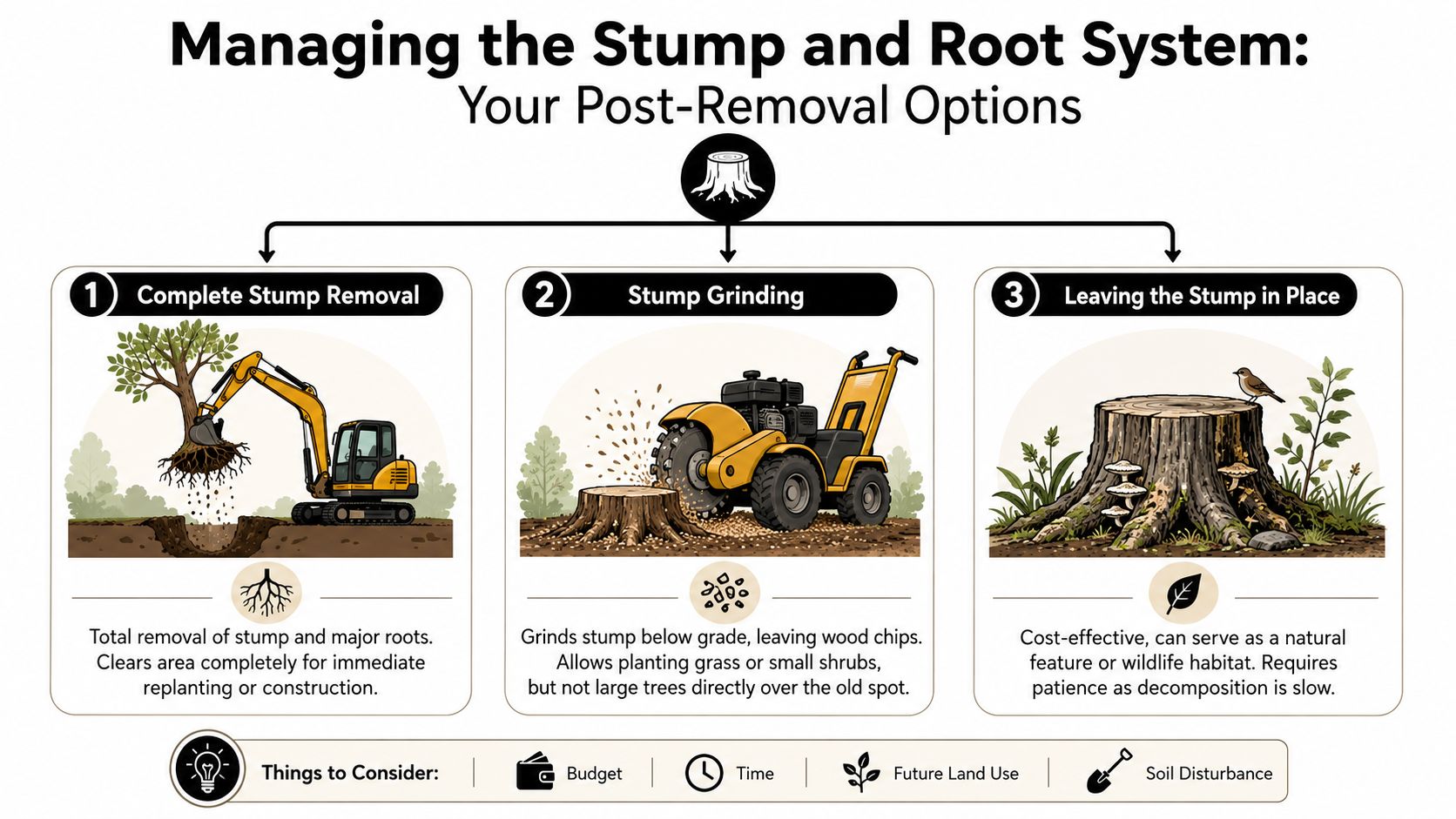
Choosing the right stump strategy
Complete stump removal fits sites that need a full reset. It works well for new construction, a hardscape feature, or a fresh tree planted in the same spot. It also disturbs the most soil, so the area usually needs more grading and correction afterward.
Stump grinding is the middle path I recommend most often for yards that need to be functional without a full excavation. It clears the visible stump and leaves the area workable, but the grind leaves wood chips 6 to 12 inches below grade according to an industry guide (Tree Removal Authority). That is fine for turf or small shrubs once the space is filled and leveled, but it is still different from clean native soil. For homeowners comparing the two approaches, this stump grinding vs removal guide lays out the trade-offs clearly.
Leaving the stump in place can make sense as a temporary choice when the budget is tight or the final design is still being decided. It lowers the up-front cost, but it slows everything else down. Decay takes time, and a stump that is partly rotted still gets in the way of mowing, planting, and foot traffic.
A stump left in the ground does not stay neutral. It keeps affecting the bed until it is removed or the design works around it.
How roots change the rest of the yard
Large surface roots often extend beyond the stump zone. That matters if you are planning beds, edging, patio work, or new sod near the old tree. Roots also affect where new shrubs can survive, because the old root network keeps competing for water and space long after the trunk is gone.
The practical choice is usually straightforward. Remove the stump completely if the area needs a clean reset, grind it if you want a usable lawn zone, and leave it only if you are willing to design around it for a while.
The soil around the old root flare can tell you more than the stump itself. In North Georgia clay, roots, compaction, and grading changes often dictate how the space will function after removal, and those conditions matter just as much as what used to be standing there.
Restoring Soil Health and Structure
Atlanta clay can look firm on the surface and still stay tight underneath. After tree removal, the bigger problem is often the ground left behind by equipment. Compacted soil does not give new roots much room to spread, and it slows the water movement that turf and shrubs need to establish well.

Start with compaction, not fertilizer
A simple compaction test is more useful than guessing. If soil resists a probe hard enough to show serious resistance, it needs aeration or deeper loosening before anything is planted. That matters because tight clay blocks root penetration and slows infiltration, which is why fresh grass and shrubs often struggle in newly cleared areas.
If the disturbed area is shallow and the soil still has some give, loosening the bed, adding organic matter, and reshaping the grade may be enough. If the ground is sealed tight, compost alone will not correct it. Mechanical relief has to come first.
Fill in layers, not all at once
Large voids settle later if they are filled in one dump. Staged filling is the safer approach for bigger stump holes and low spots that like to sink after rain. Pack the fill in layers, then finish with clean topsoil once the base is stable.
For turf restoration, one practical rule is to place enough topsoil to create a uniform seedbed over the former stump area before seeding or sodding. That helps the surface settle more evenly and lowers the chance of a dip showing up after the first hard rain.
Match the fix to North Georgia clay
Clay-heavy soil needs structure repair, not just coverage. Compost, aged organic matter, and good topsoil help, but they work best after compaction is relieved. A local crew also needs to watch grading so runoff does not move toward the house or collect in the old root bowl.
For homeowners comparing grass options and base preparation, the best soil for grass guide is useful because it focuses on what turf needs before installation. The same idea applies to shrubs and beds. If the soil cannot breathe, the planting will not hold up.
Atlanta rule of thumb: do not plant into a depression just because it looks level after raking. If the soil settles later, you end up fixing the same spot again.
Designing for Your New Sun Exposure
A removed tree doesn't just free up space, it rewrites the light map of the yard. A shade bed that worked for years can become a hot, exposed zone by lunch, and that change is often more important than the stump itself. In metro Atlanta, that shift decides whether your next planting succeeds or burns out.

Match plants to the new microclimate
If the removed tree used to shield the bed, don't assume the old plant palette still fits. Shade-loving plants such as hostas and ferns may struggle in full afternoon sun, especially once the canopy is gone and the soil dries faster. Sun-tolerant turf, tougher groundcovers, and mixed shrub borders usually make more sense in these newly exposed areas.
That's where many generic restoration guides miss the question. The issue isn't only what fills the hole, it's what can handle the new heat, the new drainage behavior, and the new light intensity. On a south- or west-facing lot, that distinction matters even more.
Consider hardscape as a real option
Not every removed tree needs to become a planting bed again. Sometimes the better design move is a small patio, a seating area, or another hardscape element that turns the exposed zone into usable space. That can be a smarter long-term fit than forcing a plant community to survive where shade once dominated.
If you're evaluating materials for that kind of transition, the natural stone pavers Melbourne 2026 guide is a useful reference point for understanding how paver choices affect the look and feel of a finished outdoor area. The material itself isn't the lesson, the lesson is that surface choice should match the new conditions, not the old ones.
Build a transition plan instead of a one-for-one replacement
Replacing a removed shade tree with another tree isn't always the right answer. Sometimes the smarter design is a blend of lower plantings, a sun-tolerant focal plant, and a clean hardscape edge that ties the space into the rest of the yard. That approach fits properties where drainage is uneven or where nearby structures now get more reflected heat.
Think in layers. Start with the exposure, then the irrigation pattern, then the permanent use of the space. Once those three line up, the planting list gets much easier.
Planning Your Restoration Timeline and Budget
A tree comes out, the sun changes, and the ground under it rarely behaves the same way again. If you rush straight into planting, you can spend money twice, once to install, then again to fix what failed in North Georgia clay that settled unevenly after removal. A better plan separates cleanup, soil recovery, design, and planting so the site has time to settle before new materials go in.

Compare the main phases before you spend
Immediate removal work usually covers debris cleanup, stump decisions, and rough grading. This is the point to make the site safe, readable, and ready for the next round of work. If a tree came down in a storm, access, roofline clearance, and anything that could worsen with delay move to the front of the line.
Soil remediation comes next. Compaction relief, fill work, and topsoil correction happen here, and they matter more than most homeowners expect because the root zone often gets packed tight by equipment and foot traffic. If you skip this stage, the new yard sits on unstable ground and drains poorly.
Design and planning should happen while the soil is recovering. That is when you reassess light, drainage, and whether the area wants turf, a bed, or hardscape. The new microclimate matters here, especially where full sun now hits a spot that used to stay shaded and cool. A slower plan usually beats a fast one because it avoids tearing out a bad install later.
Planting and installation belong at the end, after the site has been corrected and the final use is clear. New trees also need supplemental irrigation for 1 to 2 growing seasons, with about 10 to 15 gallons per week during dry periods as a practical benchmark (Tree Removal Authority).
Use the budget where it effectively protects the site
Spend first on safety and structure. That usually means stump grinding or removal, grading, and drainage corrections before any ornamental work. A fancy bed over poor soil is still poor soil.
If you are pricing a project in Atlanta, the biggest variables are the size of the tree, the amount of cleanup, the grading needed, and whether the area is getting turf, shrubs, or hardscape. Those choices affect labor, equipment, and the number of trades on site. A small re-sod job and a patio rebuild are not the same budget, even if they start in the same hole.
Budget priority: fix the ground, then decide what belongs there.
Working with Professional Tree and Outdoor Services
A cleared lot can still be difficult to work with. After a tree comes out, the soil often stays compacted, the grade can shift, and the sun exposure may change enough to alter what will grow there. A homeowner can manage mulch, edging, or a small planting bed. Dangerous removals, major grading, and drainage corrections belong with a crew that understands how tree work affects the ground long after the saws are gone.
What to look for in a contractor
Choose crews with ISA Certified Arborists, proper insurance, and equipment sized for the job. That matters whether you need tree removal, emergency tree removal, stump grinding, tree pruning, storm damage tree cleanup, land clearing, or hazardous tree removal. In North Atlanta, the crews worth hiring are usually the ones that can explain the tree work and the recovery plan in the same conversation.
If you're comparing vendors, Richmond Tree Experts GA is one local option that handles tree removal, stump grinding, and arborist services in the Atlanta area. For contractor screening, the find a contractor online resource is a practical place to compare what a professional scope should include.
Ask for more than a low number
A bid should spell out how the site will be protected, how debris will be hauled, what cleanup is included, and whether the crew is handling the stump and the grade after removal. Cheap quotes often leave out the work that makes the yard usable again, especially when the soil has been tracked down by heavy equipment or a root system has left voids under the surface.
For bigger jobs, tree work, hardscapes, and ground surfaces should be sequenced with care. The tree crew clears and stabilizes the area, the grading crew resets the site, and the contractor installs the final surface after the soil has had time to settle where it needs to. That order reduces rework and keeps fresh planting from getting damaged by later equipment.
If a company cannot explain its equipment, cleanup plan, or timeline commitments, keep looking. A good crew answers those questions clearly before the truck rolls, and it can tell you what the site will need once the tree is gone, not just what it takes to cut it down.
If you are restoring a shaded corner that suddenly gets full afternoon sun, or trying to decide whether compacted clay needs time, aeration, or a full rebuild, ask for a plan that addresses the new conditions on the ground. For Atlanta homeowners, that is where working with a qualified contractor matters most, because the next planting should fit the microclimate that is present now, not the one the tree used to create.
Need a tree taken down safely? Richmond Tree Experts has worked on Marietta and Metro Atlanta trees since 1985, and every job is looked at by an ISA Certified Arborist before it is priced. Start with tree removal, or see everything we do: tree removal, stump grinding and arborist services across Cobb, Fulton, Cherokee, Gwinnett and DeKalb counties (service areas).
Call (770) 974-3964, 7am to 11pm every day, or request an estimate online.

