

A stump grinder can look controlled from the house, until its cutting wheel throws a chip toward the fence and a child walks across the yard toward the machine. If you're arranging stump grinding in Marietta, Roswell, Kennesaw, Woodstock, Acworth, Canton, or elsewhere in North Metro Atlanta, the barrier needs to protect more than the hole around the stump. It should keep people clear, limit flying debris, protect buried lines, and prevent damage to roots and nearby landscaping.
That matters whether stump grinding is part of a tree removal, storm damage cleanup, land clearing, or a standalone job. A good setup starts with the site, not with a strip of caution tape.
What a Stump Grinding Barrier Is and Why It Matters
A stump grinding barrier is any physical perimeter or protective layer that keeps people, pets, vehicles, and property out of the grinder's hazard zone while cutting is underway. The cutting wheel creates two separate problems. Anything that reaches it risks a caught-in hazard, and chips and loose debris can fly toward windows, vehicles, and neighboring yards. A barrier controls access to the work area so neither problem reaches a bystander.
A pool fence is the clearest comparison. The fence doesn't remove the water; it stops someone from reaching the hazard unsupervised. A stump grinding barrier works the same way around an active machine, backing up the grinder's own guard, the operator's training, and a firm rule that bystanders stay clear.
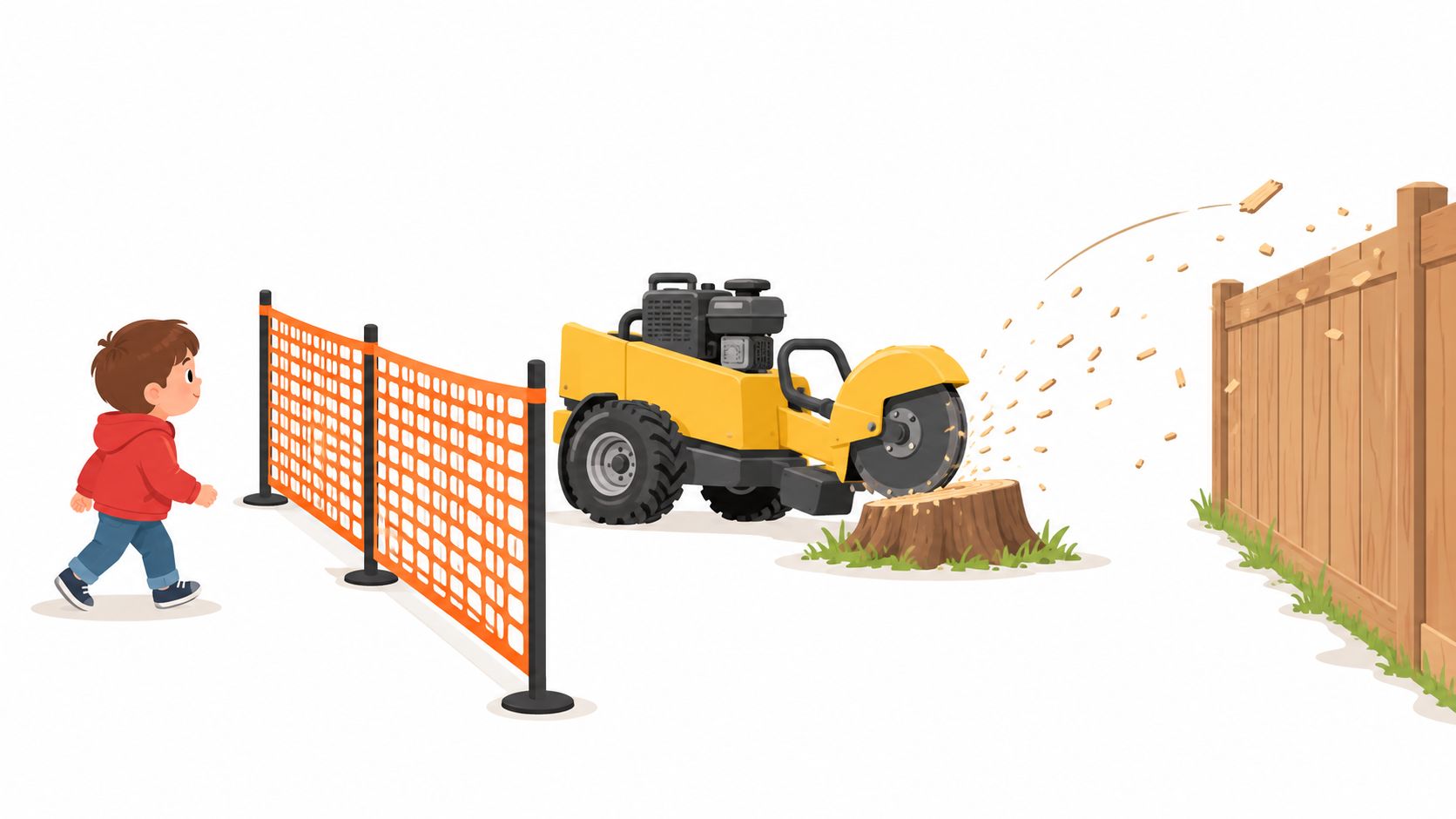
The CDC/NIOSH engineering-safety case study cites American Rental Association insurance data reporting six injury claims involving rented stump cutters since January 2000. That figure covers reported rental claims, not every stump-grinding injury, so it shouldn't be read as a complete count. The same case study notes that ANSI Z133.1-2006 required stump cutters to have enclosures and guards that remain in place during operation. Machine guards handle contact at the wheel. The barrier handles everything beyond it.
The barrier also protects what sits under and around the stump. Calling 811 gets public utility lines marked before digging, but it does not locate private lines like irrigation pipe, garden lighting wire, or an invisible dog fence, and those often run straight through the grinding area. Marking the barrier line is a practical place to flag them. The same perimeter can shield the roots of trees meant to remain, since the wheel and the chip pile can damage roots close to the surface.
Homeowners and DIY operators face extra exposure when they're unfamiliar with the machine, helpers haven't been trained, or children can walk into an open yard. A sign warns people, but it won't stop a curious child or contain debris. The barrier is a safety system, not a sign or a strip of tape.
When a Barrier Is Required on Atlanta Lots
Use this rule of thumb: if someone can reach the grinder or be struck by chips during cutting, set up a barrier. On a residential lot, that often means more than placing a cone beside the stump.
A barrier is called for when:
- Children or pets are in the house or yard and could approach the work area.
- A sidewalk, driveway, or shared property line leaves people or vehicles within reach.
- A patio, pool, or outdoor kitchen sits close enough to be exposed to machine movement or flying chips.
- The operator has no safe retreat, as can happen on a narrow lot between a fence and a retaining wall.
- A retained tree or its roots could be damaged by foot traffic, equipment, or excavation.
That last point can be easy to miss. ANSI A300 Part 5 tree-protection guidance says barriers around a tree-protection zone should be installed before clearing, grading, demolition, or planting work and maintained while that work continues. It also says stump removal should limit disturbance to roots of trees intended to remain. On compact lots in Cobb, Forsyth, Gwinnett, and Cherokee counties, a grinder may work close to a neighboring tree, planting bed, or retaining wall, so the perimeter should protect the work zone and the surrounding plantings.
A practical three-tier test
Required: Someone can enter the work zone; a retained tree or property line is close to the equipment; or a vehicle, window, or other vulnerable property is within the machine's specified exclusion area.
Recommended: The stump is beside a sidewalk or driveway with regular foot traffic, such as a front yard in Johns Creek or Alpharetta. A low barrier can help control access even when people aren't expected to gather.
Optional: The stump is on open land with no structures, people, or retained trees close enough to be affected. Even then, the machine guard and safe operating practices still matter.
Classify the site before buying materials. A small, open backyard may need a simple physical perimeter, while a tight lot near glass or a mature tree needs a more complete setup.
Checking Utilities and Private Lines Before You Grind
Calling 811 is necessary, but it doesn't finish the utility check. Public marking services may not locate owner-installed lines, and a grinder can damage a pipe or cable just as easily as a fence or lawn.
The safe sequence is to request public utility marks, check that the markings make sense for the site, look for private lines and other obstructions, then set the grinding depth to match what's been verified. A stump-grinder operator's manual limits grinding to 10 inches below ground and directs users to request utility marking three days in advance. Those instructions illustrate why depth can't be chosen independently of the utility layout or the machine's operating limits.
Public marks may not include:
- Irrigation pipes and sprinkler heads
- Low-voltage garden lighting
- Invisible pet fencing
- Power to a detached garage or other accessory building
- Outdoor gas connections, including lines serving grills or kitchens
These private systems are common around established North Metro properties, pools, and outdoor living areas. Ask the property owner where lines may run, but don't treat memory or an old site plan as proof of the route.
If a line is close or uncertain
A useful planning trigger is a line within 24 inches of the stump. At that distance, consider “daylighting,” carefully exposing the line with air excavation or hand digging before grinding. Treat that measurement as a planning threshold, not a universal safety standard. The locator should determine the final exposure distance on site.
If the route is uncertain, mark a no-cut buffer and choose among hand excavation, reduced grinding depth, or full stump removal. If a pipe or cable is struck, stop cutting, shut the machine down, evacuate the area, and call emergency services, especially if the line may carry gas, petroleum, or electricity.
Choose the Barrier Type and Set Up the Exclusion Zone
A stump beside a driveway needs more than tape around the hole. The barrier is a site-protection system: it keeps people out, keeps chips off glass and siding, keeps the grinder from tracking across turf, and leaves retained roots outside the cut area. Treat 811 marks as the public portion only; private lines still have to be identified before the perimeter and grinding depth are final.
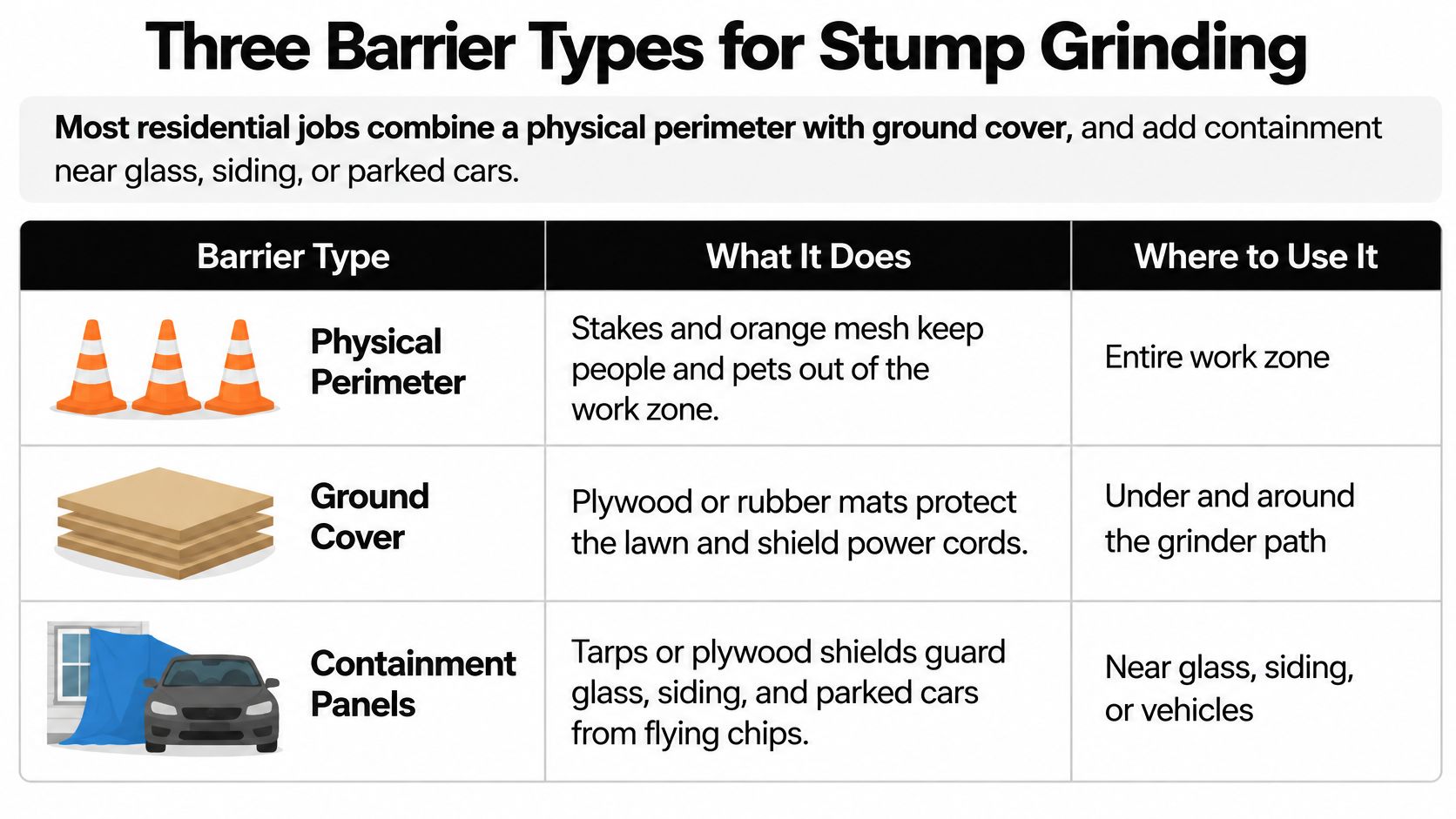
| Barrier type | What it is | Stops people | Stops chips and debris | Best for | Main limit |
|---|---|---|---|---|---|
| Physical barrier | Fence panels, snow fence, or staked fabric fencing around the exclusion zone | Yes, when closed and staked with one controlled gap | Partly, if the fence is solid or fitted with cloth | Open front lawns and stumps visible from the street | Doesn't protect roots or ground surfaces |
| Landscape fabric or ground cover | Heavy geotextile or rubber mats under the grinder path and chip pile | No | Yes, catches chips, spills, and track marks | Turf, landscape beds, and irrigation zones | Doesn't block entry; it only protects the ground |
| Containment shield | Rigid plywood walls, purpose-built shields, or a tarp wall tied to the machine guard | Partly, when it closes a gap next to a path | Yes, redirects chips away from glass, siding, and vehicles | Stumps within reach of windows, gutters, parked cars, or patios | Bulky, needs room, and mustn't replace the machine guard |
For a comparison of temporary fence layouts and their trade-offs, construction site fencing advice from FenceScape can help you close access points. The grinder still needs a purpose-designed setup for the stump, the machine, and the property, and these stump grinding tips for depth, access, and cleanup help tie the barrier to the rest of the job.
Build the setup in order
Clear the area. Remove stones, metal, toys, hoses, and loose irrigation components. The cutting wheel can turn a buried or loose object into a projectile.
Set the exclusion area. One Northstar operating manual, hosted with ANSI Z133 guidance and related operating materials, specifies keeping bystanders and children 75 feet away and protecting vehicles, windows, and other vulnerable property within that radius. Follow the specific grinder's manual. On a tight lot, mark the largest practical zone and add shields where the full radius can't be cleared.
Erect the perimeter. Use fence panels, snow fence, or staked fabric fencing. Secure it so it can't be pushed over, and leave one operator-controlled access gap. Warning tape alone doesn't create a controlled boundary.
Shield exposed property. Use rigid plywood or purpose-built shields near glazing, siding, sidewalks, parked vehicles, or artificial turf. Don't place a tarp where it could interfere with the machine's guard or controls.
Protect the ground. Lay heavy ground cover or mats beneath the grinder's route and chip pile. This helps reduce track marks and keeps chips out of turf and garden beds.
Check the machine and crew position. Confirm the guard is in place. The operator should remain at the controls until the cutting wheel stops; remote operation is appropriate only at the distance the machine or manufacturer specifies.
Practical rule: After any interruption, walk the perimeter again before restarting. A displaced panel or newly opened gate changes the hazard zone.
Keep the barrier simple enough for the operator to monitor. More panels don't help if they create blind spots, block the operator's escape route, or make it harder to shut down the grinder.
Realistic Costs for Grinding and Barrier Materials
The price of stump grinding generally follows stump diameter, then depth and access. The ranges below are unverified planning estimates for Atlanta-area jobs, not published prices. Compare every line with written quotes and local rental suppliers before relying on it.
| Item | Typical range | Notes |
|---|---|---|
| Stump up to 12 inches across | $75 to $150 | Often subject to a minimum service charge |
| Stump 12 to 24 inches across | $150 to $300 | Price rises with depth and access difficulty |
| Stump 24 to 36 inches across | $250 to $450 | Larger machine and more passes |
| Stump over 36 inches or multi-trunk | Quote on site | Access and roots drive the price |
| Snow fence roll, about 100 feet | $25 to $50 | Common DIY perimeter material |
| Sheet of 3/4-inch plywood for shields | $40 to $80 | Planning estimate; use near glass, siding, or vehicles |
| Rented temporary fence panels | $10 to $30 per panel per week | Planning estimate; confirm with local rental suppliers |
| Standard 811 utility marking | Free | Covers public utilities only |
| Private line locating for irrigation, lighting, or pet fence | $100 to $300 | Planning estimate; usually arranged separately |
A quote can rise when the stump has multiple trunks, roots flare into a garden bed, the grinder has to travel behind a fence or through a narrow backyard, or private-line locating is needed. The physical barrier and ground protection can also become separate DIY expenses, especially if you need rental panels or plywood shields.
Ask every contractor to state whether the barrier, ground protection, and debris cleanup are included. A low per-stump figure can leave you responsible for access control, chips, and lawn protection. For more detail on the factors that affect a job estimate, review this guide to stump grinding costs.
Add the barrier and locating costs to the grinding estimate before deciding whether to rent a machine, hire a crew, or choose a different removal method.
Deciding Between DIY Grinding and a Licensed Crew
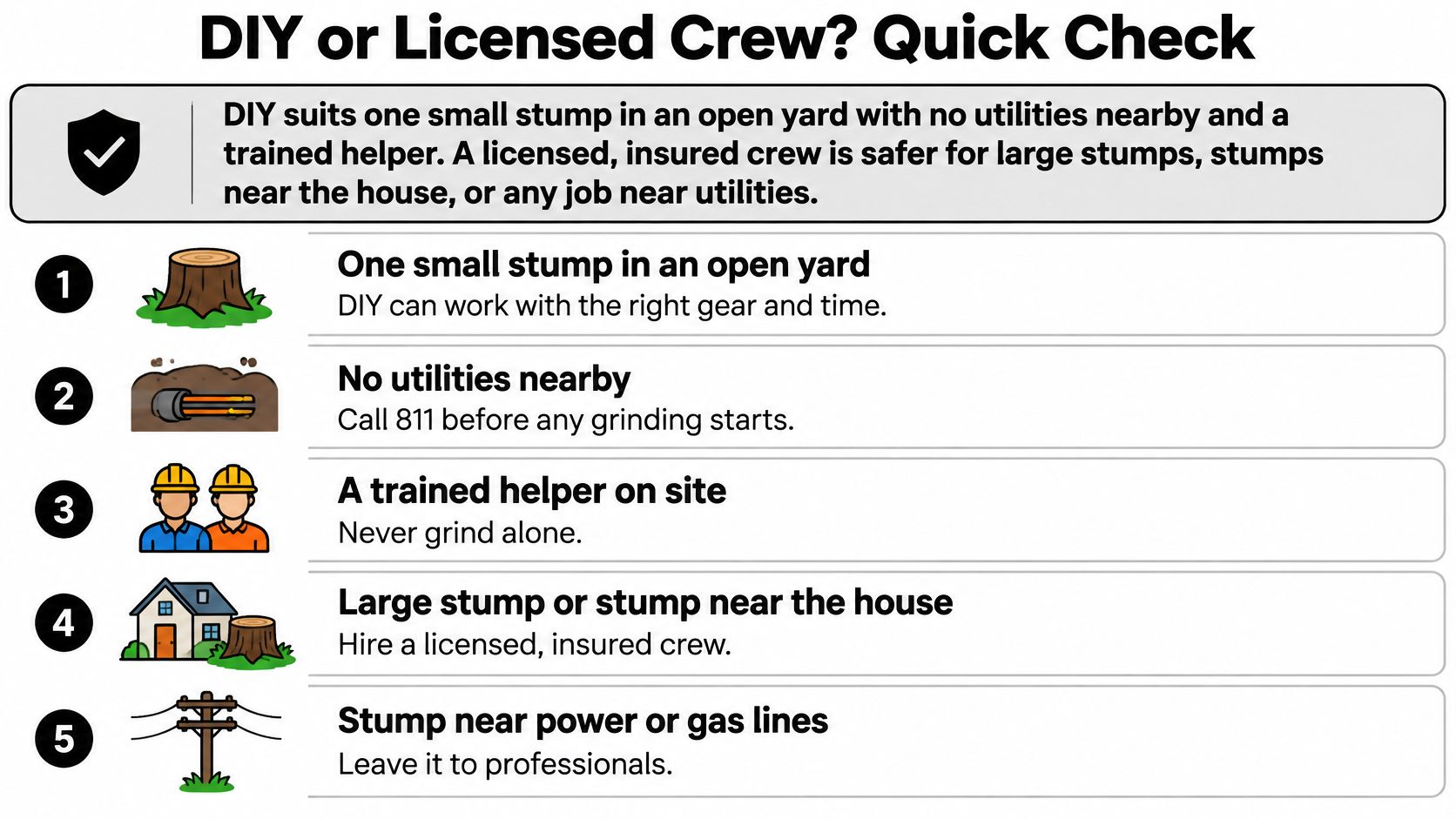
One small stump in an open yard, no utilities inside the work zone, and a second person holding the perimeter is a reasonable DIY job. A licensed, insured crew is the safer call for a large stump, grinding near a house or utility, slopes, or any site where private lines cross the grind zone. The barrier work settles much of this decision: whoever runs the machine has to protect bystanders, buried utilities, and the roots of trees you intend to keep, and a rental fee covers none of that responsibility.
| Factor | DIY with a rented grinder | Licensed, insured crew |
|---|---|---|
| Upfront cost | Rental plus barrier materials, often lower for one small stump | Per-stump quote that usually includes barrier and cleanup |
| Utility risk | You arrange locating and private-line checks yourself | Crew manages the locate sequence and sets a documented no-go zone |
| Equipment and training | Rental machine, learned on the day | Owned machines and trained operators |
| Liability | Injury and property damage fall on you | Insured crew carries liability cover; verify the certificate |
| Time | Half a day to a weekend for a first-timer | Often completed in one visit |
| Best fit | Small stump, open yard, no nearby utilities | Large stumps, stumps near the house, slopes, or private lines |
For rental logistics and the limits of homeowner equipment, see this overview of stump grinding equipment rental. If you are comparing contractors for work beyond stump grinding, a guide to trusted help for home improvement projects can help you assess quotes and check the basics.
One point catches DIYers off guard. Calling 811 marks public utilities only, so irrigation lines, outdoor lighting, and pet fence wire stay unmarked unless you hire a private-line locator. A grinder wheel does not stop at a shallow pipe, and a missed line turns a cheap rental into a repair bill.
Before work starts, confirm the practical details rather than relying on a verbal "we'll be careful":
- License and insurance: Ask for the crew's license details and certificate of insurance.
- Barrier and ground protection: Get the perimeter, shielding, and lawn-protection plan in writing.
- Utility results: Confirm public locate marks and private-line checks, and ask which areas are no-cut zones.
- Cleanup: Make sure the quote says whether chips and surface debris will be removed, spread, or left on site.
- Start time: Ask how soon the crew can begin, especially if a storm has made the stump part of a larger safety hazard.
If the stump sits beneath a leaning or fallen tree, or near a downed line, do not begin grinding. FEMA advises people never to touch, cut, or remove debris near downed power lines, even if the lines appear to be off. Call the utility company or an emergency tree removal service first; a tree resting on a home or leaning dangerously may need removal before anyone can reach the stump.
Check city or county rules before cutting or removing a tree. Permit requirements vary by location and circumstances, so confirm with the local authority rather than assuming a stump-grinding quote covers removal approval.
Richmond Tree Experts GA serves Atlanta-area communities including Marietta, Roswell, and Cherokee County. Measure the stump, mark the proposed exclusion area, call 811, and arrange private-line locating; if the site does not meet the DIY checklist, request a written professional estimate.
For a stump near a structure, utility, retained tree, or busy walkway, ask Richmond Tree Experts GA for an estimate and a clear plan for grinding, barriers, and cleanup. The team serves North Metro Atlanta homeowners who need safe stump grinding, tree removal, or storm-related service.

