

A summer storm has passed, and you're standing beneath a dense oak, looking at a dead limb hanging over the driveway. Should you cut it, reduce the crown, or remove the tree? A before-and-after photo can show the finished shape, but it can't explain why a particular cut was chosen, what the arborist deliberately left alone, or how the tree should be checked afterward.
These seven North Metro Atlanta examples show how to read a tree trimming before and after as a decision record: the visible problem, the work performed, the trade-offs, and the follow-up. They're planning references, not promises that your tree will need the same treatment. A tree service in Marietta, Roswell, Kennesaw, Woodstock, Acworth, or Canton should assess the actual tree, site conditions, and safety risks before recommending tree trimming, pruning, or removal.
1. Crown Cleaning and Deadwood Removal on a Mature Oak
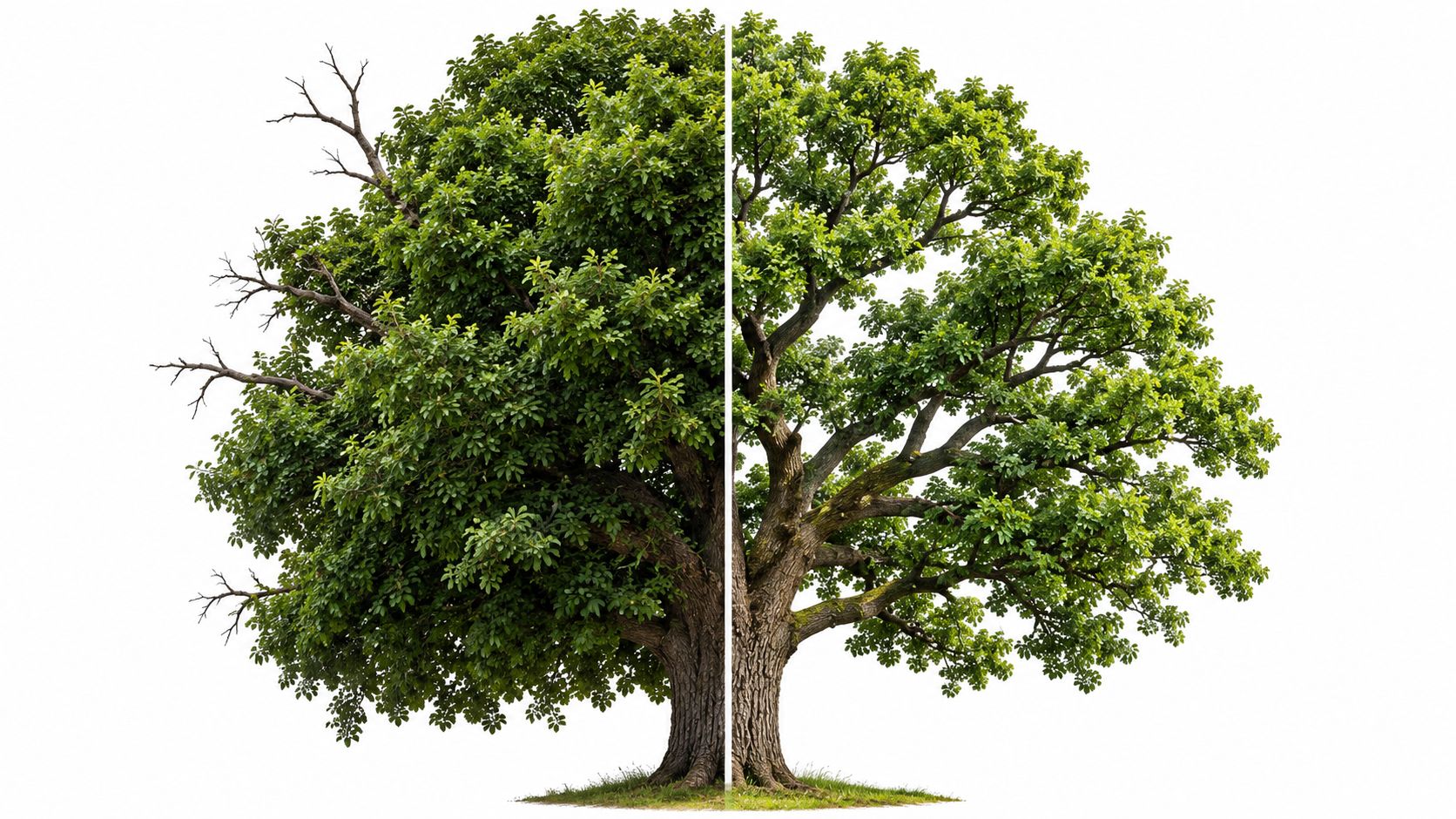
A mature oak can look full and healthy while carrying dead branches, rubbing limbs, and weak growth in its canopy. In East Cobb, a homeowner might notice deadwood hanging above the driveway. In Marietta, several hardwoods may need periodic inspection and selective pruning rather than a dramatic one-time cut.
The purpose of crown cleaning is to remove selected dead, diseased, crossing, or damaged branches while keeping the tree's natural form. Good pruning isn't a haircut around the outside. ANSI A300 provides a framework for specifying and evaluating pruning work, including attention to pruning objectives and cut placement (ANSI A300 pruning standard).
Look beyond the silhouette: Ask which branches will be removed and why. A balanced canopy with correctly placed cuts matters more than an artificially neat outline.
For an East Cobb oak with dead limbs over a driveway, a professional tree trimming crew would identify hazardous wood and assess any crossing or rubbing branches. The intended result is an open, balanced crown, not a stripped tree. A Marietta property with mature hardwoods may benefit from a planned inspection and pruning schedule, adjusted to the trees' condition and the reason for the work.
Request a written estimate describing the objectives and proposed cuts. A licensed, insured company can explain the work before it starts, and an ISA Certified Arborist can assess tree structure and health. Pruning timing should reflect the species, condition, and local disease risks, so ask the arborist why the proposed timing suits that oak.
2. Crown Reduction on Overextended Limbs After a Storm
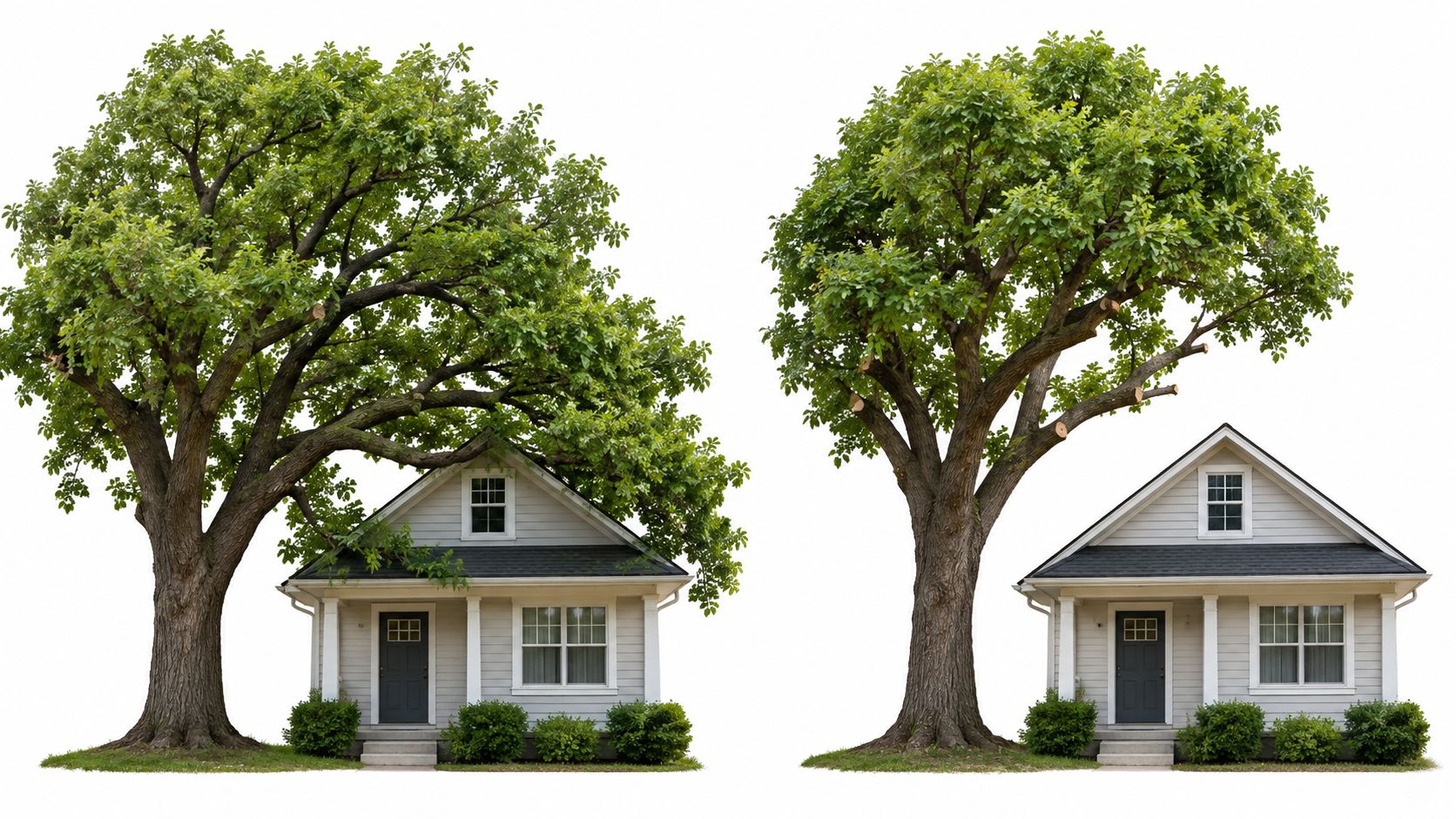
Long, heavy limbs over a roof or deck call for an assessment, not an automatic cutback. After a storm in Roswell, a hardwood may have a crack near a limb attachment or damage that isn't visible from the ground. In Alpharetta, storm-damaged pines near a home may also need inspection before anyone decides whether pruning can address the concern.
Crown reduction shortens selected limbs back to suitable lateral branches. It differs from topping, which cuts back branches without preserving a sound natural structure. The intent is to reduce conflicts and retain a balanced canopy, not just to make the tree smaller. Proper reduction depends on the species, condition, and branch structure. The crown reduction service overview explains this pruning approach.
If you see a split limb or suspect root damage, keep clear and arrange an assessment before work begins. A tree can hide damage beyond what a photograph shows.
In a Roswell example, an arborist inspects a hardwood over a rooftop, finds sound laterals, and recommends reducing selected limbs rather than removing the whole tree. In Alpharetta, a row of damaged pines may need a different response, based on the condition of each tree. Before cleanup, photograph visible storm damage for your records.
Keep away from power lines. If branches touch utility wires, stay at least 10 feet away and contact Georgia Power or 911. Don't attempt to cut or move the branches yourself. Ask the crew to explain the planned cuts, and don't accept topping as a substitute for proper pruning.
3. Hazardous Leaning Tree Assessment and Pruning
A lean deserves attention, but it doesn't automatically mean a tree must come down. In Woodstock, a homeowner may notice a pine leaning toward the house after heavy rain. In Canton, a maple with a longstanding lean may still have a stable root system and sound trunk. The before photo can flag the issue, but an on-site assessment determines the next step.
Look for changes around the base, such as cracked or raised soil, along with trunk splits, dead branches, decay, or mushrooms. The ISA Rocky Mountain Chapter lists these and other visible conditions as potential hazard signs, and recommends keeping people, pets, and vehicles away from a tree that may be unsafe until it's assessed (hazard-tree warning signs).
A Woodstock pine with a sudden lean and disturbed soil may need hazardous tree removal. A Canton maple with healthy roots and no structural damage might be a candidate for selective pruning and monitoring. Removing weight from one side isn't a substitute for correcting a compromised root system or cracked trunk. A qualified arborist should explain whether pruning can reasonably address the risk.
Keep the area clear while you arrange an inspection. Ask the tree service whether removal is needed and whether permits apply to your property. Requirements vary by jurisdiction and by tree. If the tree threatens a home, driveway, or road, tell the company that when you call and ask whether it offers emergency tree removal.
4. Storm Debris and Fallen Limb Cleanup
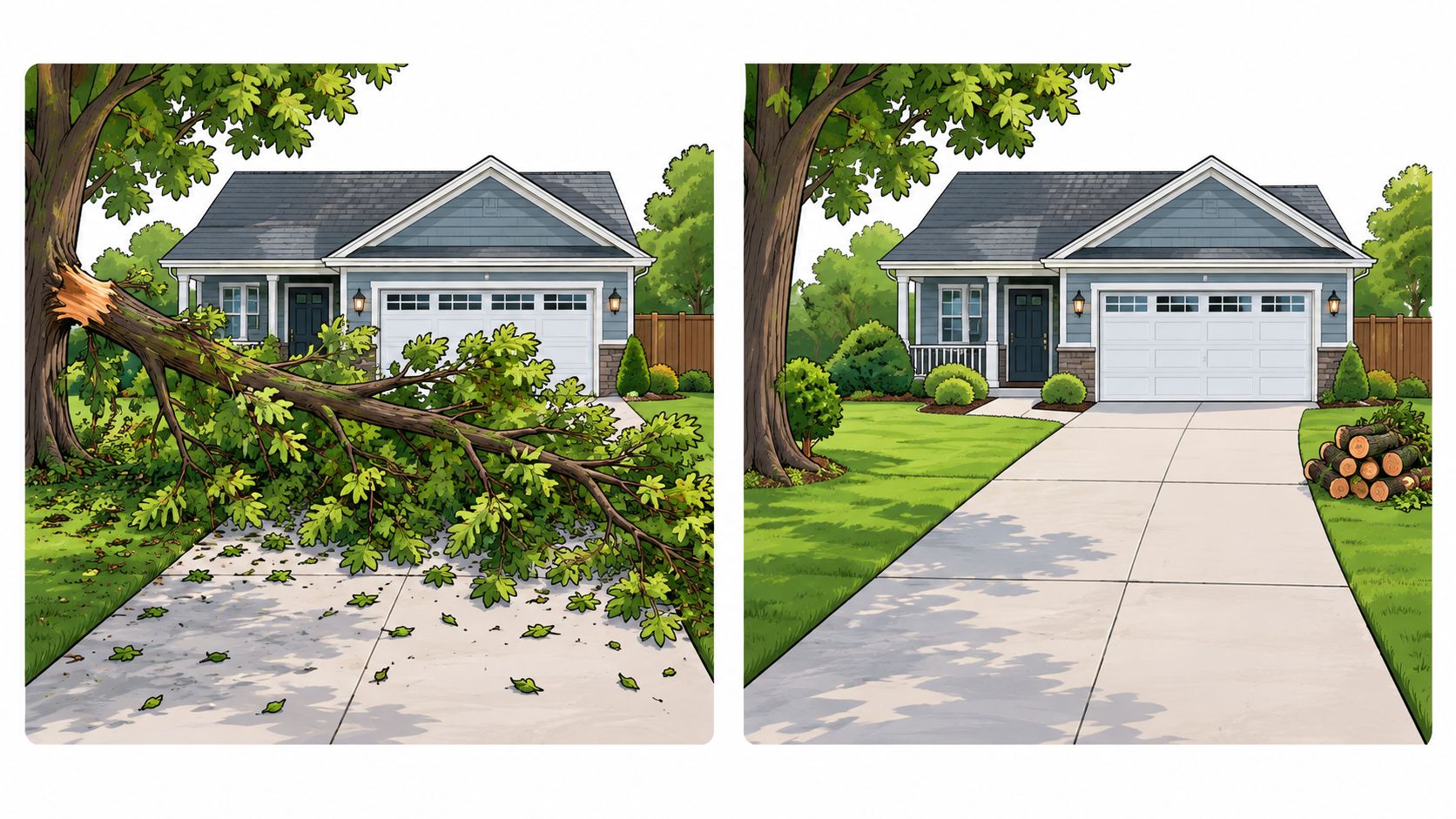
After a storm, a fallen limb across a garage roof or a tree blocking the driveway can turn a routine cleanup into an urgent safety problem. In Kennesaw, a crew may need to remove a limb using rigging so it doesn't cause more damage as it comes down. In Acworth, fallen tree removal may involve cutting and hauling sections before the driveway is usable again.
Don't climb onto a damaged roof or touch a branch that could be in contact with a power line. If lines are down or a tree has fallen onto a power line, call Georgia Power or 911 and stay away. Photograph the damage before cleanup begins, and save receipts for your insurance records.
The plan should account for both removal and the condition of the property afterward. A Kennesaw crew might remove the limb, cover an exposed roof area temporarily, and return to finish yard cleanup. In Acworth, clearing the driveway may come first, while stump grinding can be scheduled after the immediate hazard is handled. Ask what the estimate includes: cutting, hauling, debris cleanup, and any stump work.
Don't judge storm cleanup by speed alone. The crew needs a safe plan for the tree, the structure, and anyone nearby.
For storm damage tree cleanup, fallen tree removal, or a tree cutting service, verify that the company is licensed and insured. Ask for proof of coverage before work starts. The tree-waste removal service can help you understand the debris-removal portion of the job and what to confirm before booking.
5. Crown Raising for Clearance Over Driveways, Roofs, and Sidewalks
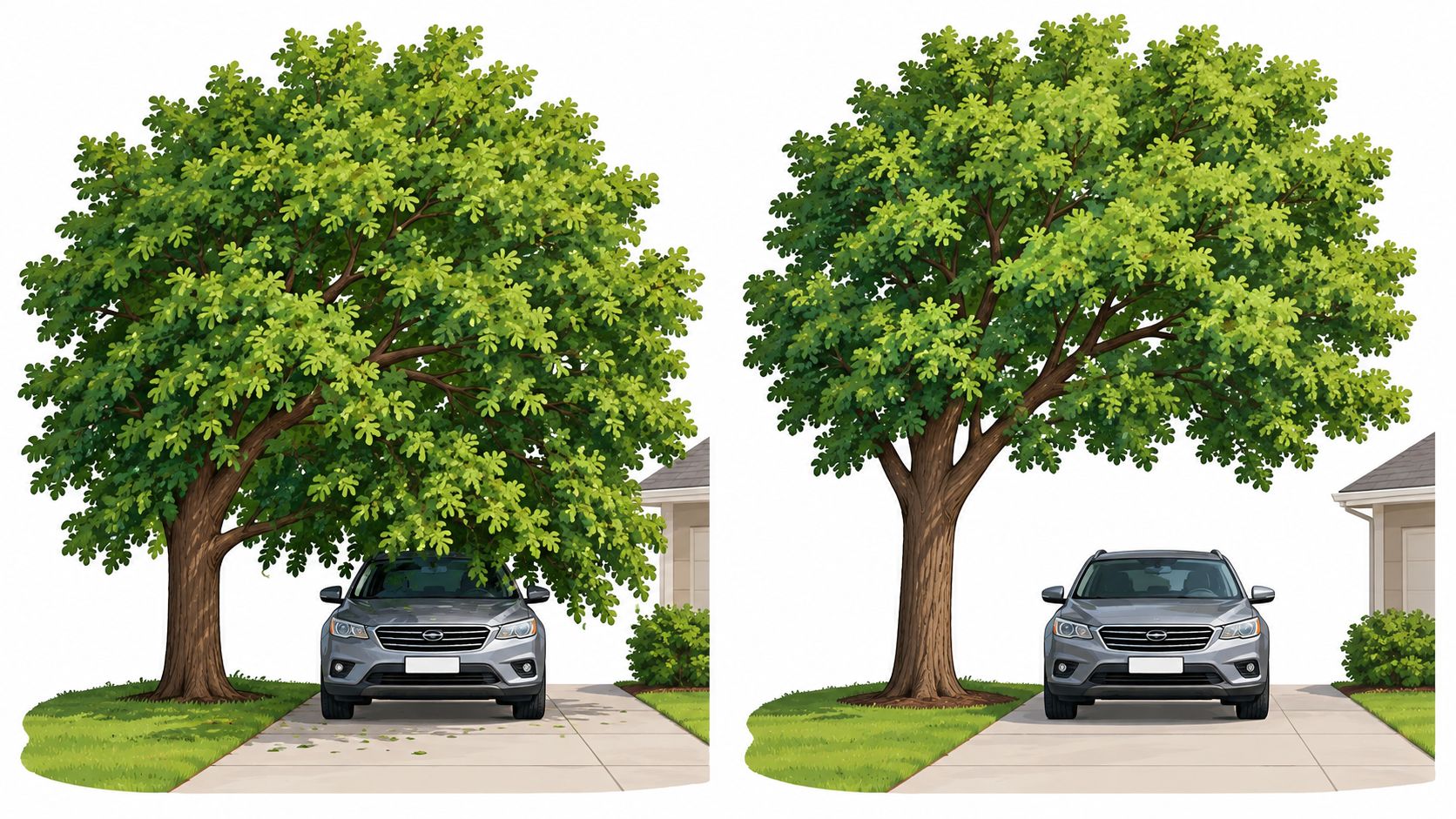
Low limbs can scrape a vehicle, block a walkway, or interfere with a roofline. Crown raising removes selected lower branches to improve clearance while retaining the tree's natural shape. The right result depends on the site and the tree, not on making every trunk bare to the same height.
In Johns Creek, a maple may have limbs that brush a family vehicle as it enters the driveway. An arborist can identify which branches are suitable to remove and whether the work should be staged. In Milton, a sweetgum beside a sidewalk may need selective lower-branch removal to improve pedestrian access without opening the crown too aggressively.
Agree on the clearance goal before work starts. Check whether the tree is near utility lines or in a right-of-way, where separate rules or utility requirements may apply. If branches conflict with power lines, don't prune them yourself; contact the utility.
The amount of live canopy removed should be part of the assessment, especially when a tree is already stressed or the proposed work is substantial. A dramatic clearance cut may solve one problem while leaving the tree unbalanced. Ask the arborist to point out which branches will be removed and which should remain.
6. Restoring Topped Trees with Corrective Pruning
A topped tree often produces a cluster of upright shoots from large cut stubs. Those shoots can grow quickly, but their attachment and the condition of the old cuts need careful assessment. The before photo may look like a bundle of sprouts rather than a usable canopy.
Corrective pruning aims to select and manage suitable branches over time. It can't erase old cuts, and it isn't always a safe or practical alternative to removal. If the trunk or major limbs have extensive decay, removal and replanting may be a better decision than trying to rebuild the crown. The explanation of tree topping and its effects can help homeowners recognize the difference between topping and targeted pruning.
In Cumming, a topped sugar maple might have several shoots that an arborist assesses for spacing, attachment, and condition. In Forsyth County, a pin oak with decay around old stubs may not be a suitable restoration candidate. These are different problems, even if the before photos look similar.
Ask for a written assessment that explains the condition of the old cuts and whether the arborist recommends restoration, continued monitoring, or tree removal. A cautious plan may involve several visits, because the tree needs reassessment as selected growth develops. Don't accept a promise that a single hard cut will restore a topped tree to its former structure.
The best corrective plan may be a staged pruning program, or it may be removal. The tree's condition, not the appeal of a quick visual fix, should decide.
7. Understory Clearing and Lot Preparation
A brush-covered Acworth lot may need understory clearing, stump grinding, and hauling before a contractor can install sod, retaining walls, or artificial turf. Start by identifying the site boundaries, the trees to keep, and how the cleared area will be used. A Cherokee County parcel may need phased work so crews can prepare the site without damaging retained trees.
Mark protected trees and buffer zones before equipment arrives. Sequence clearing, stump work, and grading with the yard care professional to prevent rework. Get a written estimate that separates tree cutting, stump grinding or removal, hauling, and cleanup. The before photo should show what blocks access or preparation; the completed work should reflect what was removed and what was deliberately left in place.
Permits may apply to clearing and grading, not just building work. Cherokee County states that its Land Disturbance Permit process covers clearing and grading of one acre or more, while work below one acre is regulated through an Erosion Control Permit. The county also lists tree or vegetation removal among regulated activities and includes soil disturbance within 200 feet of state waters (Cherokee County land-disturbance permits). Check with the county or city before work begins, particularly near protected trees, graded areas, or water buffers.
For site designers, property managers, and homeowners coordinating an installation, an itemized scope gives each contractor the same boundaries and work sequence. For a multi-contractor project, use Exayard landscaping estimating tools to build an itemized scope for each crew to price. Confirm permits and arrange an on-site tree assessment before equipment arrives. Keep the agreed limits and sequence on file so follow-up work does not disturb retained trees.
Tree Trimming Before & After: 7-Project Comparison
| Tree Service Example | 🔄 Complexity & Resource Requirements | ⚡ Typical Timeline | 📊 Expected Outcome | ⭐ Key Advantage | 💡 Ideal Use Case |
|---|---|---|---|---|---|
| Crown Cleaning and Deadwood Removal | Moderate; arborist assessment and pruning equipment | Usually one scheduled visit | Deadwood and weak branches removed; natural canopy retained | Reduces limb hazards while supporting tree health | Mature trees with dead, crossing, or diseased branches |
| Crown Reduction After a Storm | Moderate to high; skilled pruning and careful limb access | Often scheduled promptly after inspection | Overextended limbs reduced to suitable laterals; crown remains balanced | Reduces limb weight without topping or removing the tree | Storm-damaged or overextended limbs near roofs and structures |
| Hazardous Leaning Tree Assessment and Pruning | High; risk assessment, with removal equipment if needed | Urgent when risk is immediate; otherwise scheduled | Tree is monitored, pruned, stabilized, or removed based on risk | Provides a documented safety decision | Trees with a sudden lean, root disturbance, cracks, or soil movement |
| Storm Debris and Fallen Limb Cleanup | High; crew, rigging, hauling, and possibly stump-grinding equipment | Emergency response may be delayed after major storms | Access and yard are cleared; damaged wood is removed | Quickly reduces debris-related hazards and property damage | Fallen trees or limbs blocking driveways or affecting structures |
| Crown Raising for Clearance | Moderate; careful pruning, often phased | One visit or gradual work over multiple seasons | Lower branches are lifted while enough live crown is retained | Improves clearance for vehicles and pedestrians | Low branches obstructing roads, sidewalks, driveways, or rooflines |
| Corrective Pruning of Topped Trees | High; arborist evaluation and repeated pruning | Typically two to four seasons | Selected sprouts develop into a better-spaced crown, or removal is advised | May preserve a valuable tree and improve its structure | Previously topped trees with manageable decay and viable new growth |
| Understory Clearing and Lot Preparation | High; heavy equipment, hauling, and permit coordination may be needed | Varies with lot size, density, and approvals | Brush and debris are cleared; site is prepared for grading or landscaping | Creates access and prepares land for construction or landscaping | Overgrown or wooded lots requiring site preparation |
Turning a Before Photo Into a Pruning Plan
Use the photos as a way to identify the problem, not as a template for copying someone else's cuts. A dead limb over a driveway, a storm-damaged crown, a sudden lean, and low branches blocking access call for different responses. The right plan may be tree pruning, crown reduction, emergency tree removal, stump grinding, or a decision to leave the tree alone and monitor it.
Ask for a written assessment that names the proposed work, explains why the selected cut or removal is appropriate, and identifies the share of the canopy affected. Request a follow-up plan, too. Aftercare may include checking for new shoots, dieback, fresh cracks, or signs of continuing movement at the base. The schedule should reflect the tree's condition and the risk, rather than a universal rule.
If you're in Marietta, Roswell, Kennesaw, Woodstock, Acworth, or Canton, describe the location and urgency clearly when you contact a tree service. Tell the dispatcher if a tree has fallen on a home, blocks access, leans toward a structure, or is near power lines. For “tree removal near me” searches, compare the written scope and safety plan, not just the apparent speed of the response. Ask whether the company is licensed and insured, whether an ISA Certified Arborist will assess the work, and whether a permit may be required.
Save the before photos for insurance records and future comparison. If a crew is available for a free estimate, ask them to walk you through what they'd remove, what they'd leave, and when they'd inspect the result again. That gives homeowners, commercial property managers, and grounds care professionals a practical basis for choosing between pruning, removal, and continued monitoring.
Richmond Tree Experts GA provides tree trimming and pruning, tree removal, stump grinding, and arborist assessments for properties across the Atlanta area. If storm damage, a dangerous lean, or a tree over a roof needs attention, share your photos and request an estimate through Richmond Tree Experts GA.

