

So, you're wondering what it costs to have a tree taken down? The short answer is it can run anywhere from $250 to over $2,500. The final number on your invoice really boils down to the tree's size, where it's located on your property, and its overall condition.
Understanding the Baseline Cost of Tree Removal
When you ask, "what is the cost to cut down a tree?" don't think of it as a fixed price tag on a shelf. It's more like a sliding scale.
The starting point for almost any quote is the tree's height. It's simple, really. Just like a small sedan costs less than a big rig, a little ornamental tree in your front yard is a much simpler job—with far less labor and risk—than a massive oak looming over your house. This initial size check gives an arborist a rough idea of the equipment, crew, and time they'll need. It's the most straightforward factor that shapes your first estimate.
To give you a clearer picture, here’s a quick breakdown of what you can generally expect based on tree size.
Estimated Tree Removal Costs by Size
| Tree Size | Height Range | Average Cost Range |
|---|---|---|
| Small | Under 30 feet | $250 – $600 |
| Medium | 30 to 60 feet | $600 – $1,600 |
| Large | 60 to 80 feet | $1,200 – $2,200 |
| Extra-Large | Over 80 feet | $2,000+ |
This table provides a solid starting point for budgeting, but remember, these are just ballpark figures.
How Size Shapes the Price
Looking ahead, projected costs for 2025 aren't much different. A small tree removal job might start around $250. For a medium-sized tree between 30 and 60 feet, you're likely looking at a range of $600 to $1,600. Once you get into the big leagues—trees towering over 60 feet—prices often start at $1,200 and can climb quickly from there, with some extra-large giants easily exceeding $2,500. You can explore more detailed pricing predictions to get a deeper sense of these numbers.
This infographic lays it all out visually.
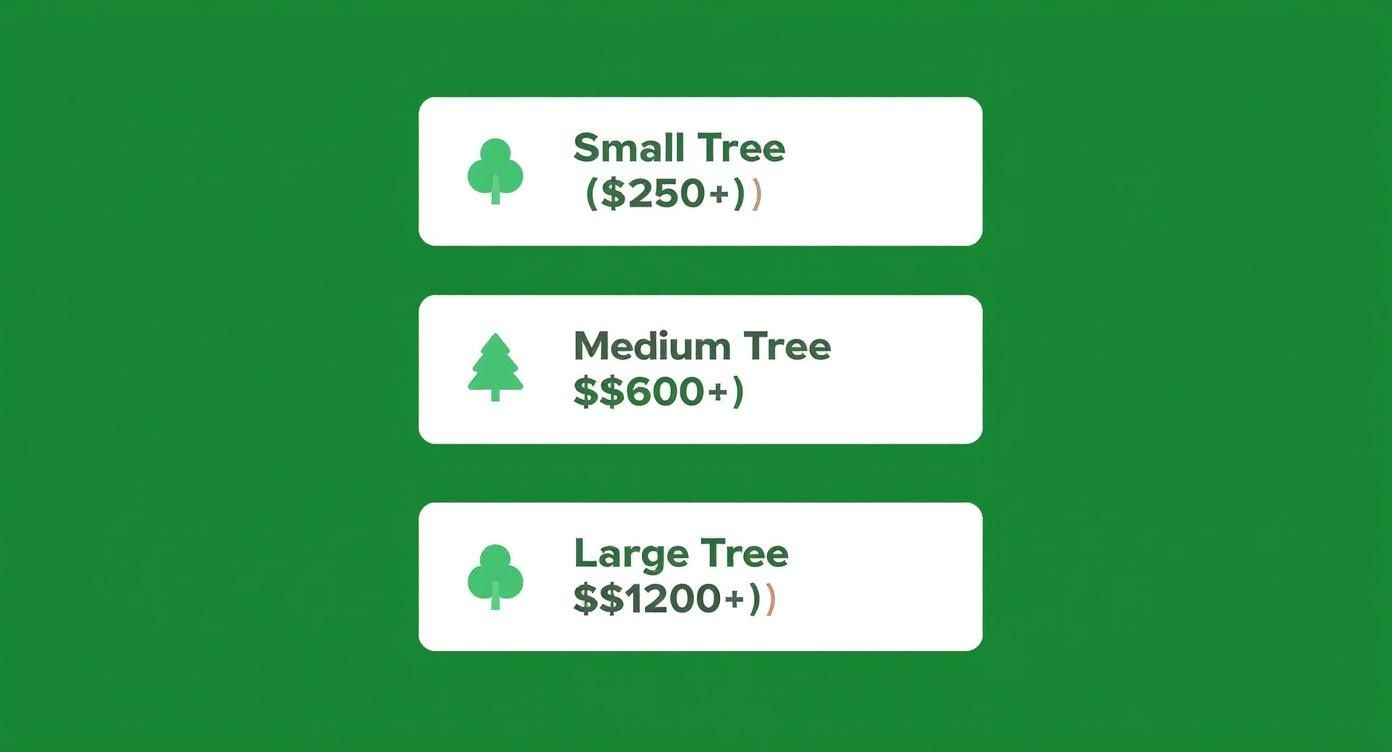
As you can see, the jump in price between categories is pretty significant. It really drives home why height is the first thing any professional will look at when giving you a quote.
Keep in mind, these numbers are a baseline. The unique circumstances of your tree—such as its proximity to your home, its health, and ease of access—will further adjust this starting price.
Ultimately, while height gives you a ballpark figure, it's just the first piece of the puzzle. The true cost to cut down your tree only comes into focus after a professional arborist has had a chance to assess all the specific variables on your property.
What Drives Your Tree Removal Quote Up or Down?
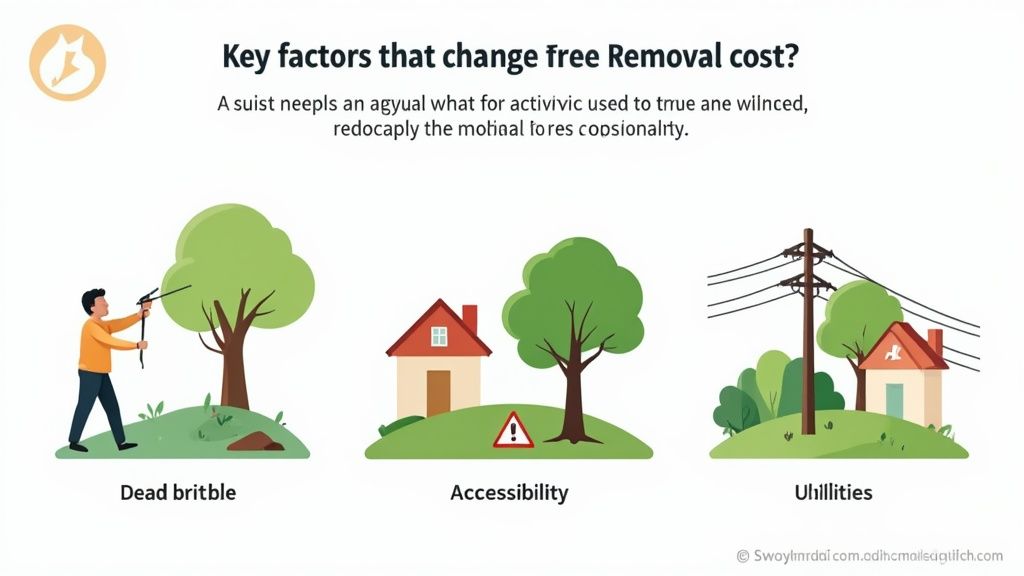
While a tree's height gives us a starting point for the cost, a handful of other factors can send that estimate swinging in either direction. Think of it like this: taking down a tree in a wide-open field is a pretty straightforward job. But removing that same tree when it's looming over your roof and tangled in power lines? That’s a whole different ballgame. It becomes a complex operation that needs a highly skilled team and some serious planning.
At the end of the day, an arborist's quote comes down to three things: risk, complexity, and time. Let's dig into the key variables they're looking at when they walk your property to figure out the final cost to cut down a tree.
Tree Health and Condition
The health of your tree is a huge piece of the puzzle. A strong, healthy tree has predictable wood, which lets the crew make precise cuts and control how it comes down. Easy enough.
A dead, dying, or diseased tree, however, is a major wild card. The wood can be brittle and weak, making it incredibly dangerous to climb and unpredictable to cut. In these cases, crews often have to bring in specialized equipment like a bucket truck or even a crane to dismantle the tree piece by piece from above. That extra machinery and caution adds a good bit to the project's bottom line.
A dead or decaying tree can increase the removal cost because it poses a higher risk to the crew and your property. The unpredictable nature of brittle branches requires more careful planning and often specialized equipment for a safe takedown.
Location and Accessibility
After size, the tree’s location on your property is probably the single biggest factor influencing the price. A tree standing alone in a big, open front yard is the best-case scenario—it’s the easiest and cheapest to remove. The crew can fell it and handle all the cleanup right there on the ground.
But when a tree is tucked away in a tricky spot, things get complicated fast.
- Close to Buildings: Is the tree leaning over your house, garage, or fence? Every nearby structure is a hazard. The crew has to work much more slowly, often using ropes and rigging to carefully lower each branch and log to the ground without causing damage.
- Backyard Jobs: If the tree is in a fenced-in backyard with no easy access for equipment, the job instantly becomes more labor-intensive. Every single log and branch has to be carried out by hand, which dramatically increases the time and effort involved.
- Near Utilities: A tree tangled in or even just close to power lines is an extreme hazard. This isn't just a tree job anymore; it often requires coordinating with the utility company and using specialized, non-conductive tools to prevent a power outage or a serious accident.
It’s not unusual to see costs jump by 25% to 50% for trees near power lines or in hard-to-reach areas. These logistical hurdles are a big part of why every tree removal quote is so different. For a deeper dive, you can learn more about how location influences tree service pricing on invoicefly.com.
Tree Species and Structure
Finally, the type of tree absolutely matters. Some species, like oak, have incredibly dense and heavy wood, making them much harder to cut, handle, and haul away. A sprawling oak with several massive trunks is a far more involved project than a straight, single-trunk pine of the exact same height.
An arborist also looks at the tree's overall structure—is it leaning? How many major limbs does it have? How wide is the canopy? All of these details shape the strategy for taking it down safely, and that strategy is directly reflected in your final quote.
How Your Location Impacts the Final Price
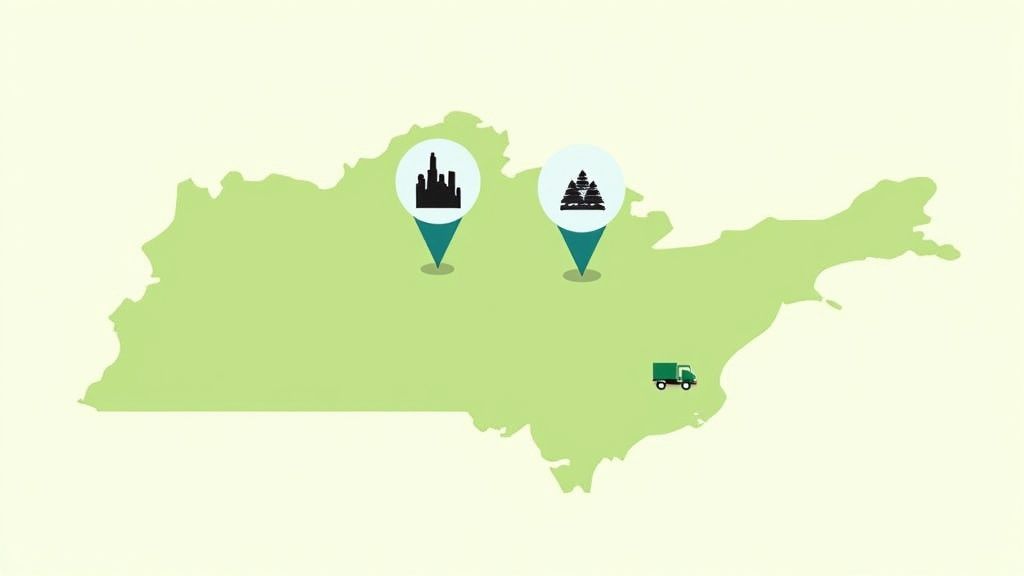
Just like the price of gas or a gallon of milk changes from town to town, the cost to cut down a tree is a very local number. It all comes down to simple economics—the going rate for labor, local regulations, and the overall cost of doing business in your specific area all get baked into the final quote.
Think about it: a tree service in a packed city has way higher overhead than a crew out in a rural county. They’re paying more for just about everything—fuel, insurance, and experienced arborists. Those expenses have to be covered, which is why you'll almost always see higher prices in and around major metro areas.
Urban Centers Versus Rural Regions
Getting a tree down in a busy city is a whole different ball game. It’s a logistical challenge. Crews have to deal with tight spaces between homes, navigate traffic, and follow local rules that might limit when they can work or require special permits. Even hauling away the debris costs more in urban zones where landfill space is at a premium.
Out in the country, however, things are often much more straightforward. With more open space and a lower cost of living, the entire job can be done more easily and for less money. This gap between city and country pricing is one of the biggest factors you'll face when budgeting for tree removal.
These differences can be stark. For example, tree removal in coastal states like California and Florida often leans toward the higher end, typically ranging from $650 to $1,500 for a single tree. Meanwhile, states in the Midwest, like Illinois and Colorado, tend to have much lower averages, often around $350 to $730. You can see more data on these regional cost differences on homeadvisor.com.
Local Market Dynamics
Even within the same state, you'll see prices swing. A major hub like Atlanta will have a completely different pricing structure than a smaller town just an hour's drive away. This is exactly why getting multiple local quotes is non-negotiable. To get a feel for the specific factors in Georgia, for instance, check out our guide on the tree removal cost in Atlanta.
The bottom line is that national averages are just a starting point. It’s your local economy—from labor costs to disposal fees—that really sets the price for tree work in your neighborhood.
Pricing for Large-Scale Land Clearing
Now, if you're looking at a bigger project, like clearing an entire lot for a new home, the pricing model changes. Instead of paying per tree, companies will often quote you per acre. This can be a much more affordable way to handle a large number of trees at once.
- Economies of Scale: It’s far more efficient to bring in the heavy machinery and spend a full day clearing dozens of trees than it is to tackle just one.
- Reduced Per-Tree Cost: While the total bill is obviously higher, the average cost per tree can drop by as much as 30-50%.
- Ideal for Development: This is the standard pricing model for developers, builders, and landowners who are prepping a site for construction or a major landscaping overhaul.
At the end of the day, understanding how geography affects the price will help you set a realistic budget and know a fair quote when you see it.
Understanding the Add-Ons in Your Quote
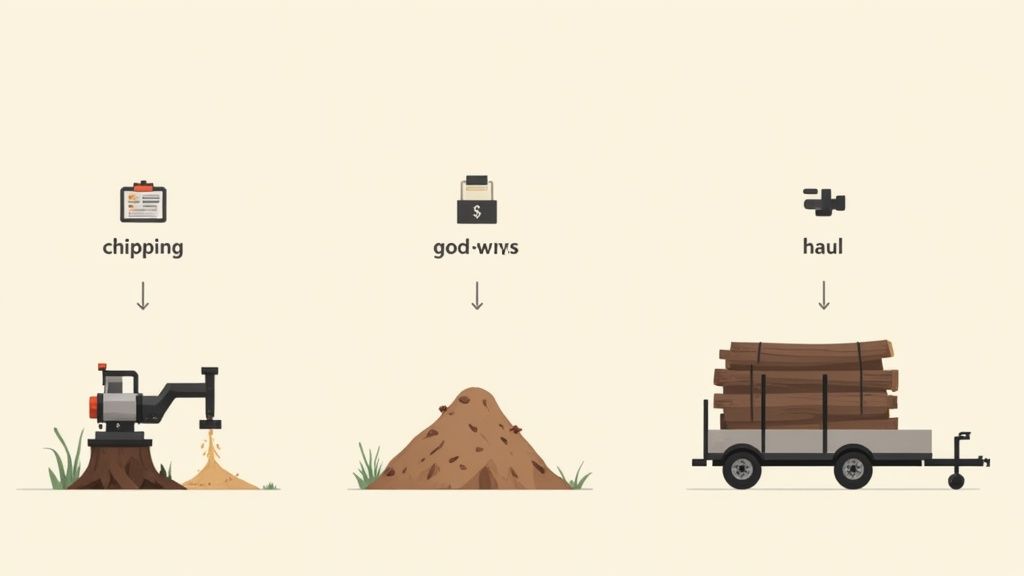
When you get a quote for tree removal, it’s easy to think the price covers everything from the first cut to the final cleanup. But that’s not always the case. A standard estimate usually only includes the core service: felling the tree and cutting it into manageable pieces. That gets the tree on the ground, but it often leaves you with a yard full of wood and an unmovable stump.
This is where add-on services come into play. Think of it like buying a car—the base price gets you the vehicle, but features like a sunroof or leather seats are extra. In the tree world, things like stump grinding, wood chipping, and hauling are separate line items that let you customize the job to fit exactly what you need. Knowing these options is the key to comparing quotes accurately and making sure there are no surprises on the final bill.
Stump Grinding and Removal
Once a tree is down, the stump is left behind. It’s more than just an eyesore; it’s a tripping hazard and can become a magnet for pests like termites and ants. You’ve got two main ways to deal with it, and each comes with a different price tag.
- Stump Grinding: This is by far the most common and budget-friendly approach. We use a powerful machine with a rotating cutting wheel to grind the stump down several inches below the soil. This lets you fill the area with topsoil, plant grass, and make it look like the tree was never there.
- Stump Removal: Now this is a much bigger job. It involves digging out the entire stump and its main root system, which calls for heavy equipment and leaves a massive hole to fill. We usually only recommend this if you’re planning to build something or plant another large tree in that exact spot.
The cost for grinding is typically based on the stump’s diameter. You can get a much deeper dive into the specifics in our guide to the average cost of stump grinding.
Handling the Debris
A big, mature tree creates a surprising amount of debris—we’re talking branches, leaves, and massive logs. Your quote should clearly spell out how all this material will be handled, and you generally have a few choices that will affect the final cost.
It's a good idea to always clarify cleanup when getting an estimate. Some companies might leave all the wood and debris on-site by default unless you specifically ask for it to be removed.
Here are the common options for managing the mess:
- Wood Chipping: The crew feeds the smaller branches and limbs into a wood chipper, instantly turning them into valuable mulch. A great perk here is that you can often keep the wood chips for your garden beds.
- Log Hauling: The main trunk sections are way too big to chip. This service involves loading those heavy logs onto a truck and hauling them away.
- Self-Cleanup: If you're looking to save some money, you can always opt out of cleanup. This leaves you to deal with the wood yourself, which is a perfect option if you have a fireplace or know someone who’d appreciate free firewood.
Common Add-On Services and Their Average Costs
To give you a clearer picture, here’s a quick breakdown of what you can expect to see on a quote for these optional services.
| Service | Average Cost Range | What It Includes |
|---|---|---|
| Stump Grinding | $100 – $400 | Grinding the stump 4-8 inches below ground level. |
| Wood Chipping | $75 – $150 | Processing branches and small limbs into wood chips. |
| Log Hauling | $100 – $300+ | Loading and removing large logs and trunk sections from the property. |
By talking through these services with your arborist, you can tailor the job perfectly to your property and your budget, ensuring you only pay for what you truly need.
How to Get Fair and Accurate Tree Removal Quotes
Knowing the numbers behind tree removal costs is only half the battle. Now, you need to find a trustworthy professional who can get the job done safely and for a fair price.
Truthfully, hiring the right company is just as important as the work itself. It's your best defense against property damage, liability nightmares, and just plain shoddy results.
Navigating this process can feel like a lot, but taking it step-by-step makes all the difference. Your goal is to get several competitive bids from qualified experts so you can compare your options and choose with confidence. Rushing this or just picking the first name you find is a classic recipe for overpaying—or worse, hiring an uninsured crew.
Find Certified and Insured Professionals
Your search should always start with professionals who are both certified and fully insured. A certified arborist brings proven expertise to the table, while the right insurance policies protect you from any "what if" scenarios.
- General Liability Insurance: This is what covers any damage to your property. Think a fallen limb hitting your roof, fence, or even your neighbor's shed.
- Worker's Compensation: This one is non-negotiable. It protects you from being on the hook financially if a crew member gets injured while working on your property.
Don't be shy about asking for proof of both types of insurance and checking that the policies are current. Any legitimate company will have this ready for you. If they hesitate, that's a huge red flag.
Here's a pro tip that's practically an industry standard: Always get at least three written estimates from different companies. It's the single best way to get a feel for the fair market price in your area and spot an estimate that's way out of line.
What to Look for in a Written Quote
Comparing quotes only works if you're comparing apples to apples. A vague, one-line price scribbled on the back of a business card just won't cut it. A professional quote should be a detailed document that spells out the entire scope of the project. To see what a proper one looks like, you can learn more about professional tree service estimates and why they're so important.
Here is a quick checklist of what every legitimate quote should include:
- Company Information: Their full name, address, and phone number.
- Detailed Scope of Work: A clear description of which tree (or trees) is being removed and exactly what the service includes. Does it cover felling, debris removal, and stump grinding?
- Itemized Costs: A breakdown of the price for the main removal and any add-on services you talked about.
- Proof of Insurance: They should mention or attach copies of their liability and worker's compensation policies.
- Project Timeline: An estimated start date and a reasonable idea of how long the job will take.
- Total Price and Payment Terms: The final, all-in cost and details on how and when they expect payment.
By making sure each quote has this level of detail, you can confidently weigh your options and pick the best pro for the job—securing a fair price and, most importantly, peace of mind.
Still Have Questions About Tree Removal Costs?
Even after you've got a quote in hand, it's natural to have a few more questions rattling around. It's a big job, after all. Understanding the finer details—like how insurance plays a role or where you can find potential savings—is key to feeling confident about the project.
We've put together some straightforward answers to the most common questions we hear from homeowners. Think of this as filling in the last few pieces of the puzzle so you can move forward without any surprises.
Will My Homeowners Insurance Cover Tree Removal?
This is easily the most frequent question we get, and the answer almost always comes down to why the tree is coming down. In most situations, your insurance will only get involved if a tree has already fallen and damaged something covered by your policy, like your house, fence, or garage, during an event like a windstorm.
However, insurance policies almost never cover preventative removal. If you have a tree that’s dead, looks sick, or you’re just worried it might fall someday, the cost of taking it down is considered routine home maintenance. That one's on you, the homeowner. It’s always a smart move to pull out your policy or call your agent to be certain about your specific coverage.
Can I Save Money by Removing a Tree in Winter?
Absolutely. Scheduling your tree removal for the dormant season—think late fall and winter—can often knock a bit off the price. Demand for tree work tends to dip when it's cold out, so some companies offer more competitive rates just to keep their crews busy.
It's not just about the price, though. There are some real practical benefits to a winter removal:
- Better Visibility: When the leaves are gone, an arborist has a crystal-clear view of the tree’s entire structure. This makes planning the job simpler and often faster.
- Lawn Protection: Hard, frozen ground is a lot tougher than a soft, summer lawn. It can stand up much better to heavy equipment, which helps protect your landscaping from damage.
It's not a guarantee, but the off-season is definitely a smart time to gather quotes. You’ll often find that tree services have a bit more wiggle room in their schedules and their pricing, which can lower your total cost.
What Happens if a Company Damages My Property?
This is precisely why you should only hire a tree service that is fully and properly insured. Any reputable company will carry two crucial types of insurance that protect you from any potential mishap.
- General Liability Insurance: This is what covers your property. If a limb goes sideways and takes out your fence or lands on the roof, this policy is what pays for the repairs.
- Worker's Compensation: This one is just as important. It covers any injuries the crew members might sustain while working on your property. If they don't have it, you could be held liable for their medical expenses.
Before any work begins, don't be shy about asking for their certificate of insurance. You can even call the provider listed on the certificate to confirm the policies are active. It’s a quick, simple step that buys you complete peace of mind.
How Can I Lower the Overall Cost?
Besides aiming for a winter removal, the single best way to trim the final bill is to handle some of the cleanup yourself. When you're getting quotes, ask the company what the price would be without the add-on services like hauling and chipping. If you’re willing and able to deal with the debris, you can make a real dent in the total cost.
For instance, you could ask the crew to simply fell the tree and leave the wood where it lies. If you have a fireplace or know someone who wants firewood, you’ve just saved yourself the hauling fee. Just make sure you leave all the dangerous cutting and high-up work to the professionals.
Navigating the costs and logistics of tree removal can feel complex, but you don't have to do it alone. The ISA Certified Arborists at Richmond Tree Experts GA have been serving homeowners across the Atlanta area, including Johns Creek, Alpharetta, and Marietta, since 1985. We provide transparent, detailed quotes and safe, professional service. Contact us today for a free estimate at https://richmondtree.com.
Need a tree taken down safely? Richmond Tree Experts has worked on Marietta and Metro Atlanta trees since 1985, and every job is looked at by an ISA Certified Arborist before it is priced. Start with tree removal, or see everything we do: tree removal, stump grinding and arborist services across Cobb, Fulton, Cherokee, Gwinnett and DeKalb counties (service areas).
Call (770) 974-3964, 7am to 11pm every day, or request an estimate online.

