

Let's get right to it. If you're looking to plant a tree here in North Georgia, you can expect to invest anywhere from $200 to over $2,000. That price tag depends heavily on the tree's size, its species, and the labor involved.
It's easy to see that number and think it's a lot for a single tree, but this isn't just a simple retail purchase. It's a long-term investment in your property's value, curb appeal, and overall health.
Your Guide to North Georgia Tree Planting Costs
Planting a tree is so much more than digging a hole and dropping it in—it’s a strategic move for your landscape's future. For homeowners everywhere from Milton and Johns Creek to Marietta, understanding what really goes into the cost is the first step toward making a smart, lasting choice for your yard.
Think of it this way: you’re not just buying a product off a shelf. You’re investing in a living asset that, when planted correctly, will give back with shade, beauty, and value for decades. A professional service ensures this success by handling all the critical details that most people overlook.
Understanding the Investment
So, what are you actually paying for? The price covers far more than just the sapling itself. It includes the expertise to choose a species that will actually thrive in our dense Georgia clay soil, proper site preparation, and the skilled labor to plant it at the exact right depth.
These factors are absolutely crucial for strong root establishment and long-term survival. In fact, improper planting is one of the top reasons new trees fail. The value of getting it right the first time is huge. If you want to learn more about the ongoing care that keeps trees healthy, our guide on professional branch tree services is a great place to start.
A correctly planted tree is an asset that appreciates over time, enhancing curb appeal and property value. An incorrectly planted tree often becomes a liability, leading to future removal costs.
To give you a clearer picture of what to expect, here’s a quick breakdown of typical costs based on tree size.
Estimated Tree Planting Costs at a Glance
This table provides a quick overview of typical cost ranges based on tree size, helping you budget for your project.
| Tree Size | Typical Height or Caliper | Estimated Cost Range (Includes Labor) |
|---|---|---|
| Small Sapling | 3-5 feet tall | $200 – $500 |
| Medium Tree | 6-10 feet tall / 1.5-inch caliper | $500 – $1,200 |
| Large Tree | 12-15+ feet tall / 2-3 inch caliper | $1,200 – $2,500+ |
Remember, these are general estimates. The final cost will always depend on the specific tree and the unique conditions of your property.
Decoding Your Quote: What Are You Actually Paying For?
When you get a quote to plant a new tree, it’s easy to focus on the bottom line. But that number represents a lot more than just the tree itself. Think of it like a high-end dinner. You aren't just paying for the raw ingredients; you're paying for the chef's expertise, the meticulous prep work, and the final presentation that makes the meal unforgettable.
In the same way, a professional tree planting quote covers the entire process, ensuring your new tree doesn't just survive—it thrives. Each line item is designed to give your tree the best possible start, which is a huge deal for property managers in places like Alpharetta and Roswell who need to justify their landscape investments. The whole point is to do it right the first time to avoid costly replacements down the road.
The Anatomy of a Professional Planting Quote
So, what goes into that final price? The most obvious part, of course, is the cost of the tree. This can swing wildly depending on the species you choose, its size and maturity, and even how readily available it is. But that’s just the starting point.
The real value is in the labor and expertise. You're paying for the skill of an ISA-Certified Arborist who knows our specific Georgia soil like the back of their hand. They understand the exact planting depth required to encourage strong root growth. This knowledge is what separates a struggling tree from one that flourishes for years to come.
A professional tree planting quote isn't just a bill for a tree and a hole. It's an investment in a living asset, covering the materials, machinery, and mastery needed to ensure it grows strong for decades.
This diagram shows how tree size is often the biggest factor in the overall cost.

As you can see, larger trees demand significantly more resources, and the price reflects that.
Beyond the Tree and the Hole
Digging a bit deeper, several other factors play a role in the total cost. These are the behind-the-scenes essentials that make for a smooth, successful installation.
Let's break down the typical components you'll see in a detailed estimate.
Detailed Cost Component Breakdown
| Cost Component | What It Covers | Typical Impact on Price |
|---|---|---|
| The Tree Itself | The price from the nursery for your chosen species, size, and grade. | Major. This is often the largest single cost, especially for mature or rare trees. |
| Labor | The physical work of digging, planting, and securing the tree by a skilled crew. | Major. Covers the time and expertise of the arborists and technicians on-site. |
| Delivery & Transport | Safely moving the tree from the nursery to your property without damaging the trunk or root ball. | Moderate. Larger trees require bigger trucks and more careful handling, increasing this cost. |
| Site Preparation | Clearing the planting area, amending the soil with compost, and ensuring proper drainage. | Moderate. Poor soil or a difficult-to-access site will increase prep time and cost. |
| Equipment | The use of machinery like augers, mini-excavators, or even small cranes for very large trees. | Variable. Depends entirely on the scale of the job. A small tree might need none; a large one might need several. |
| Cleanup & Finishing | Applying mulch, initial deep watering, staking (if needed), and cleaning up the site afterward. | Minor to Moderate. Includes materials like mulch and the labor to leave your property tidy. |
This table helps illustrate that you're paying for a comprehensive service, not just a product. Every one of these steps is critical.
A few other key logistical factors contribute to the total:
- Specialized Equipment: You can't just stick a large tree in the ground with a shovel. Proper machinery, from augers to small cranes, is non-negotiable for a safe and correct installation.
- Delivery and Transportation: Getting a mature tree from the nursery to your home is a delicate operation. It needs to be handled carefully to protect the trunk, branches, and especially the critical root ball from damage.
- Site Preparation and Cleanup: This covers everything from mixing the right amendments into our Georgia clay soil to applying a healthy layer of mulch, giving the tree its first good watering, and making sure your yard is left neat and tidy.
Knowing what goes into the price empowers you to make a smart decision. If you’re ready to see a clear breakdown for your specific project, the best move is to get a detailed quote. When you're ready, you can request a transparent tree service estimate from our certified professionals.
Key Factors That Influence Your Final Tree Planting Cost
Beyond the price tag on the tree itself and the basic labor to dig a hole, a few on-the-ground variables can really shift the final cost. Think of it like this: baking a cake in your kitchen is one thing. Baking that same cake on a rocking boat in the middle of a storm? That's a whole different challenge requiring more skill, equipment, and time. Your property's unique conditions are the "storm," and they can make the job a bit more complex.
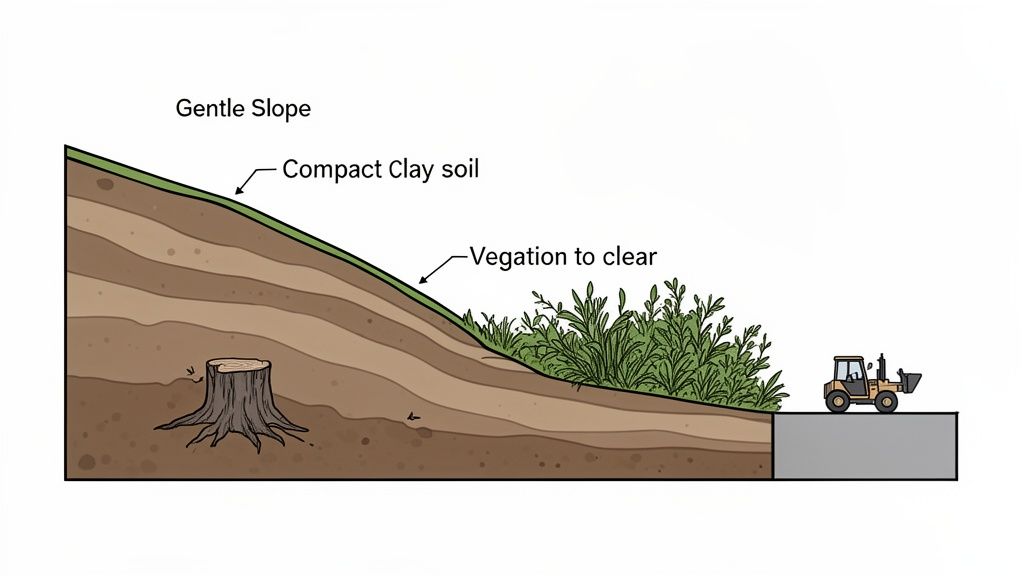
This is especially true for homeowners in places like Marietta and Forsyth County, where we see sloped yards and that classic Georgia red clay all the time. Knowing what to look for ahead of time helps you get a realistic picture of the job and avoid any surprises on the final invoice.
Site Access and Location
The first major variable is simply getting to the planting spot. Is it right out front by the curb, or is it tucked away in a fenced-in backyard on the other side of the pool?
Easy access means our crew and equipment can get in and out efficiently, which keeps labor costs down. When access is tricky, however, new costs can pop up.
- Tight Spaces: Navigating fences, narrow gates, or tight side yards might mean we can't bring in larger equipment, forcing us to rely on more manual labor.
- Hills and Slopes: Planting on a steep grade is much harder work. It often requires special techniques to make sure the tree is secure and to prevent future erosion problems.
- Remote Locations: If the planting spot is a long haul from the driveway, it simply takes more time and manpower to transport the tree, soil, tools, and everything else needed for the job.
Soil Quality and Site Preparation
The ground itself plays a huge part in the total cost. That infamous Georgia red clay might be iconic, but it's often dense, compacted, and low on nutrients. It takes a lot of work to turn it into a welcoming home for a new tree.
Just digging a hole and dropping a tree into that hard-packed clay is a recipe for failure. The roots can't spread out, and water has nowhere to go, which can essentially drown the tree before it ever gets established. This is why professional site preparation isn't just a good idea—it's essential for the tree's long-term survival.
Investing in soil amendment isn't an upsell; it's an insurance policy for your tree. It gives the roots the healthy, well-draining foundation they need to establish quickly and thrive for years to come.
This critical prep work often includes:
- Soil Amendments: We almost always need to mix in generous amounts of high-quality compost and other organic matter. This helps break up the dense clay, improves drainage, and provides the nutrients a young tree craves. The amount needed directly affects the cost.
- Grading: Sometimes minor grading is needed to ensure water drains properly, flowing away from the tree's trunk and your home's foundation.
- Clearing Vegetation: If the perfect spot is currently home to turf, weeds, or old shrubs, we have to clear that out first, which adds to the labor time.
Existing Obstacles and Cleanup
Finally, we have to consider what’s already on your property. If you're replacing a dead tree, for example, the job doesn't start with planting—it starts with removal.
One of the most common things people forget is the old stump. If a stump is sitting right where the new tree needs to go, it has to be ground down first. Stump grinding is a separate service with its own price tag, usually running between $150 and $400, depending on how big and accessible it is. Forgetting to account for this can lead to unexpected budget changes and delays.
How Tree Species and Size Impact Your Budget
Deciding on a new tree for your property is the fun part, but it's also where your budget can swing wildly. Not all trees are priced the same, and the specific species and size you choose are the single biggest factors in your final bill.
It's a lot like buying a car. A reliable sedan and a high-end sports car both get you from point A to point B, but their price tags are worlds apart thanks to differences in engineering, rarity, and materials. In the same way, a common, fast-growing Leyland Cypress is easy to find and won't break the bank. A delicate, slow-growing Japanese Maple, on the other hand, needs more specialized care at the nursery, making it a premium choice with a higher upfront cost.

Why Bigger Trees Cost Dramatically More
The size of the tree, usually measured by its container (like a 3-gallon vs. a 15-gallon pot), directly impacts your quote. A larger tree isn't just more expensive to buy; it creates a ripple effect that increases the cost of everything else.
- Heavier Root Ball: A 15-gallon tree can easily weigh over 100 pounds. That kind of weight often requires more crew members or even specialized equipment just to move it without causing damage.
- Larger Hole: Digging a hole for a massive root ball is serious work, especially in the dense clay soil we see all over Cobb and Gwinnett counties. It's much more labor-intensive.
- Transportation Logistics: A small sapling might fit in the back of a truck, but larger, more mature trees need more space and careful handling to make it to your property in one piece.
The price jump from a small to a large tree isn't just about the tree itself. It’s about the exponential increase in labor, equipment, and logistical planning needed to get it in the ground successfully.
Looking at the bigger picture, it helps to understand broader strategies for landscaping on a budget to see how your new tree fits into your overall plan.
Balancing Cost with Desired Impact
While a big tree gives you that "wow" factor with immediate shade and presence, a smaller tree is often the smarter, more budget-friendly option. Younger trees tend to have an easier time with transplant shock and can establish their root systems much faster. You'd be surprised how quickly they can catch up in size to their larger, more expensive counterparts.
This trade-off between instant impact and long-term value is key. The professional tree planting equipment market was recently valued at a staggering $4.64 billion and is expected to hit $7.88 billion by 2032. That number shows the massive scale of the infrastructure behind professional tree care. This investment makes the pros efficient, but the core principle of matching the right tree to the right budget never changes. By understanding these factors, you can make a smart choice that adds beauty and value to your landscape for years to come.
Why a Certified Arborist Is Your Best Investment
When you're looking at quotes for planting a new tree, it's easy to just zero in on the lowest number. But here's the thing about a living investment like a tree: the cheapest option today often becomes the most expensive headache down the road. The real value isn't just paying someone to dig a hole; it's about making sure your new tree has a healthy, vibrant future.
This is exactly where hiring an ISA-Certified Arborist changes the game. An arborist isn’t just a landscaper with a shovel; they're a tree health specialist. Think of their expertise as an insurance policy for your investment, ensuring your tree doesn’t just limp through its first year—it thrives for decades.
Beyond the Shovel and Dirt
So, what does a certified arborist actually bring to the table? Their skills go way beyond the basics of planting. They're trained to tackle the very specific challenges we see right here in our North Georgia environment.
An arborist's expertise includes:
- Expert Site and Species Selection: They can walk your property, find that perfect spot with the right sunlight and drainage, and then match it with a tree species that will absolutely flourish in our local soil. No guesswork involved.
- Proper Planting Depth: This is probably the single most critical step, and it's where most amateur plantings go wrong. Even a few inches too deep or too shallow can lead to root suffocation, disease, or a tree that topples over in the first big storm.
- Early Disease and Pest Identification: A trained arborist can spot subtle signs of stress or health issues in a new tree that would be invisible to most people. This means catching problems before they even have a chance to start.
- Advanced Soil Knowledge: They know Georgia's dense clay soil like the back of their hand. More importantly, they know exactly how to amend it to create the perfect environment for new roots to get established and grow strong.
This specialized knowledge is the key to dramatically reducing the risk of your new tree failing. To get a better sense of everything they do, you can learn more about the benefits of hiring a certified arborist in Atlanta for all your tree care needs.
Hiring a certified arborist isn't an added expense; it's a strategic investment in your tree's long-term health, significantly reducing the risk of future costs associated with disease, poor growth, or removal.
At the end of the day, the professional planting cost to have an arborist install your tree prevents the much, much higher expense of removing and replacing a dead or dying tree in just a few years. It protects your initial investment, boosts your property's value, and ensures your landscape only gets more beautiful with time.
Common Questions About Tree Planting Costs
Even after breaking down all the factors, you probably still have a few questions rolling around in your head about the real-world cost to plant a tree. We get it. We've heard just about every question from homeowners across North Georgia, so we’ve put together some straight answers to help you plan your project with confidence.
What Is the Best Time of Year to Plant a Tree in Georgia to Save Money?
You'll always have the best results planting trees in Georgia during the dormant seasons—think fall and early spring. This timing is perfect because it lets the root system get established without the brutal stress of a Georgia summer, which dramatically improves its chances of survival.
While some companies might shave a little off the price during these landscaping "off-seasons," the real savings come from doing the job right the first time. Planting at the optimal time ensures a high survival rate, and that means you avoid the frustration and much bigger expense of having to replace a dead tree a year later.
Is It Cheaper to Plant Multiple Trees at the Same Time?
Absolutely. In fact, planting several trees in a single visit is one of the smartest ways to bring down the average cost per tree. When our crew can plan for more than one tree, the whole operation becomes much more efficient.
This approach lets us consolidate several major cost factors:
- Delivery Fees: It’s one trip from the nursery instead of several.
- Labor Costs: Our team and all the necessary equipment are already on your property.
- Mobilization: There's only one setup and one cleanup.
By bundling the work, we can pass those operational savings directly to you. If you’re considering adding a few trees to your landscape, always ask us for a bundled quote. You’ll be surprised how much you can save.
A professional quote should be fully transparent and all-inclusive. Our tree planting price covers the tree itself, professional delivery, expert installation by an ISA-Certified Arborist, initial watering, and a proper layer of mulch to protect the roots. We review every line item with you so there are no surprises.
How Does Poor Clay Soil Affect the Planting Cost?
That dense red clay, so common throughout Cherokee and Forsyth counties, is something our arborists know all too well. Just digging a hole and dropping a tree in it is a recipe for disaster. The compacted soil acts like a ceramic pot, trapping water and suffocating the roots, preventing them from growing out and establishing themselves.
Our professional planting service always includes amending the soil with high-quality compost and conditioners. This creates a much healthier, looser environment where your new tree’s roots can actually spread out and thrive. The cost for these crucial amendments will be clearly detailed in your quote, because this small upfront investment is absolutely vital for the tree's long-term health and success.
Ready to invest in a tree that will enhance your property for years to come? The certified arborists at Richmond Tree Experts GA have the expertise to ensure your new tree is planted for optimal health and longevity. Contact us today for a professional tree planting consultation.
Need a tree taken down safely? Richmond Tree Experts has worked on Marietta and Metro Atlanta trees since 1985, and every job is looked at by an ISA Certified Arborist before it is priced. Start with tree removal, or see everything we do: tree removal, stump grinding and arborist services across Cobb, Fulton, Cherokee, Gwinnett and DeKalb counties (service areas).
Call (770) 974-3964, 7am to 11pm every day, or request an estimate online.

