

A small magnolia can cost as little as $39.50 to $54.50, while larger or more specialized magnolias can reach $1,350 depending on species, size, and stock type. In North Atlanta, many homeowners also need to budget 15% to 25% above the tree's base price for professional installation, especially if they want the tree to establish well in clay soil and avoid the kind of future problems that lead to pruning emergencies or full tree removal.
That's usually the true question behind how much is a magnolia tree. Not just what it costs at the nursery, but what it costs to buy the right one, plant it correctly, keep it healthy, and avoid turning a beautiful tree into a hazardous one over time.
A magnolia can be one of the best-looking trees on a property in Marietta, Roswell, Kennesaw, Woodstock, Acworth, or Canton. It can also become a long-term headache if it's planted too close to a house, installed poorly, or ignored until limbs start failing in storms. The difference between those outcomes usually comes down to decisions made at the beginning.
The True Cost of a Magnolia Tree in Your Atlanta Yard
A magnolia often starts as a simple outdoor design idea. A homeowner wants evergreen privacy near a patio in Roswell. A family in Marietta wants a flowering focal tree near the front walk. A property manager in Woodstock wants something with year-round presence that looks established faster than a sapling.
That first nursery price matters, but it's only one part of the bill.
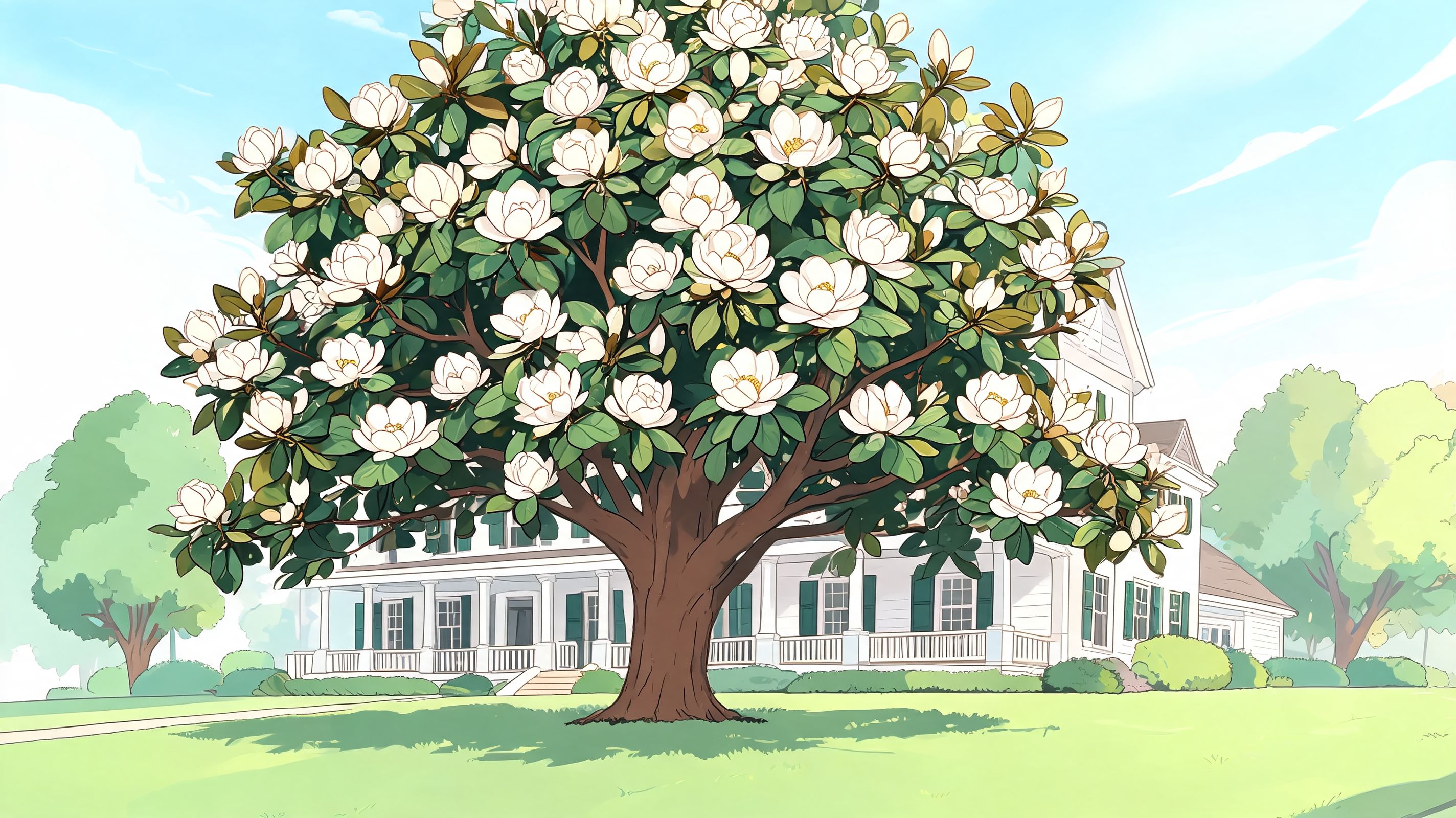
Why the cheapest tree isn't always the lowest-cost choice
In practice, the least expensive magnolia on the lot can end up costing more if it's the wrong species for the space, if the root ball is weak, or if the tree struggles after planting. A compact cultivar may cost more upfront than a common alternative, but it can fit a tighter lot better and reduce future pruning pressure.
That matters in established North Atlanta neighborhoods where trees often sit near driveways, rooflines, fences, pools, and utilities. The wrong selection today can become tomorrow's aggressive pruning job, storm damage cleanup, or hazardous tree removal.
Practical rule: Buy for the mature size, not the current size in the pot.
A magnolia is also a property asset
A mature Southern Magnolia can be appraised at over $18,000 using the CTLA Trunk Formula Method, and that same tree can add 3% to 15% to home value in metro Atlanta while delivering over $730 in annual environmental benefits, according to the CTLA-based appraisal example for Southern Magnolia.
That's why I treat magnolia pricing as a total cost of ownership question. You're not just buying a tree. You're buying shade, screening, aesthetics, and future value. You're also deciding whether that tree will stay an asset or eventually require expensive tree cutting service, emergency tree removal, stump grinding, or storm damage tree cleanup after years of neglect.
Magnolia Tree Prices by Species and Size
A homeowner in Alpharetta might compare a 5 foot Little Gem to a similar-height Southern Magnolia and assume the cheaper tag wins. In practice, the better buy depends on how much room the tree will need at 10, 20, and 30 years, how expensive it will be to plant correctly, and whether that choice lowers the odds of future storm damage or removal work.
Magnolia pricing around Atlanta usually comes down to three variables: species, mature size, and the size of the nursery stock you're buying. The same 4 to 6 foot height can represent very different long-term costs depending on the cultivar.
Estimated 2026 Magnolia Tree Prices in Metro Atlanta
| Magnolia Type | Container Size / Height | Estimated Price Range |
|---|---|---|
| Sweetbay Magnolia | smaller nursery stock to larger caliber stock | $39.50 to $1,350 |
| Jane Magnolia | 4 to 6 ft specimens | $54.50 to $119.50 |
| Little Gem Southern Magnolia | 4 to 6 ft specimens | $64.50 to $199.50 |
| Standard Southern Magnolia | nursery stock sold for planting in yards and gardens | $68.95 to $169.50 |
| Saucer Magnolia | commonly sold ornamental sizes | $89.50 to $119.50 |
| Little Girl series magnolias such as Ann and Jane | nursery sizes vary by cultivar and pot size | $44.50 to $179.50 |
| Royal Star | nursery sizes vary | $39.50 to $169.50 |
| Bracken's Brown Beauty | premium evergreen stock | $179.50+ |
What pushes the price up
The fastest price jumps usually come from root ball size, transport, and handling, not just from the name on the tag. Once a magnolia moves out of small container stock and into heavier field-grown or larger container material, labor and delivery costs start climbing with it.
That matters on North Atlanta properties where access is tight. A tree that has to be carried through a side gate, protected from hardscape damage, or set near utilities often costs more to install than buyers expect. If you want a better sense of that side of the budget, this breakdown of tree planting cost factors in Atlanta helps explain what gets added after the nursery price.
Species choice changes the long-term math
A standard Southern Magnolia gives you the classic broad evergreen form, but it needs real space. On a large lot, that can be a strong investment. On a smaller lot in Roswell, Milton, or East Cobb, it can create future pruning conflicts with roofs, driveways, and property lines.
Little Gem and Bracken's Brown Beauty often cost more for the size you see today, yet they can be the less expensive ownership choice on tighter residential sites because they stay more manageable. Sweetbay Magnolia is often the smarter pick for lower or wetter areas where another species may struggle.
Blooming deciduous types such as Jane, Ann, and Saucer Magnolia appeal to homeowners who want spring flowers over year-round screening. They also bring a different maintenance profile. Deciduous magnolias usually stay smaller, but they still need the right placement and structure from the start.
Best fit by property goal
- For narrow residential spaces: Little Gem is usually the safer choice.
- For a traditional evergreen statement tree: standard Southern Magnolia fits best where there is enough canopy room.
- For damp ground or lower spots: Sweetbay Magnolia tends to handle those conditions better.
- For spring color near patios or front yards: Jane, Ann, and Saucer Magnolia are often strong candidates if overhead space is limited.
I advise clients to price magnolias the same way they would price an exterior improvement project such as how much does cladding cost. The purchase price matters, but the better question is what the finished result will cost to own and maintain over time.
Where buyers make expensive mistakes
The common mistake is buying by bloom, leaf gloss, or current height without pricing the mature footprint. That is how a tree that looked affordable in a nursery pot turns into recurring clearance pruning, canopy reduction after storms, or removal when the trunk outgrows the planting space.
In North Atlanta, those problems are rarely cheap. The right species and size class usually cost less over the life of the tree than correcting a bad planting decision after the roots are established and the canopy is over the house.
Beyond the Price Tag Additional Installation Costs
A homeowner in Roswell buys a magnolia because the nursery price looks reasonable. Then the actual costs show up. Delivery, site prep, planting depth, drainage correction, mulch, watering, and early follow-up care often decide whether that tree becomes a long-term asset or an expensive problem.
In North Atlanta, installation carries more weight than many buyers expect. Our clay soils hold water in some yards and bake hard in others. A magnolia planted a few inches too deep or set in a low spot can struggle for years, and those early mistakes often lead to corrective pruning, decline, or removal costs later.
What professional installation is paying for
Professional planting usually includes more than digging a hole and setting the root ball.
- Site evaluation: checking grade, drainage, sun exposure, clearance from structures, and mature canopy spread.
- Delivery and handling: larger magnolias are heavy, awkward, and easy to damage in transit.
- Correct planting depth: one of the most common reasons young trees fail.
- Soil and root-zone preparation: especially important in compacted red clay.
- Stabilization: staking only if the site or root ball calls for it.
- Watering plan: the establishment period is when many new trees are lost.
I tell clients to budget for installation the same way they budget for any exterior improvement. The listed item is only part of the bill. That is why comparisons like how much does cladding cost are useful. Material price and finished installed cost are rarely the same number.
For a local pricing reference, this guide on how much it costs to plant a tree gives a good breakdown of how labor, access, and site conditions affect the final invoice.
A magnolia responds to soil, depth, drainage, and aftercare. The tag price does not keep it alive.
Costs that show up after planting
Some installation mistakes do not look serious at first. They become expensive later.
- Planting too deep: roots stay stressed and oxygen-starved.
- Bad placement: the tree later conflicts with rooflines, walks, foundations, or other canopy trees.
- Poor drainage: roots sit in wet soil after heavy rains.
- Skipped aftercare: even a well-planted tree can decline without water and monitoring during establishment.
This is often why, years later, homeowners find themselves needing tree removal services after a preventable failure. In my field experience around Alpharetta, Milton, and Marietta, the cheapest planting job is rarely the lowest-cost decision over the life of the tree. A proper install helps protect the property, lowers the chance of storm damage cleanup, and gives the magnolia a fair chance to mature into something worth keeping.
Long-Term Value Versus the High Cost of Neglect
A healthy magnolia becomes more valuable over time. A neglected magnolia becomes more expensive over time.
That's the fork in the road.
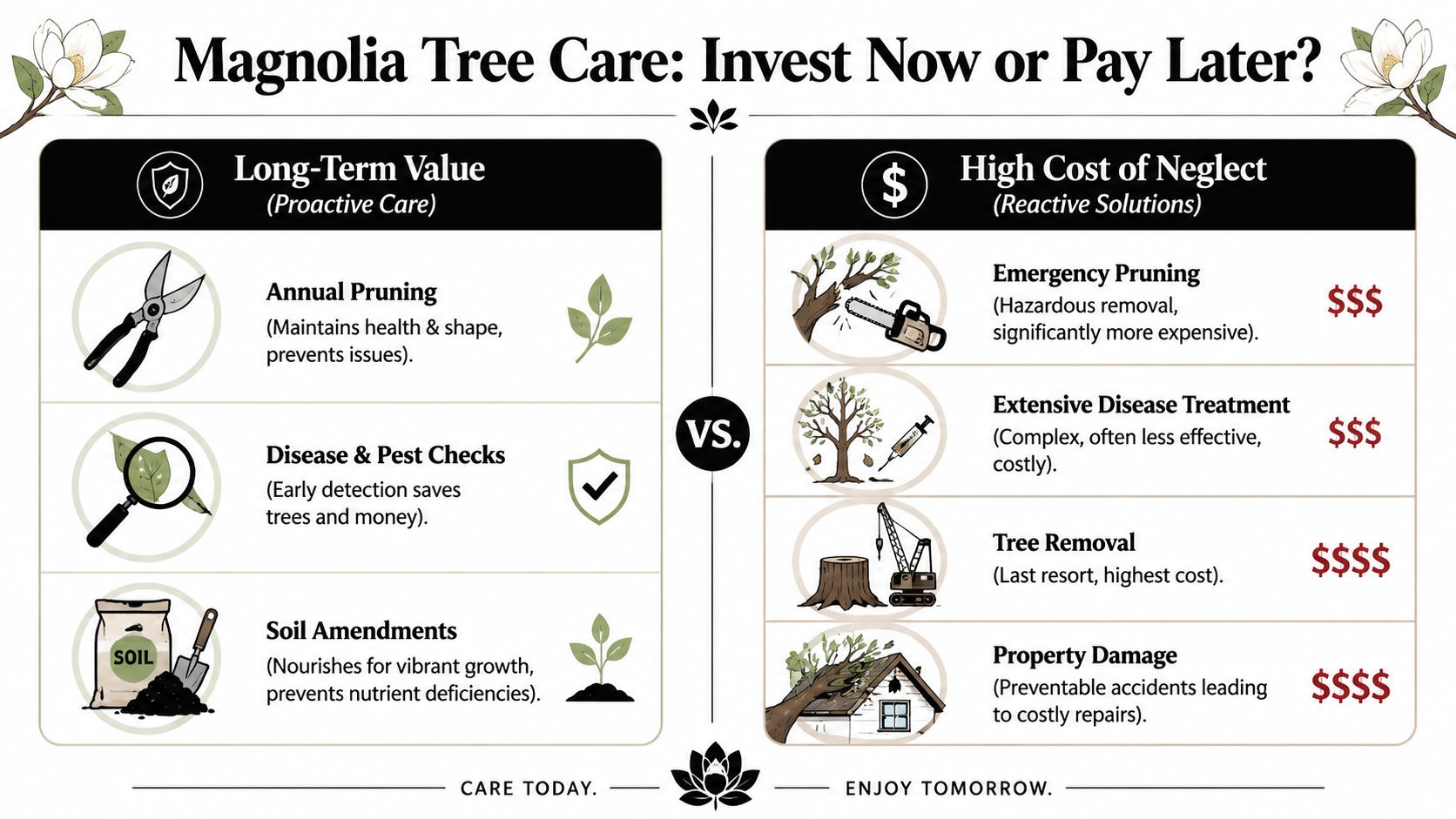
What proactive care actually buys you
Magnolias benefit from routine pruning, periodic inspection, and timely correction of structural issues before weight, decay, or storm exposure turn them into hazards. That's a much calmer, more controlled expense than calling for emergency tree removal after a limb tears off over a driveway in Kennesaw or Acworth.
In practical terms, proactive care helps avoid:
- Storm breakage over roofs, cars, and fences
- Leaning or unstable growth that triggers hazardous tree removal
- Large dead limb failures that require urgent tree cutting service
- Root and stump problems after a preventable decline
- Messy post-storm cleanup with multiple contractors involved
What neglect usually looks like in the field
The pattern is familiar. A tree goes uninspected for years. Lower limbs rub and overextend. Deadwood stays in the canopy. The root zone gets compacted during a driveway project or grade change. Then a summer storm hits Cobb County or Cherokee County, and the phone call isn't about pruning anymore. It's about a fallen tree removal, a branch on the house, blocked access, or fast storm damage tree cleanup.
If a magnolia is close enough to hit something important, it's close enough to inspect before weather does it for you.
The reason this matters financially is simple. A mature Southern Magnolia can carry substantial appraised value and real site value. For homeowners thinking in resale terms, guidance on how trees can increase property value is worth reading because the value discussion isn't abstract once a tree is established and well placed.
The cost comparison isn't just about dollars
Reactive work is usually harder on everyone involved. Emergency tree removal in Roswell after a storm happens under pressure. Access may be limited. Structures may already be damaged. Crews may need to protect the home first and sort the tree second. If the tree dies entirely, stump removal or stump grinding may follow, and the owner loses the screening, shade, and visual anchor that made the planting worthwhile in the first place.
By contrast, routine care supports a tree that continues doing its job in the garden environment. It also protects the owner from the kind of preventable risk that makes a once-beautiful specimen feel like a liability.
Where owners make the right call
The best long-term results usually come from owners who act early when they notice:
- Branches extending heavily toward the house
- Deadwood in the crown
- Visible decline after construction or drainage changes
- Repeated storm debris from the same parts of the canopy
- A tree that was obviously planted too close to structures
Those are tree service calls, not wait-and-see calls. Delay is what turns maintenance into emergency work.
DIY Planting vs Hiring a Professional Arborist
Most DIY magnolia failures don't happen because the owner didn't care. They happen because magnolias are less forgiving than people expect, especially in metro Atlanta soil.
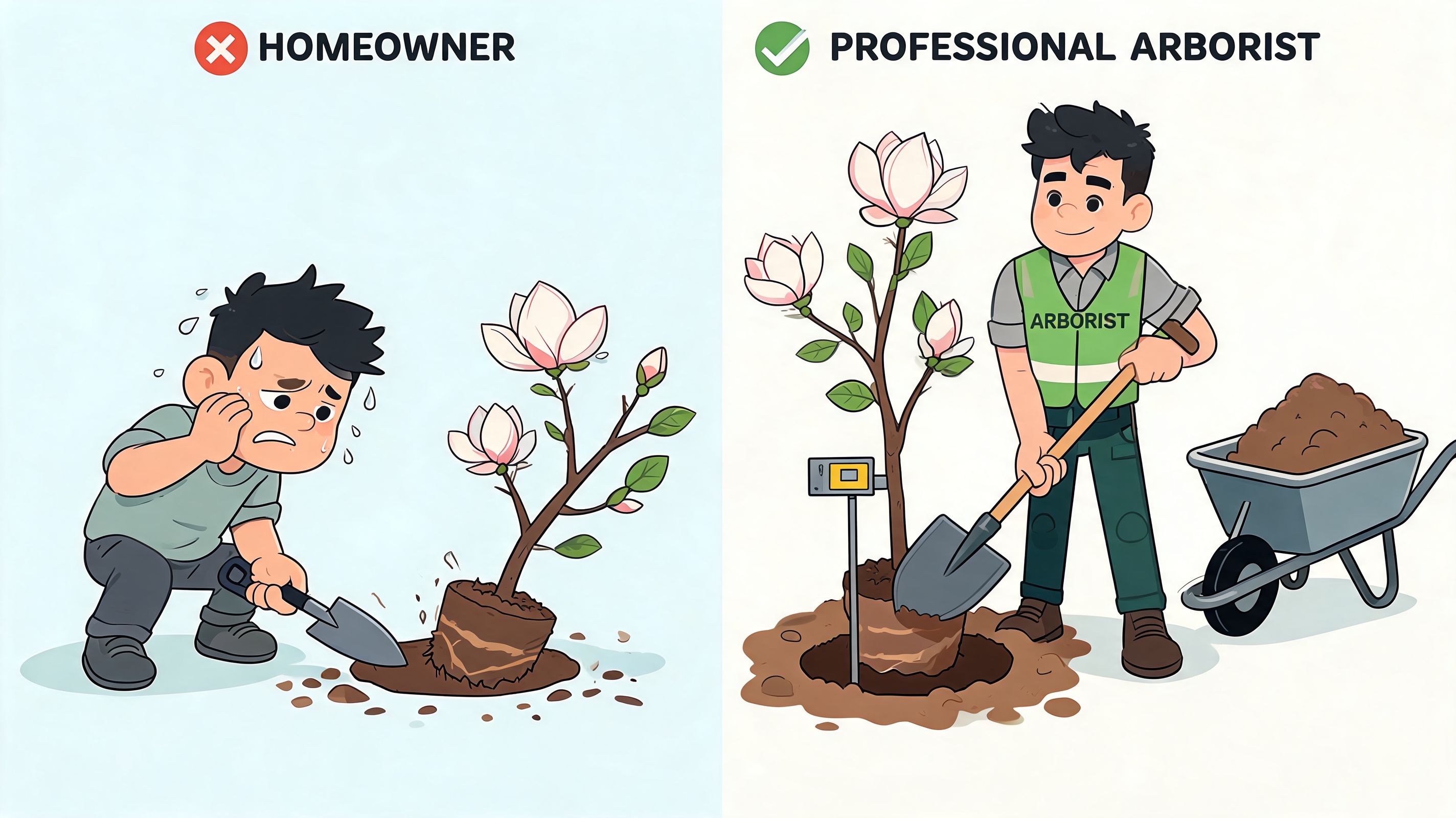
Where DIY usually goes wrong
Homeowners often focus on the hole and the mulch. Professionals focus on the whole site. That includes mature spread, root flare visibility, drainage, grade, wind exposure, existing utilities, structure clearance, and how the tree will respond after year one.
DIY planting tends to break down in a few places:
- Bad placement: too close to a foundation, driveway, deck, or septic area.
- Buried root flare: common and damaging.
- Rough handling of the root ball: especially on larger nursery stock.
- Overwatering or underwatering during establishment
- No structural plan for future pruning
What a professional arborist changes
Professionally managed Southern Magnolias can store up to 17,800 pounds of carbon annually in Georgia, and cost-benefit analysis found that energy savings can account for 85% of total economic benefits when shade placement is done well, according to the Southern Magnolia environmental and placement data.
That's the difference between planting a tree and siting a tree. Placement affects shade, wind buffering, aesthetics, maintenance access, and long-term health. An arborist doesn't just install the magnolia. They help decide where it should live for decades.
A local pricing guide for what arborists charge for tree work can also help homeowners compare the cost of expert planning against the much higher cost of fixing mistakes later.
Here's a useful visual overview of proper planting technique and setup:
Hiring an arborist makes the most sense when the tree is large, the site is tight, or the consequences of getting it wrong are expensive.
When DIY makes less sense
If the planting area is near a home, retaining wall, driveway, utility corridor, or high-traffic space, DIY savings shrink fast. The same is true when the root ball is too heavy to move cleanly, or when the buyer wants a specimen-sized tree that needs careful orientation and handling.
That's where professional planting stops being a convenience and becomes risk control.
Get an Accurate Magnolia Tree Estimate for Your Property
A magnolia can look reasonably priced at the nursery and still turn into an expensive tree on the wrong lot. In North Atlanta, the number depends on where the tree is going, how difficult the install will be, and whether the planting plan reduces or increases your future risk.
I do not price a magnolia by the tag alone. I price the whole decision. Soil depth, drainage, slope, access through a gate, clearance from the house, and the mature spread of the cultivar all affect what you will spend and whether that tree adds value or creates a liability five or ten years from now.
Before I give a homeowner a meaningful estimate, I need to see a few property-specific factors:
What affects your actual project cost
- The magnolia you want: Southern Magnolia, Little Gem, Jane, Sweetbay, or another cultivar
- The size you want now: smaller stock lowers the initial bill, while larger trees raise delivery, equipment, and labor costs
- Access to the planting area: a front yard with open access costs less to work in than a fenced backyard or a tight side yard
- Soil and drainage conditions: heavy clay and poor drainage can change the planting method and the prep work required
- Proximity to structures: spacing affects root room, canopy development, pruning needs, and storm exposure over time
An on-site estimate does more than set a price. It helps prevent a bad purchase. I have seen homeowners spend good money on a magnolia, then spend far more correcting placement problems, pruning for clearance, or removing a tree that never should have been installed in that spot. In our area, that kind of mistake can end in storm damage cleanup, emergency removal, stump grinding, or repairs to nearby hardscape.
The same cost logic shows up in other home projects. Base pricing is only a starting point, and the property drives the installed cost. That is why comparison resources such as sacramento sunroom pricing are useful as a reminder that site conditions matter as much as the product itself.
Homeowners in Marietta, Roswell, Kennesaw, Woodstock, Acworth, Canton, Cobb County, Cherokee County, and the surrounding North Metro Atlanta area get the best answer from a site visit, not a generic price range. I can tell you whether your preferred magnolia fits the space, what the installation should include, and what the long-term maintenance picture will look like before you commit.
If you want a precise quote for a new magnolia, replacement planting, tree removal, emergency tree work, stump grinding, or storm damage cleanup, contact us at Richmond Tree Experts GA. We provide free estimates across North Atlanta, and as ISA Certified Arborists, we focus on planting decisions that protect the property now and help you avoid the much higher cost of preventable tree problems later.
Not sure what your tree needs? Richmond Tree Experts has worked on Marietta and Metro Atlanta trees since 1985, and every job is looked at by an ISA Certified Arborist before it is priced. Start with an ISA Certified Arborist evaluation, or see everything we do: tree removal, stump grinding and arborist services across Cobb, Fulton, Cherokee, Gwinnett and DeKalb counties (service areas).
Call (770) 974-3964, 7am to 11pm every day, or request an estimate online.

