

Think of tree cabling and bracing services as an insurance policy for your most treasured trees. When a tree has a structural weakness, these systems provide critical support to prevent it from failing, especially during a storm. It’s a proactive way to reinforce weak limbs or split trunks using high-strength cables and rods, ultimately preserving a mature tree and protecting your property.
Why Your Tree Might Need a Support System
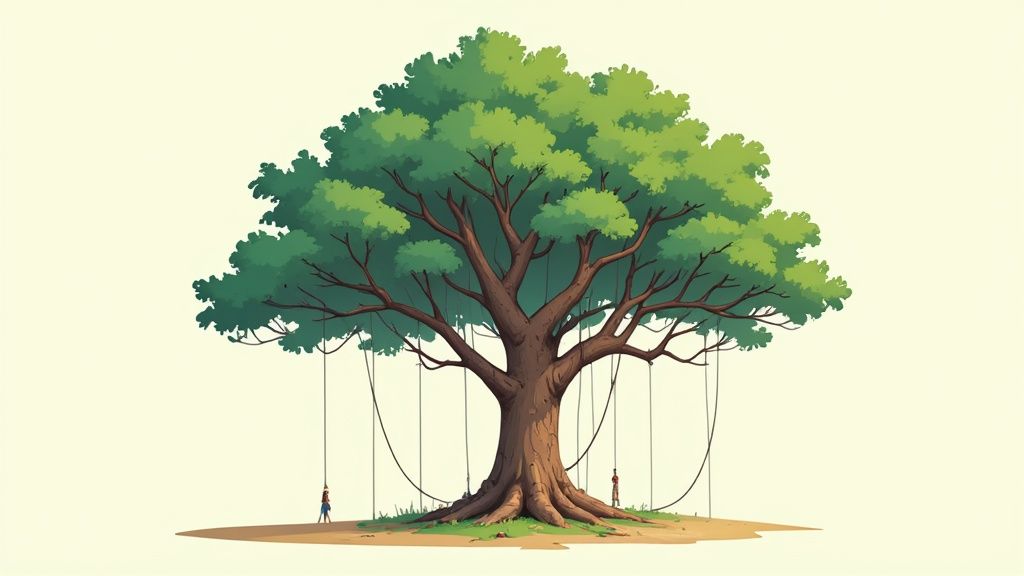
Mature trees add incredible value to our landscapes—they provide shade, beauty, and often hold sentimental meaning. But when a tree starts to show signs of structural problems, it can quickly turn from a beloved asset into a major liability. Before you even consider removal, know that tree cabling and bracing services offer a non-invasive and highly effective way to save a tree that might otherwise be lost.
It’s a lot like orthopedics for trees. If a doctor uses a brace to support a broken bone while it heals, a certified arborist uses specialized hardware to support a tree’s compromised structure. This intervention helps redistribute stress across the tree, giving it the stability it can no longer provide on its own.
The Two Core Components of Tree Support
The system relies on two key methods that are often used together for the best results:
-
Cabling: We install high-strength steel or synthetic cables high up in the tree's canopy. These cables connect two or more limbs, limiting how much they can swing during high winds and reducing the chance they’ll split apart from the trunk.
-
Bracing: For this, we carefully insert steel rods through weak or split sections of the trunk or major limbs. These rods essentially act like internal bolts, holding the wood fibers together and stopping a crack from getting any worse.
This one-two punch creates a complete support network. The cabling handles the dynamic, shifting forces in the canopy, while the bracing tackles the static, existing weaknesses in the tree's main structure.
A proactive support system is not just a repair; it's a long-term investment in the health and safety of your tree. It can extend the life of a cherished tree for decades, preserving its place in your landscape.
While cabling is a fantastic solution for existing problems, prevention is always the best medicine. Understanding practices like maintaining fruit tree health through companion planting can boost a tree's overall vitality from the ground up, sometimes reducing the need for major interventions later. In the end, professional tree support is all about preserving a tree's integrity and giving you peace of mind.
Signs Your Tree Might Need Cabling
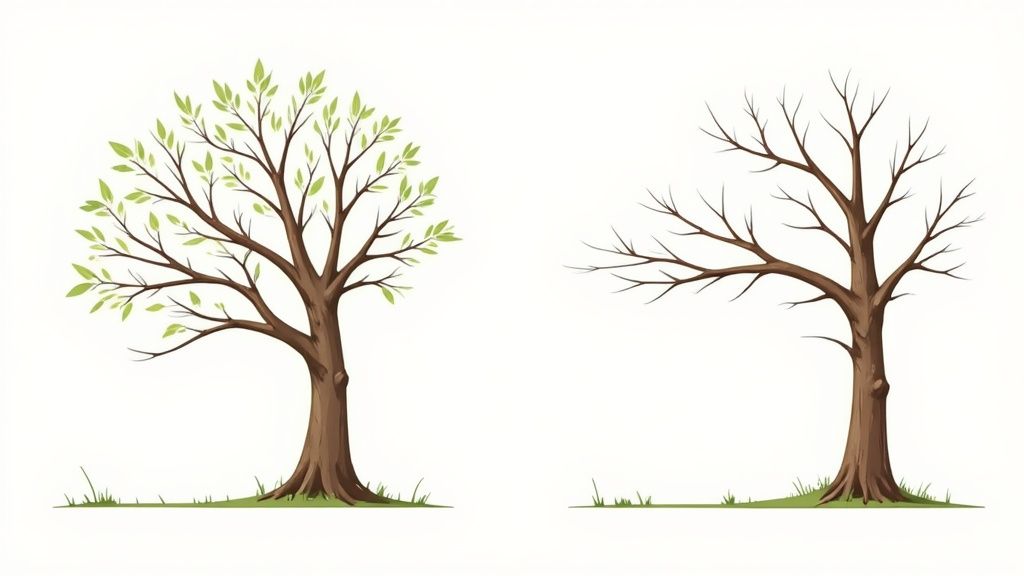
Trees have their own way of telling us when something’s wrong. They send out subtle, but clear, visual cues that signal distress. Learning to spot these signs is the first step in figuring out if your tree could use the support of professional tree cabling and bracing services. Think of these symptoms not as a death sentence, but as a call for a professional check-up to head off a potential disaster.
One of the most common—and dangerous—structural problems we see is codominant stems. This happens when a tree’s trunk splits into two or more main stems of roughly the same size, creating a tight “V” shape at the junction. Unlike a much stronger “U” shaped union, this V-shape is a natural weak point where bark gets trapped as the stems grow, preventing the wood from fusing together properly.
Over time, this "included bark" acts like a wedge, slowly pushing the stems apart. When a big storm rolls in with high winds or heavy ice, the immense stress can cause one or both of these stems to split and fail without warning.
Obvious Cracks and Leaning Trunks
Visible cracks in the trunk or on major limbs are immediate red flags. These fractures can run deep along the wood grain, telling you the tree’s internal structure is already compromised. A crack might pop up suddenly after a storm or develop slowly from internal decay.
A tree that has started to lean is another serious concern. While some trees naturally grow at a slight angle to chase sunlight, a new or worsening lean often points to a failing root system or unstable soil. The tree is literally losing its footing, making it a major fall risk.
A structural defect doesn't automatically mean a tree must be removed. Professional cabling and bracing can often provide the necessary support to secure weak points, preserving the tree for many more years while ensuring property safety.
Overextended and Damaged Limbs
Keep an eye out for overextended limbs. These are those long, heavy branches that droop way down, especially when loaded with leaves, rain, or snow. All that weight puts constant strain on the point where the limb connects to the trunk, making it a prime candidate for snapping off.
Likewise, any limb that's been damaged by storms, lightning, or even bad pruning jobs could need some extra support. The immediate danger of a storm might be over, but hidden weaknesses can linger. If you're worried about a tree’s stability after severe weather, understanding the process for professional storm-damaged tree removal can help you weigh the options for both repair and removal.
Spotting these warning signs early gives you the chance to bring in a professional arborist. Timely intervention with a properly installed cabling and bracing system can manage the risk, save a valuable tree, and protect your home and family.
Matching Tree Problems to Arborist Solutions
Sometimes it's hard to know what you're looking at or what kind of help you need. This table connects common issues you might see with the solutions an arborist would typically recommend.
| Observable Tree Issue | Potential Risk | Common Arborist Solution |
|---|---|---|
| Two large stems forming a tight "V" | The stems could split apart during a storm. | Dynamic Cabling to allow movement while preventing failure. |
| A long, heavy branch sagging low | The branch could break under its own weight. | Static Cabling or Bracing Rods to provide rigid support. |
| A visible crack in the main trunk | The tree's entire structure is compromised. | Bracing Rods drilled through the trunk to bolt it together. |
| Tree leaning more than it used to | Root system failure; imminent fall risk. | Assessment for Removal; cabling is rarely enough for this. |
Seeing any of these signs doesn't mean it's time to panic, but it does mean it's time to call for a professional opinion. An expert can assess the specific situation and recommend the right course of action to keep your tree healthy and your property safe.
The Real Benefits of Professional Tree Support
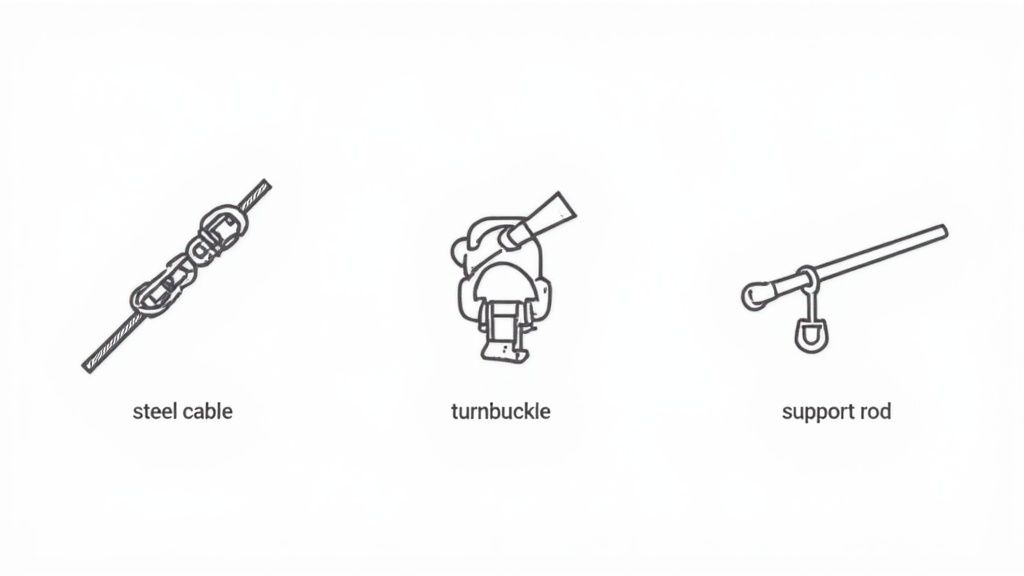
When you invest in tree cabling and bracing services, you're getting a lot more than just a cosmetic fix. The number one reason people choose this route is simple but incredibly important: mitigating risk. A beautiful, mature tree with a hidden structural weakness is a ticking time bomb. With every storm, it poses a threat to your home, your cars, and—most importantly—your family.
Think of professional support systems as a crucial safety net. They secure those compromised limbs and give a weak trunk the reinforcement it needs to stand strong. This simple step can dramatically lower the odds of a catastrophic break, turning a potential liability back into the beautiful, safe part of your landscape you know and love. It’s all about proactive protection for true peace of mind.
Beyond the safety aspect, these services are about preservation at their core. So many homeowners see a tree with a split trunk or heavy, overextended branches and assume it’s a lost cause. But cabling and bracing offer a powerful alternative to removal, often giving a cherished tree decades of extra, healthy life.
A Smart Investment in Your Landscape
Choosing to save a tree instead of removing it isn’t just an emotional decision—it’s often the smarter financial one, too. Think about it. The cost to remove a large, mature tree can be significant. Then you have the added expense and years of waiting for a new tree to grow anywhere near that size.
In contrast, installing a support system is a targeted investment. You're protecting the immense value your mature tree already brings to your property. A healthy, majestic tree is a major booster for your home’s curb appeal and can seriously increase its market value.
A support system isn't just a repair; it’s a commitment to a tree's future. It preserves the natural character and shape of the tree, allowing it to continue growing stronger and more resilient for years to come.
This commitment to tree health is catching on. The global market for these services is seeing major growth, especially as urban areas expand and people focus more on preserving green spaces. As city planners and homeowners alike realize the value of mature trees, the demand for services that keep them stable and healthy just keeps climbing. You can dig into the data on the growing tree support services market on MarketReportAnalytics.com.
The Long-Term Advantages of Tree Support
When all is said and done, the benefits of professional tree support create a domino effect of good things for your property.
- Preserves Natural Form: Instead of resorting to drastic pruning that can ruin a tree's natural shape, cabling and bracing work with its existing structure to maintain its beauty.
- Increases Structural Resilience: These support systems give a tree the backup it needs to handle stressors like high winds, heavy snow, and brutal ice storms.
- Protects Property Value: By saving a valuable landscape asset and preventing potential damage, you are actively protecting the investment you've made in your home.
This forward-thinking approach ensures your trees can remain a source of beauty and enjoyment, not a source of worry. It's a strategic move that puts long-term health, safety, and the lasting value of your landscape first.
When an arborist determines a tree needs a little help staying upright and intact, they don't just throw a rope up there and call it a day. It’s a carefully considered decision, where the right support system is chosen based on the tree’s specific problem. The two main tools in the arborist’s support toolkit are static and dynamic systems. Each has a very different job to do.
Think of a static system as something like a hard cast on a broken arm. These systems are all about providing rigid, unmoving support. Using high-strength steel cables, the goal is to completely stop a weak or damaged part of the tree from moving. You'd use this to prevent a bad situation from getting worse, like holding a split trunk together or keeping a compromised limb from failing. It’s all about maximum, unyielding support for those critical weak spots.
Static Support for Critical Weaknesses
Static systems are the heavy lifters, reserved for high-risk situations where any movement could be catastrophic. An arborist will typically recommend this rigid approach when:
- A large, heavy limb is showing clear signs it’s about to fail.
- The trunk has a major split that needs to be clamped together securely.
- There's a structural defect so severe that the tree simply can't handle any more stress on that point.
By locking that weak section in place, the static system effectively redirects stress away from the problem area, providing the kind of solid stability needed to prevent a disaster.
This graphic gives you a simplified look at how arborists think through these complex decisions, from the initial assessment all the way to installation.
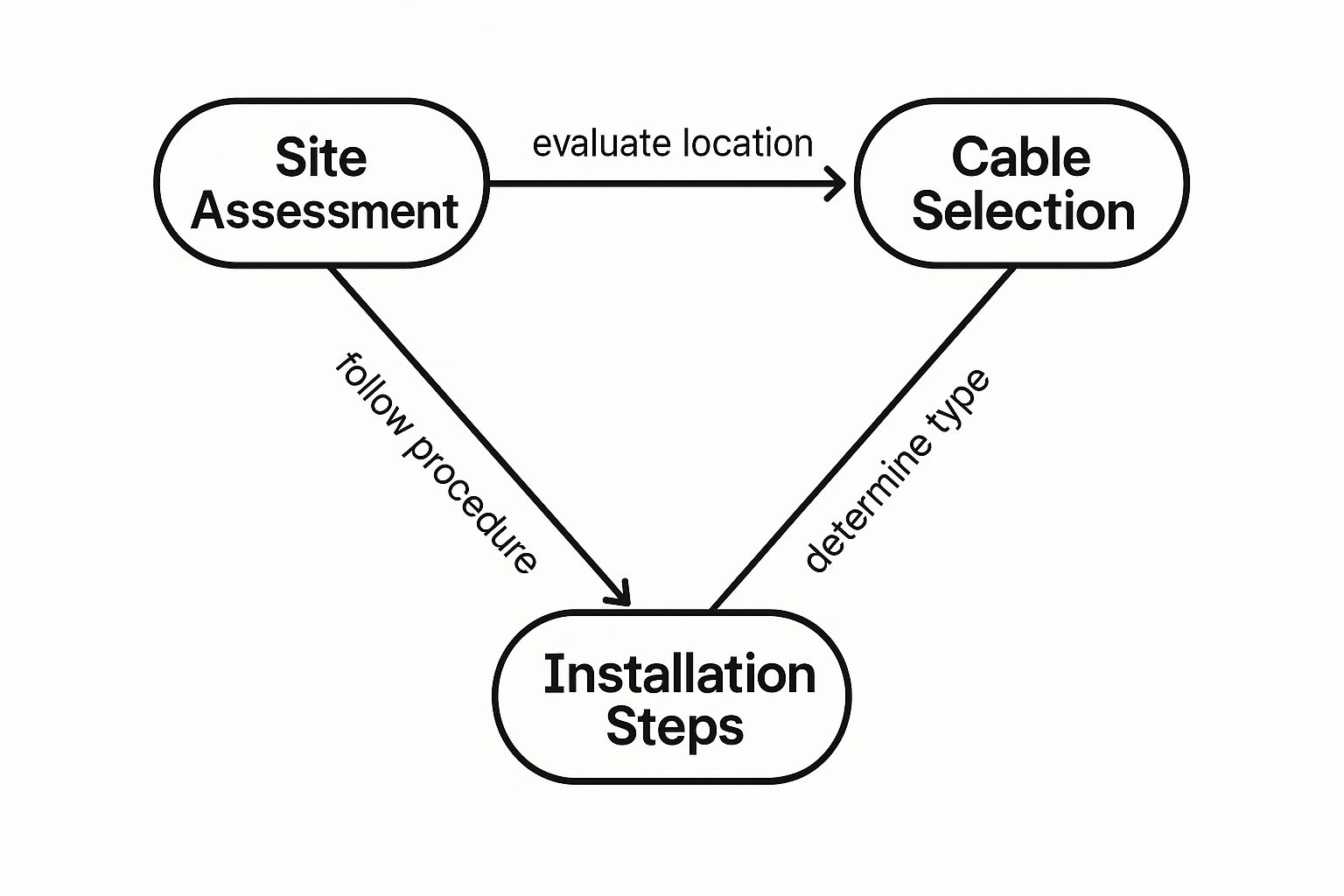
As you can see, choosing the right support system isn't a guess—it's a process that always starts with getting boots on the ground for a thorough site and tree assessment.
Dynamic Systems: A Modern Approach
On the other hand, you have dynamic systems, which are more like an athletic brace for an athlete’s knee. Instead of stiff steel, these modern systems use flexible synthetic ropes that have a bit of give. This controlled stretch is incredibly important because it allows the tree to sway naturally in the wind, which is how it builds strength over time. This process is known as thigmomorphogenesis—a fancy term for trees getting stronger by responding to movement.
Dynamic cabling provides support but still lets the tree flex its muscles, encouraging it to strengthen itself. This makes it the perfect choice for giving a little extra help to V-shaped unions or limbs that aren't in immediate danger but could become a problem down the road.
The core difference really comes down to philosophy: static systems immobilize to prevent failure, while dynamic systems support to encourage strength. A certified arborist will weigh the tree's immediate risks against its long-term health to choose the right path forward.
Cabling isn't the only tool, either. Arborists also use bracing rods, which are another form of static support. These are essentially long, threaded steel rods that are drilled right through a split trunk or weak branch attachment, bolting the wood together from the inside out. Bracing is often used hand-in-hand with a cabling system to create a complete support network, tackling weaknesses in both the canopy above and the trunk below.
What to Expect During the Installation Process
When you decide it’s time for tree cabling and bracing services, you’re not just hiring someone to slap some hardware on a tree. Think of it more like calling in a specialist for a very precise, surgical procedure. The whole process is carefully planned and executed to give your tree the support it needs while being as minimally invasive as possible. It all starts with a deep-dive evaluation.
The first thing that will happen is a thorough consultation with a certified arborist. This isn't just a quick walk-around; it’s a detailed Tree Risk Assessment Qualification (TRAQ). The arborist will get up close and personal with your tree, inspecting its structure, pinpointing weak spots, calculating the forces acting on specific limbs, and figuring out the root cause of the problem. From that expert analysis, they’ll create a custom support plan designed just for your tree.
Once you give the green light, the installation work can get underway. This is where you really see the arborist’s skill in action.
Precision and Safety During Installation
Installing cables and braces is a job that demands serious precision. Arborists use specialized gear to get into the tree’s canopy safely and place the hardware in the exact spot where it will do the most good. Yes, this often means drilling into the tree, but it’s done with incredible care.
The holes are drilled to very specific depths and diameters to make sure they don’t cause any unnecessary damage to the tree's living tissues. The whole point is to anchor the support system securely without introducing new weaknesses. This meticulous approach ensures the hardware works with the tree, providing backup without getting in the way of its natural growth. A proper installation is everything, which is why it’s so critical to work with a real professional. If you want to know more about what separates an expert from a guy with a chainsaw, you can learn about the qualifications of a certified arborist in Atlanta GA.
The entire process is guided by arboricultural best practices. The objective is never just to install hardware but to preserve the long-term health and structural integrity of the tree, extending its life safely.
Ongoing Care and Follow-Up Inspections
The job isn’t over once the last cable is tightened up. Trees are living things, constantly growing and shifting with the seasons. Because of that, the support system will need a check-up every now and then to make sure it’s still doing its job correctly and not causing any new problems.
Follow-up inspections are a crucial part of the service. An arborist will usually recommend coming back once a year to:
- Check hardware tension: Make sure the cables have the right amount of give—supportive but not strangling the tree.
- Inspect for tree growth: Ensure the tree isn’t growing over or around the hardware in a way that could cause harm.
- Assess overall tree health: Confirm the support system is actually helping and the tree’s stability is improving.
These regular check-ins make sure the cabling and bracing system adapts as the tree grows, giving you peace of mind and reliable protection for years to come.
Breaking Down the Costs of Tree Support
Let's talk about the bottom line, because it's a crucial part of the decision when you're looking at professional tree cabling and bracing services. While every tree is a unique puzzle, getting a handle on the key variables can give you a pretty clear picture of the potential investment. The final cost isn't just a number pulled from a hat; it’s a direct reflection of the specific work needed to make your tree safe and sound.
A few big factors come into play here. The size and height of the tree are obviously at the top of the list, as bigger trees naturally demand more equipment, more time, and more materials. Accessibility is another huge one—a tree tucked away in a tight backyard space is going to be a tougher job than one sitting out in an open front yard.
Finally, the sheer complexity of the support system itself drives the cost. A single weak limb that just needs one cable is a relatively simple fix. But a large, multi-stemmed tree that requires an intricate web of cables and bracing rods to hold it together? That’s a whole different ballgame.
Understanding Price Ranges
So, what should you realistically expect to pay? The cost of a professional installation really depends on how complex the job is.
For a pretty straightforward job, like supporting a single-stem union, you're typically looking at a range of $300 to $600.
If you're dealing with a more involved system on a multi-stemmed tree, the price can climb into the $750 to $2,000 range. For truly massive specimen trees with highly complex canopies, costs can easily go beyond $5,000, which just reflects the immense amount of work and expertise required. You can find more great insights about tree support system costs on ArboristNow.com.
It's important to see this as an investment in your safety and property value. Being proactive with a support system is almost always a fraction of the cost of emergency tree removal or repairing the damage from a fallen limb.
Making the Investment Manageable
Protecting your property and saving a valuable tree shouldn't be out of reach just because of the upfront cost. We get it. That’s why many professional tree services offer flexible payment solutions.
If the budget is a concern, it's definitely worth exploring the different tree service financing options available. A little bit of planning can make this essential safety measure totally accessible and help you secure your tree’s future without breaking the bank.
Common Questions About Tree Support Systems
When you're thinking about tree cabling and bracing, it's totally normal to have a few questions. These systems are a big investment in your tree's future, and understanding how they work is the best way to feel confident you're making the right call for its health and your property's safety. Let's tackle some of the things we hear most often.
A big one is whether cabling can save any tree. The short answer is no; this is a preservation tool, not a miracle cure. Cabling and bracing work wonders for trees that are otherwise healthy but have a specific structural weak spot, like a split trunk or heavy, overextended limbs. If a tree is battling widespread decay, a serious disease, or has a failing root system, removal is often the only safe move.
Is Installation Harmful and How Long Does It Last?
Another great question is about the installation itself—does drilling holes hurt the tree? When a certified arborist handles the job, the process is minimally invasive. They know exactly where to drill small, precise holes that the tree can seal over on its own through a natural process called compartmentalization. Think of it like a necessary surgery: when done correctly by a specialist, the long-term benefits far outweigh the short-term impact.
Of course, the hardware doesn't last forever. How long a support system holds up really depends on the materials used and the local weather conditions.
- Steel Cables (Static): These traditional systems are incredibly strong but need a check-up and possible adjustment every 5-8 years.
- Synthetic Ropes (Dynamic): Modern dynamic systems offer more flexibility and tend to last longer, usually around 8-12 years, before they need to be replaced.
Hiring a general landscaper for this kind of work is a huge risk. A certified arborist brings a deep understanding of tree biology, physics, and engineering to the table—all critical for a safe, effective installation. Getting it wrong can cause even more damage to the tree.
The need for skilled arborists is only getting bigger. As housing and commercial development continues, the US tree trimming market is expected to reach a massive $39.5 billion by 2025. This growth highlights just how much people are recognizing the value of professional tree care. You can dig into the numbers yourself by checking out the growing tree services industry data on IBISWorld.com.
For a professional assessment of your tree's structure and a support plan designed by the pros, you can count on the certified arborists at Richmond Tree Experts GA. Contact us today for a consultation.
Need a tree taken down safely? Richmond Tree Experts has worked on Marietta and Metro Atlanta trees since 1985, and every job is looked at by an ISA Certified Arborist before it is priced. Start with tree removal, or see everything we do: tree removal, stump grinding and arborist services across Cobb, Fulton, Cherokee, Gwinnett and DeKalb counties (service areas).
Call (770) 974-3964, 7am to 11pm every day, or request an estimate online.

