

First things first, let's figure out if you even need to jump through the permit hoops.
Before you get tangled up in paperwork, it's crucial to determine if you actually need an Atlanta tree removal permit. A lot of the time, especially for smaller or certain types of trees, you can skip the process entirely, which saves a ton of time and hassle. Knowing the rules right out of the gate is the key to a smooth project.
Do You Actually Need a Tree Removal Permit in Atlanta?
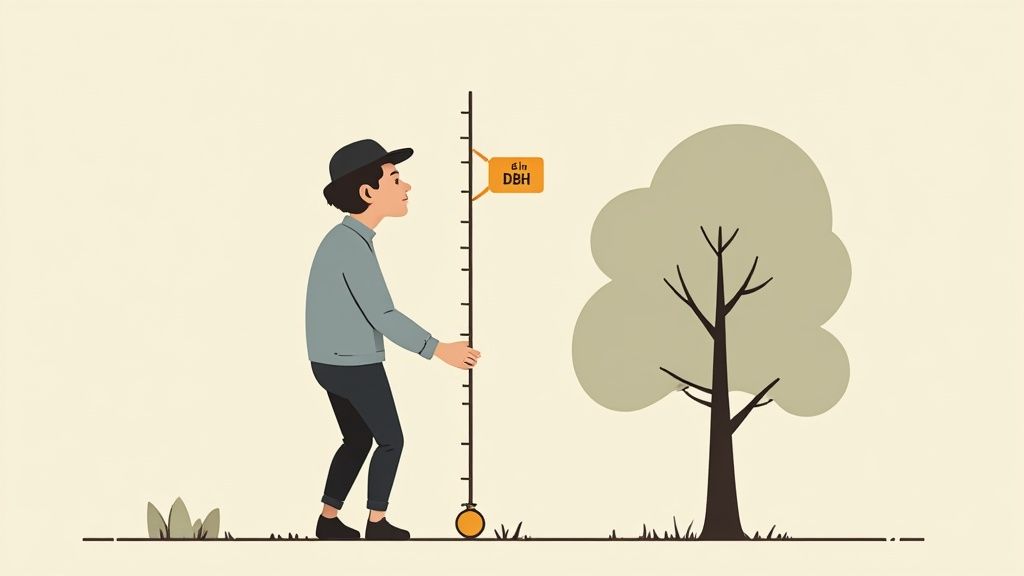
This is the big question every property owner asks: "Does my tree need a permit?" The answer is buried in the City of Atlanta's Tree Protection Ordinance, a set of rules designed to keep our incredible urban canopy healthy. At its core, the ordinance cares most about a tree's size and health.
The main measurement the city uses is something called Diameter at Breast Height (DBH). It sounds technical, but it’s just the diameter of the tree's trunk measured 4.5 feet up from the ground. It’s a simple but official measurement you can easily take yourself with a flexible measuring tape.
Measuring Your Tree's DBH
To get the DBH, just wrap your measuring tape around the trunk at that 4.5-foot mark to find the circumference. Then, divide that number by 3.14 (pi).
So, if you measure a circumference of 30 inches, your DBH is about 9.5 inches. This one number is the most important factor in figuring out if your tree is protected under the ordinance.
The 6-Inch Rule and Other Exceptions
In Atlanta, the general rule of thumb is that any tree with a DBH greater than 6 inches requires a permit for removal. This is the cornerstone of the city's ordinance, making sure we're all being responsible stewards of our green spaces.
But not every tree is protected. There are some key exemptions you need to know about:
- Small Trees: Any tree with a DBH of less than 6 inches is usually exempt. No permit needed.
- Invasive Species: Certain non-native, invasive trees like Bradford Pears or Mimosas often don't require a permit, no matter how big they are.
- Dead Trees: If a tree is confirmed to be 100% dead by a City Arborist, you'll still need to file for a "dead tree permit," but it's typically granted quickly and without a fee.
Expert Insight: Be really careful with the word "dead." A tree that looks rough but still has a bit of life in it is considered dying, not dead, in the city's eyes. Getting this wrong is a common mistake that can get your application delayed or flat-out denied.
The distinction between a dead, dying, or hazardous tree is critical. A hazardous tree—one that poses an immediate risk to people or property—follows a different permit path than one that's just unhealthy. This is especially important after a big storm, when you need to figure out which trees are a genuine threat. Our guide on assessing and removing storm-damaged trees can help you make that call.
Quick Guide: Do You Need a Permit for Your Tree?
Not sure where your tree falls? This quick table should help you get a better idea. It's a great starting point before you dive into the official application.
| Tree Characteristic | Permit Typically Required? | Key Consideration |
|---|---|---|
| DBH is 6 inches or more | Yes | This is the city's baseline for a protected tree. |
| DBH is less than 6 inches | No | Small trees are generally exempt from the ordinance. |
| Tree is an Invasive Species | No | Species like Bradford Pear or Mimosa can often be removed. |
| Tree is 100% Dead | Yes (Dead Tree Permit) | Requires confirmation from a City Arborist, but no fee. |
| Tree is Dying or Unhealthy | Yes | This falls under the standard permit process, not a dead tree permit. |
| Tree is an Immediate Hazard | Yes (Emergency Permit) | Requires proof of immediate danger to people or property. |
Remember, this table is a guide. The City Arborist's office has the final say, but this should give you a solid idea of what to expect as you move forward.
Assembling Your Permit Application Package
Getting your Atlanta tree removal permit approved smoothly all comes down to submitting a solid, comprehensive application right from the start. Think of this as your pre-flight checklist. Getting everything right the first time is the best way to avoid those frustrating delays and endless back-and-forth emails with the City Arborist's office. Your goal is to paint a clear, undeniable picture of why the tree needs to go.
The foundation of your entire package is a detailed site plan. Don't worry, this doesn't have to be a professional blueprint drawn up by an architect. It just needs to be a clear map of your property that shows exactly where the tree is located in relation to your house, driveway, property lines, and any other important structures. Accuracy is everything here; this is what gives the city reviewer the physical context they need.
Documenting the Tree's Condition
Next up, you'll need to provide clear, high-quality, and dated photographs. These pictures are your most important piece of evidence, especially if your argument is that the tree is dead, diseased, or hazardous.
- Wide Shots: Start by taking photos of the entire tree from a few different angles. This helps establish its overall size and where it sits on your property.
- Close-ups: Now, get in close. Capture the specific problems you're seeing—things like deep cracks in the trunk, large dead limbs, fungal growth, or spots where the roots are damaging your foundation.
- Context Photos: If the tree is a threat to a structure, make sure your photos clearly show its proximity to your roof, fence, or nearby power lines.
And don't forget to date these photos! This proves the issue is current, not something from years ago. I've seen too many applications get stalled simply because the pictures were blurry, undated, or didn't clearly show the problem.
This simple infographic gives you a good visual of how the city wants you to think about the permit process.
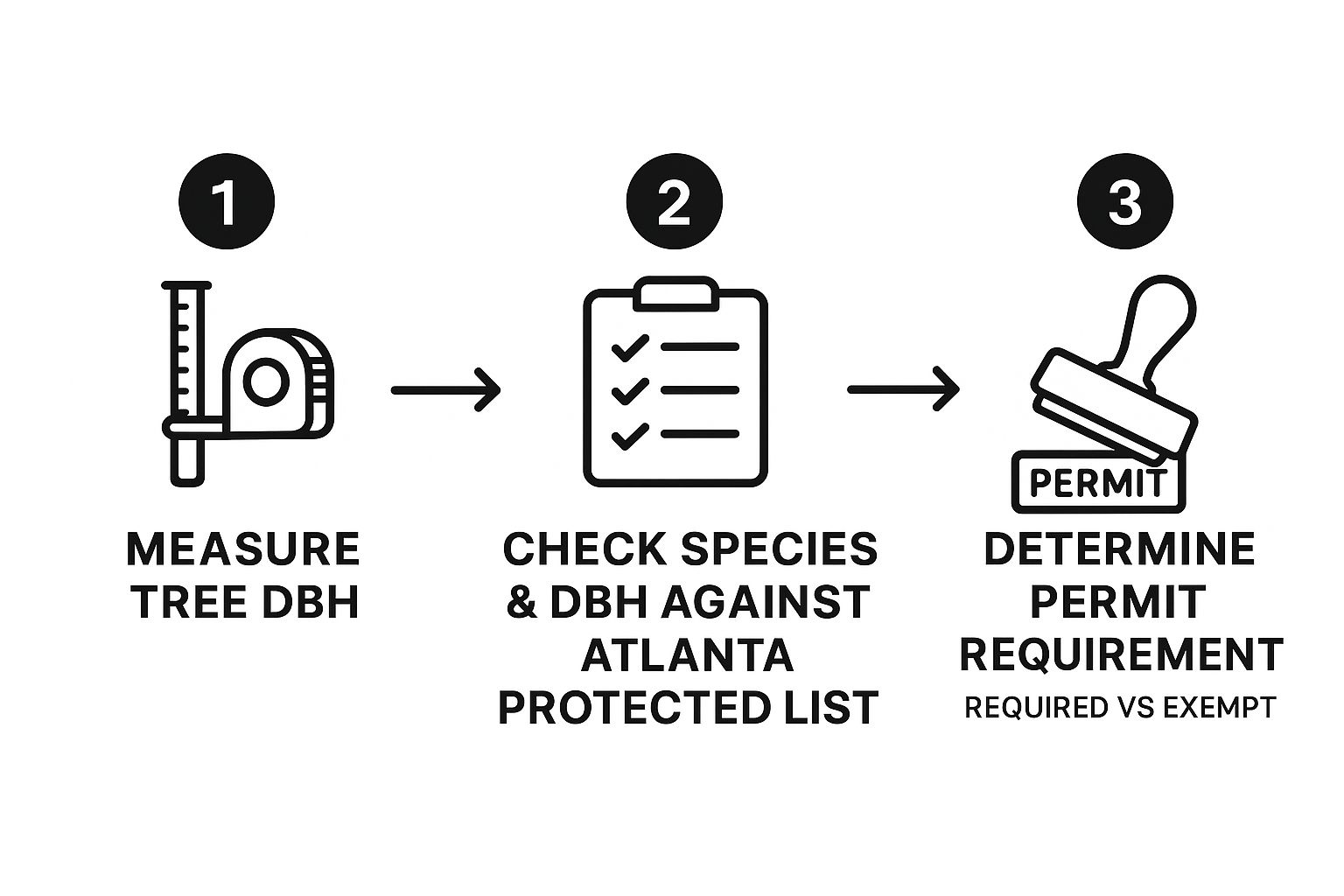
As you can see, measuring the DBH is the first critical step that really dictates which path you'll need to follow.
The Power of an Arborist's Report
For those situations that aren't so black and white—maybe the tree looks sick but isn't obviously dead—an arborist's report is your secret weapon. This formal assessment from a certified professional gives the city an expert, third-party evaluation that carries a ton of weight.
A detailed arborist report can be the single deciding factor between a permit approval and a denial. It replaces subjective homeowner observations with objective, scientific data that the city can trust.
A proper report will identify the tree's species, document its DBH, and provide a detailed health and risk assessment. Most importantly, it needs to clearly state the arborist's professional recommendation for removal and the specific, science-backed reasons why. If you need an expert opinion, you can learn more about the benefits of working with a certified arborist in Atlanta to make sure your report checks all the city's boxes.
Finally, just gather up any other required paperwork, like your proof of ownership and the completed application form you downloaded from the city's website. Getting all these documents organized into one neat package makes the whole submission process easier and shows the city you've done your homework.
Navigating the City's Review and Inspection Process
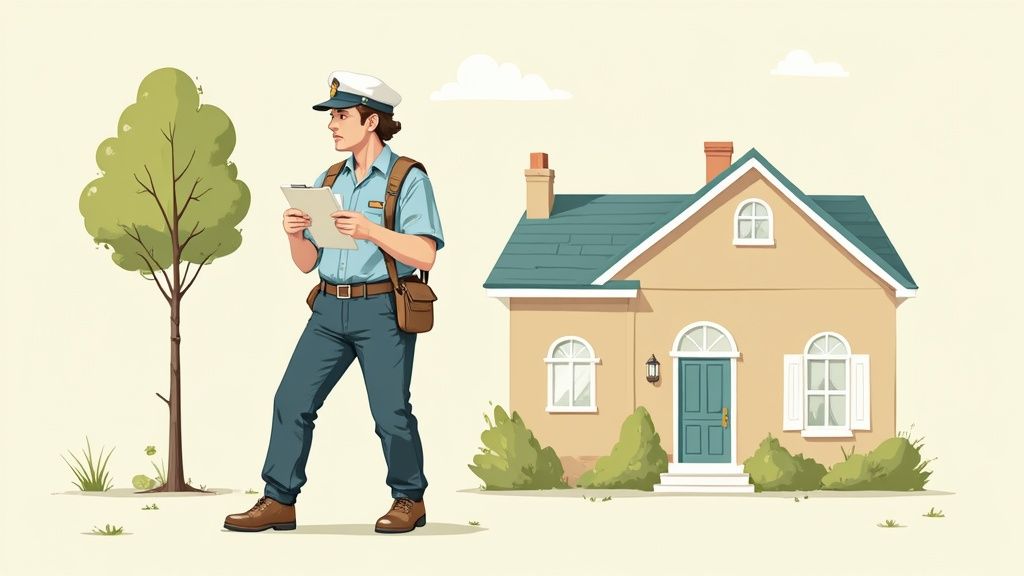
Once you've sent your application package into the void, your direct involvement hits the pause button. Now, it's the City of Atlanta's turn to get to work. Whether you filed online or dropped it off in person, the next step is universal: your paperwork lands on the desk of a City Arborist who covers your specific neighborhood.
This is the person who holds the fate of your tree in their hands. They'll be your main point of contact and the one who will ultimately approve or deny the permit. First, they'll review your site plan, photos, and all the supporting documents you provided to get the lay of the land. But the real work happens on your property.
The On-Site Arborist Inspection
Expect the arborist to schedule a visit for an on-site inspection within a few weeks. You don't technically have to be home for this, but I always recommend it if your schedule allows. Being there in person is a huge advantage. It lets you answer questions on the spot and physically point out the rot, the dangerous lean, or the cracked foundation that prompted you to apply for an Atlanta tree removal permit in the first place.
When the arborist shows up, they aren't just there to check a box. Their job is to verify your claims and protect the city’s tree canopy, so they're coming with a critical, expert eye.
Here's what they're looking for:
- Tree Health and Vigor: They'll conduct a professional assessment for signs of disease, pest infestations, or decay that an untrained eye would easily miss.
- Structural Integrity: The arborist is checking for the serious stuff—cracks, weak branch unions, a significant lean, or root system damage that makes the tree a legitimate hazard.
- Impact on Surroundings: They'll look at how the tree is affecting nearby structures, power lines, and public sidewalks or streets.
- Canopy Contribution: They also have to weigh the tree's role in the larger urban forest, balancing its environmental benefits against your reasons for wanting it gone.
After the site visit, the arborist takes their field notes and combines them with your application. This is the moment of truth. They decide if the tree's condition officially meets the criteria for removal under the Atlanta Tree Protection Ordinance.
Communication and Status Updates
Now comes the hard part: being patient. The city's arborists are juggling a massive caseload, so don't expect instant communication. In my experience, the entire review and inspection process can take anywhere from two to six weeks. This timeline can stretch or shrink depending on their current workload and how complex your situation is.
If your application was crystal clear and the inspection immediately confirms the tree is dead or hazardous, you might just get an approved permit in your email without any back-and-forth. More often than not, though, the arborist will have a few questions.
Responding to Arborist Requests
If the arborist reaches out for more information, jump on it. Respond as quickly and completely as you can. They might ask for a clearer photo of that fungus on the trunk or even request a formal report from an independent certified arborist if the situation is borderline.
A prompt, helpful response shows you're taking this seriously and helps keep your application from getting buried at the bottom of the pile. This is often the final hurdle before you get a decision.
Understanding Tree Recompense Fees and Costs
When you’re planning to remove a tree in Atlanta, the quote from your tree care company is only one piece of the puzzle. The city itself has financial requirements you absolutely need to factor in, or you could be in for a serious case of sticker shock. This is especially true if you’re taking down a healthy, protected tree for something like a new deck or a landscaping project.
The biggest financial term you need to get familiar with is tree recompense. In simple terms, this is a fee you pay to the City of Atlanta when you remove a healthy tree and don't replace it according to their specific rules. You can think of it as the city’s way of getting compensated for the loss of a public asset—that tree was contributing to our urban canopy, after all. The money collected goes straight into Atlanta's Tree Trust Fund, which is used to plant and maintain trees on public land.
How Recompense Fees Are Calculated
This isn't some flat, predictable fee. The recompense cost is calculated based on the tree's size, specifically its Diameter at Breast Height (DBH). The math is simple: a bigger tree means a bigger fee. When you're working on any kind of property project, getting a handle on all the costs is critical, and that includes permits. For a wider view on this, there are great resources on estimating renovation costs accurately, including permits.
And this isn't pocket change we're talking about, especially after recent changes. The Atlanta Tree Protection Ordinance was updated on April 13, 2023, and the new rules included a massive hike in these fees. The base rate shot up from $30 to $140 per inch of DBH, a jump that reflects the real-world cost of planting and caring for new trees.
Let’s put that into perspective. Removing a 20-inch DBH tree used to come with a $700 recompense fee. Under the new ordinance, that same tree now carries a $2,800 fee. That’s a game-changer for any project budget.
Key Takeaway: The recompense fee is a powerful tool to discourage the needless removal of healthy trees. The city’s main objective is to preserve the tree canopy, and this fee ensures that when a healthy tree is lost, there are funds to plant a new one somewhere else.
The Alternative: Planting New Trees
Instead of writing a check, you do have another option: planting replacement trees on your own property. But don't think you can just stick a small sapling in the ground and call it a day. The city has very strict guidelines on what counts as a valid replacement.
- Size Requirements: Replacement trees have to be big enough to have a real shot at survival. We're usually talking a minimum of 2.5 to 3 inches in caliper.
- Species Approval: You’ll need to choose from the city’s approved list of native or appropriate species that are known to thrive here.
- Location Matters: You can’t just cram new trees into a shady corner. They have to be planted in suitable spots on your property where they can grow and flourish.
Getting a handle on these potential fees is a non-negotiable part of your project planning. To build a truly complete and realistic budget, it helps to see how this fits into the bigger picture. You can dig into a more detailed breakdown of all the factors that influence the overall cost of tree removal in Atlanta.
Common Permit Pitfalls and How to Sidestep Them
Navigating the Atlanta tree removal permit process can seem straightforward on the surface, but I’ve seen countless property owners hit the same frustrating roadblocks. Knowing these common mistakes ahead of time is the absolute best way to make sure your application sails through without delays or, worse, a flat-out denial.
From submitting weak evidence to jumping the gun on removal, these missteps can cost you serious time and money.
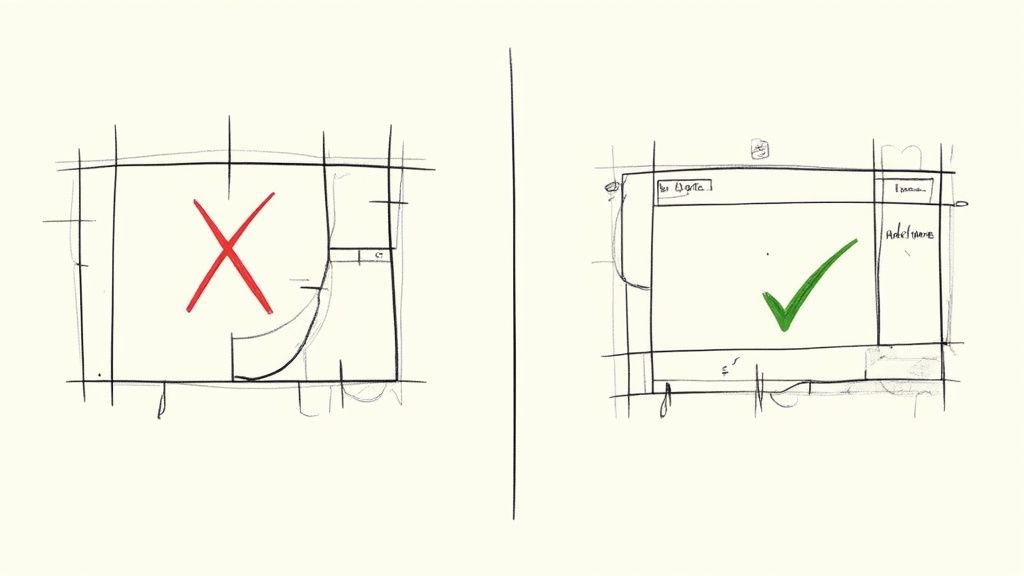
One of the most frequent errors we see? An incomplete or vague application package. A hand-drawn site plan that isn't to scale or a few blurry, undated photos of the tree just won't cut it. The City Arborist Division needs clear, compelling evidence to justify a tree's removal. A weak submission forces them to guess, which almost always leads to a denial or a request for more information.
Misinterpreting Tree Health Definitions
Another major pitfall is misunderstanding the city’s strict definitions of tree health. A tree that looks unhealthy to you might be classified as "declining" or "hazardous" by a certified arborist, but it isn't technically "dead."
Filing for a simple dead tree removal when the tree still has life—even a little—will get your application kicked back immediately. Then you have to restart the entire process under the correct, and often more complex, category. This is exactly why a professional assessment is so valuable; it ensures your application uses the right terminology from the get-go.
This level of detail is critical because Atlanta is fighting to protect its urban forest. The city has faced significant challenges managing its tree canopy due to development pressures. Between 2008 and 2014, Atlanta saw its tree cover dip from 47.9% to 47.4%, a trend driven largely by redevelopment. You can dig into the data yourself in the full study on Atlanta's urban tree canopy changes. This context really explains why the city scrutinizes every single application so carefully.
Acting Before Official Approval
By far the costliest mistake is starting any work before you have the approved, stamped permit physically in your hands. A verbal confirmation or seeing a "pending" status online is not a green light. Don't fall for it.
Crucial Warning: Starting removal work prematurely is a direct violation of the Atlanta Tree Protection Ordinance. This can lead to immediate stop-work orders, substantial fines that often dwarf the original cost of the project, and a much harder time getting any future permits approved.
To avoid these common traps, focus on building an undeniable case for your tree's removal. Follow these best practices:
- Invest in Quality Documentation: Use clear, high-resolution photos, a detailed site plan drawn to scale, and a professional arborist report. Leave no room for doubt.
- Understand the Lingo: Know the difference between "dead," "dying," and "hazardous" as defined by the city. When in doubt, ask an arborist.
- Be Patient: Do not schedule any tree work until you have the final, approved permit.
- Communicate Clearly: If the city arborist requests more information, respond promptly and thoroughly. Give them exactly what they ask for.
By sidestepping these frequent errors, you shift from hoping for an approval to confidently expecting one.
Common Questions About Atlanta Tree Permits
Even with a clear roadmap, you're bound to have questions. It's totally normal. Most property owners run into the same handful of uncertainties the first time they navigate the city's tree rules. Let's tackle the most common ones we hear from our clients.
How Long Does a Permit Take to Get Approved?
This is the big one, and the honest answer is: it depends.
For a straightforward Atlanta tree removal permit—think a clearly dead tree with all your paperwork perfectly in order—you're likely looking at a two to four-week wait. It's the best-case scenario.
However, things slow down quickly if your situation is more complex. If the tree removal is part of a bigger construction project, or if you're dealing with a healthy tree that requires a recompense payment, the timeline can easily stretch to six to eight weeks, sometimes even longer. The most common hold-ups? Incomplete applications and a backed-up schedule for the City Arborist's site visits. Always, always apply well ahead of when you actually need the work done.
What Happens If I Remove a Tree Without a Permit?
Thinking of just skipping the permit? Don't. It might seem like a shortcut, but cutting down a tree without a permit is a serious and expensive violation of the Atlanta Tree Protection Ordinance. We're talking about penalties that can easily run into the thousands of dollars.
Fines are often calculated based on the tree's value, and the city has the power to demand triple the standard recompense fees as a penalty. On top of the financial pain, they can force you to plant replacement trees and issue stop-work orders on any construction you have going on. It’s never worth the risk.
A violation of the Atlanta Tree Protection Ordinance is a criminal offense. The first fine is $500, with subsequent offenses carrying a $1,000 fine or even jail time. This isn't just a simple ticket; it's a serious legal matter.
Can I Remove a Healthy Tree for Convenience?
We get this question a lot: "This tree drops a ton of leaves and blocks my sun. Can I just take it down?" The answer is almost always a hard no.
Atlanta's ordinance was written specifically to protect the city's tree canopy, and permits are not handed out for aesthetic reasons or pure convenience. To even have a chance at getting approval for a healthy tree, you need to show undeniable proof that it's a direct hazard, is causing documented structural damage to your home, or has to be removed for an approved construction project.
Even if you meet those tough criteria, expect to pay a hefty recompense fee or plant new trees based on the city's strict guidelines. For more in-depth information on property-related regulations, there are some great additional resources available online. Getting through these rules just takes a bit of planning and a solid understanding of what the city is trying to achieve.
Navigating the permit process can feel like a real headache, but you don't have to figure it out alone. The team at Richmond Tree Experts GA has decades of experience helping homeowners in Atlanta, Roswell, and across Cobb County secure the necessary permits for their projects. If you need expert guidance or a professional arborist's assessment, contact us today for a consultation.
Not sure what your tree needs? Richmond Tree Experts has worked on Marietta and Metro Atlanta trees since 1985, and every job is looked at by an ISA Certified Arborist before it is priced. Start with an ISA Certified Arborist evaluation, or see everything we do: tree removal, stump grinding and arborist services across Cobb, Fulton, Cherokee, Gwinnett and DeKalb counties (service areas).
Call (770) 974-3964, 7am to 11pm every day, or request an estimate online.

