

The lush, green canopy is one of Atlanta's most defining features, earning it the nickname 'The City in a Forest.' But have you ever wondered what specific trees make up this beautiful urban landscape? Choosing the right tree for your property can enhance curb appeal, provide valuable shade, and even increase your home's value. However, selecting a species that thrives in Georgia's unique climate is crucial for its long-term health and your peace of mind.
This guide explores the most common types of trees you'll find in the Atlanta area, from the mighty Oak to the fast-growing Poplar. We will dive into their key identification features, ideal uses in landscaping, and essential care tips to help them flourish. Understanding these distinct species is the first step toward creating a vibrant and sustainable landscape that complements your property.
Whether you're a new homeowner planning your garden or a long-time resident curious about the towering giants in your neighborhood, this roundup will equip you with the knowledge to appreciate and cultivate Atlanta's natural beauty. This article provides a detailed look at the trees that define our city, helping you make informed decisions for your own green space.
1. Oak Tree
A quintessential giant of the Southern landscape, the Oak tree is one of the most common types of trees you'll find in Atlanta and a true symbol of strength and endurance. Belonging to the genus Quercus, oaks are renowned for their massive canopies, distinctive lobed leaves, and the acorns they produce, which are a critical food source for local wildlife. Their inclusion in this list is non-negotiable due to their sheer prevalence and ecological significance. From the towering White Oaks in Piedmont Park to the majestic Live Oaks gracing historic properties, these trees define much of the region's character.
Their hardwood is legendary for its density and durability, historically used in everything from shipbuilding to the production of whiskey barrels. In a residential or commercial landscape, an oak provides unparalleled shade, boosts property value, and creates a habitat that supports a vast web of life, making it a cornerstone of a healthy urban forest.
Key Characteristics and Uses
Oaks are easily identified by their deeply fissured bark and lobed leaves, though the specific shape varies between species like the Red Oak (pointed lobes) and White Oak (rounded lobes). They are a top choice for large-scale landscaping projects and spacious residential yards where their extensive root systems and broad canopies can fully mature without interference.
- Landscape Use: Best suited as a stately shade tree for large, open areas like parks, corporate campuses, and large backyards.
- Ecological Benefit: As a keystone species, oaks support more than 500 species of caterpillars alone, which in turn feed local bird populations.
- Commercial Value: White oak wood is highly prized for its use in high-quality furniture, flooring, and barrel aging for spirits.
This quick reference infographic highlights the oak's impressive long-term value and ecological impact.
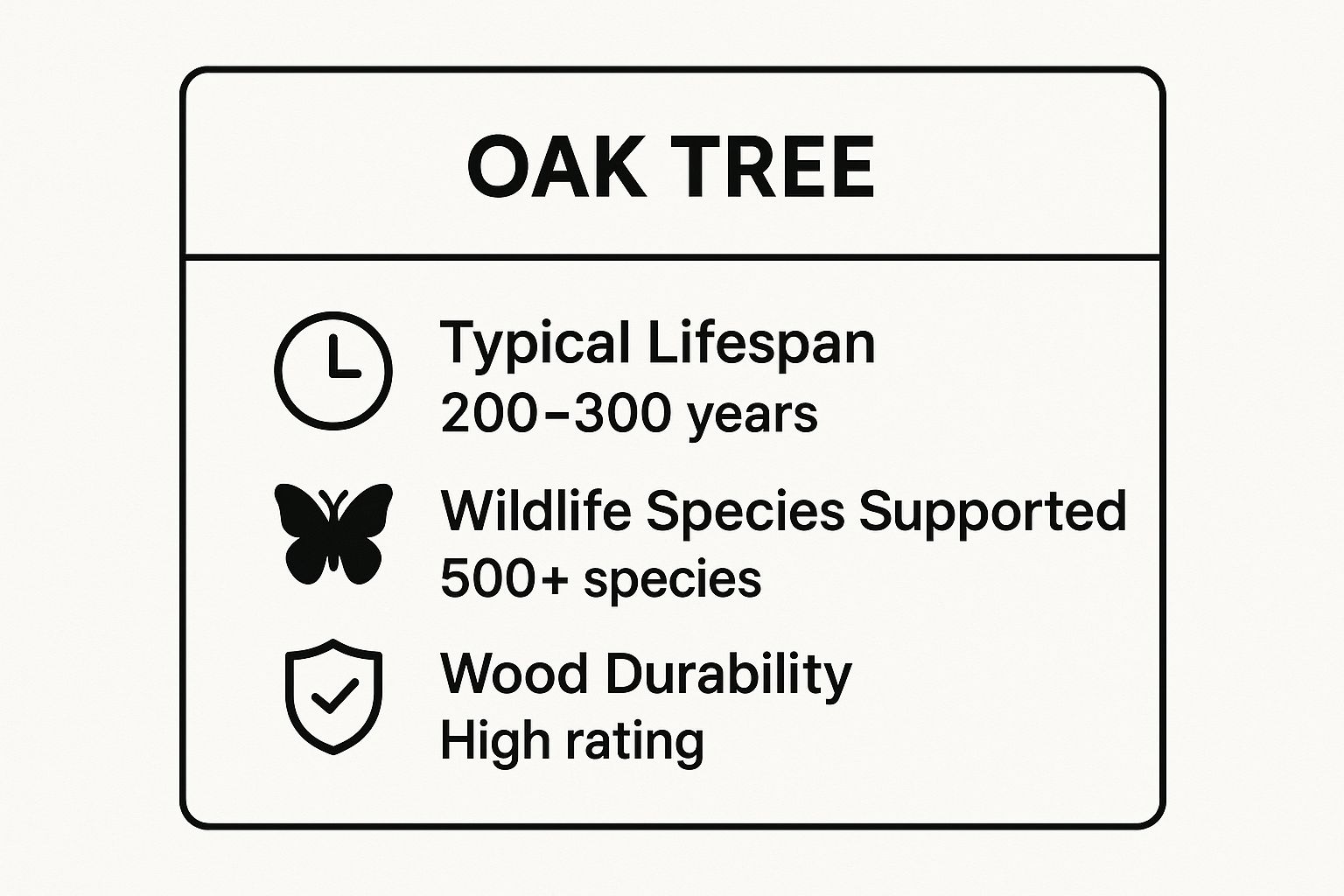
The data clearly illustrates why planting an oak is a long-term investment in both your property and the local ecosystem.
Planting and Care Tips
To ensure a long, healthy life for an oak tree in your Atlanta landscape, proper placement and care are crucial from the start.
Pro Tip: Prune oaks only during their dormant season (late fall to early winter) to significantly reduce the risk of oak wilt, a deadly fungal disease spread by sap-feeding beetles attracted to fresh wounds.
When planting, select a location that receives full sun and has well-draining soil. Give the tree ample room to grow, planning for at least 50-60 feet of clearance from buildings, power lines, and paved surfaces to avoid future conflicts with its mature canopy and root system. Water deeply but infrequently during the first few years to encourage a robust, drought-resistant root structure.
2. Maple Tree
A beloved favorite for its vibrant fall color and classic leaf shape, the Maple tree is one of the most versatile and common types of trees found across Atlanta. Belonging to the genus Acer, maples are celebrated for their stunning autumnal displays of red, orange, and yellow foliage, as well as their distinctive winged seeds, known as samaras, that twirl to the ground like helicopters. Their adaptability and relatively fast growth rate make them a popular choice for adding quick shade and seasonal interest to residential and urban landscapes.
From the brilliant Red Maple (Acer rubrum) thriving in Grant Park to the elegant Japanese Maple adorning countless front yards, these trees offer a diverse range of sizes and forms. Their value extends beyond just aesthetics; the hard wood of species like the Sugar Maple is used for flooring and furniture, and they are, of course, the source of maple syrup. In a landscape, a maple provides excellent shade, vibrant seasonal beauty, and a fast-growing solution for property enhancement.

Key Characteristics and Uses
Maples are generally identified by their palmate leaves, which have multiple lobes originating from a single point, resembling a hand. They are a top selection for homeowners seeking a beautiful, fast-growing shade tree that performs well in the Atlanta climate. Different species offer different benefits, from the large, stately form of the Silver Maple to the compact, ornamental appeal of the Japanese Maple.
- Landscape Use: Excellent as a specimen tree for front yards, a shade provider for backyards, or lining streets and driveways for dramatic seasonal effect.
- Ecological Benefit: Maple flowers provide an important early-season source of pollen and nectar for bees and other pollinators.
- Commercial Value: Sugar Maple is the primary source of maple syrup and its wood is highly valued for its hardness and attractive grain, used in everything from bowling pins to musical instruments.
This video provides an excellent visual guide to identifying various maple species you might encounter.
Planting and Care Tips
For a maple to flourish in your landscape, proper planting and consistent care are key to its success.
Pro Tip: Prune maples in late fall or winter when the tree is fully dormant. Pruning during late winter or early spring can cause the tree to "bleed" a significant amount of sap, which, while not typically harmful, can be unsightly and attract insects.
Choose a site that receives full to partial sun and has well-draining, slightly acidic soil. When planting, be careful not to bury the root flare (the area where the trunk widens at the base). Apply a layer of mulch around the base, keeping it away from the trunk itself, to help retain soil moisture and protect its shallow root system. Water deeply and regularly during the first few years and during extended periods of drought to establish a strong foundation.
3. Pine Tree
An iconic symbol of the Southeastern United States, the Pine tree is an evergreen conifer instantly recognizable across the Atlanta landscape. As a member of the genus Pinus, pines are celebrated for their year-round green needles, distinctive cones, and resinous, fragrant wood. Their rapid growth and adaptability make them one of the most common types of trees in Georgia, from the dense Loblolly Pine forests to the stately Longleaf Pines that once dominated the region. Their constant presence provides crucial winter cover for wildlife and a steady source of food through their seeds.
Pines are economically vital, forming the backbone of the timber and paper industries in the South. In a residential or commercial setting, they serve as excellent privacy screens, windbreaks, and fast-growing shade providers. Their ability to thrive in the acidic clay soil common to the Atlanta area makes them a resilient and low-maintenance choice for property owners seeking to establish a green canopy quickly.

Key Characteristics and Uses
Pines are identified by their bundles of long, slender needles (fascicles) and the woody cones they produce for reproduction. Species common to Georgia, like the Loblolly and Slash Pine, are known for their fast growth rates and tall, straight trunks. They are a versatile choice for both reforestation projects and strategic landscape design where quick screening or a naturalized woodland feel is desired.
- Landscape Use: Ideal for creating fast-growing privacy screens, windbreaks, or as specimen trees in naturalistic or rustic landscape designs.
- Ecological Benefit: Provides essential year-round shelter and habitat for birds and small mammals, while their seeds are a key food source.
- Commercial Value: Pine wood is extensively used for lumber, pulp for paper manufacturing, and pine straw is a popular landscaping mulch.
Planting and Care Tips
Establishing a healthy pine tree requires selecting the right spot and providing minimal but correct care, especially in its early years.
Pro Tip: Avoid fertilizing newly planted pines. Most native Georgia pines are well-adapted to low-nutrient soils, and excess nitrogen can promote weak, rapid growth that is more susceptible to pests and disease.
Choose a location that offers full sun exposure and has well-draining, slightly acidic soil. While pines are drought-tolerant once established, they need consistent watering during their first one or two growing seasons to develop a strong root system. Give them plenty of space, as their roots can be far-reaching, and ensure they are planted away from structures and power lines to accommodate their mature height.
4. Willow Tree
Instantly recognizable by its graceful, sweeping branches that often weep toward the ground, the Willow tree is a picturesque and fast-growing addition to the Atlanta landscape. Belonging to the genus Salix, willows are among the most distinctive common types of trees, celebrated for their elegant form and love of moist environments. Their presence is a definitive statement, often seen gracing the banks of ponds, streams, and lakes, where their thirsty roots help stabilize the soil and prevent erosion.
Historically, the bark of the willow tree was a source of salicin, the compound from which aspirin was synthesized, marking its importance in traditional medicine. In a modern landscape, its primary appeal is ornamental. The dramatic silhouette of a Weeping Willow or the fuzzy catkins of a Pussy Willow in early spring provide unique, year-round visual interest and a sense of tranquility, making it a popular choice for properties with water features or low-lying, damp areas.
Key Characteristics and Uses
Willows are identified by their long, slender leaves and flexible, drooping branches. They are known for their incredibly rapid growth, which makes them an excellent choice for property owners seeking to establish a mature-looking tree in a short amount of time. However, their aggressive root systems seek out water and can be problematic if planted too close to septic systems or water lines.
- Landscape Use: Best suited as a specimen tree near ponds, rivers, or in rain gardens. Dwarf varieties can be used in smaller, moist garden beds.
- Ecological Benefit: Provides excellent erosion control on banks and shorelines. Its catkins are an early spring food source for pollinators.
- Commercial Value: Willow wood is lightweight and flexible, used for crafting baskets, wicker furniture, and cricket bats.
The data for this tree highlights its unique role in specialized landscaping scenarios.
Planting and Care Tips
To thrive, a willow requires a specific environment, and proper care is essential to manage its vigorous growth and maintain its health.
Pro Tip: Regular pruning is critical for willows to remove weak or dead branches and maintain their iconic shape. This helps prevent branch failure, as their wood is relatively soft and brittle.
Choose a planting site that receives full sun and has consistently moist to wet soil. Ensure it has abundant space to grow, positioning it far away from underground utilities, foundations, and septic fields to prevent root damage. Water generously, especially during its first few years and in periods of drought, to satisfy its high water needs. Understanding the best time to prune trees is key to keeping its fast-growing branches in check and ensuring a safe, attractive structure.
5. Birch Tree
While often associated with cooler, northern climates, the Birch tree offers unique ornamental value in the Atlanta landscape, particularly heat-tolerant varieties like the River Birch. Belonging to the genus Betula, these deciduous trees are celebrated for their striking, often peeling bark which can be white, silver, or tan. Their delicate, airy canopy and fine-toothed leaves create a graceful aesthetic that contrasts beautifully with more robust, dense trees. Their inclusion in this list of common types of trees is due to their popularity as a fast-growing, multi-stemmed accent tree in modern landscape design.
The River Birch (Betula nigra), especially cultivars like 'Heritage', is well-adapted to the heat and clay soils of Georgia. Its exfoliating bark, which peels away to reveal layers of cream, salmon, and brown, provides year-round visual interest. In a residential or commercial setting, a Birch adds texture, multi-season color, and a sense of movement to the landscape, making it a focal point in garden beds or near water features.
Key Characteristics and Uses
Birch trees are easily recognized by their distinctive papery bark and small, serrated leaves that turn a brilliant yellow in the fall. Their typically upright, often clumping form makes them an excellent choice for adding vertical interest to a landscape without casting the dense shade of larger trees. They thrive in moist soil, making them ideal for planting along streams or in low-lying areas of a property.
- Landscape Use: Best used as a specimen or accent tree, often planted in small groups of three or five to highlight their unique form and bark.
- Ecological Benefit: Birch trees are host plants for hundreds of caterpillar species, including the larvae of the Mourning Cloak butterfly, supporting local food webs.
- Commercial Value: While not a major timber source in the South, birch wood is valued elsewhere for plywood, cabinetry, and specialty paper products.
This fast growth rate makes the birch an appealing choice for new landscapes where quick impact is desired.
Planting and Care Tips
To successfully grow a Birch tree in the Atlanta area, careful site selection and consistent moisture are key to its health and longevity.
Pro Tip: Keep the root zone cool and moist by applying a 3-4 inch layer of organic mulch around the base of the tree. This mimics their natural habitat and helps protect the shallow root system from the stress of summer heat.
Choose a location that offers full sun to partial shade, preferably with protection from the intense late-afternoon sun. Birches demand consistently moist, slightly acidic, and well-draining soil. Water deeply during establishment and throughout periods of drought. Be vigilant for signs of stress or disease; early detection is critical. For more information on potential issues, consult a tree disease identification guide to keep your birch healthy.
6. Elm Tree
A classic American shade tree, the Elm is known for its graceful, vase-shaped silhouette that once lined countless city streets. Belonging to the genus Ulmus, elms are admired for their arching branches that create a cathedral-like canopy, providing ample shade and a sense of elegance. Although the native American Elm population was decimated by Dutch elm disease in the 20th century, its legacy continues through the development of disease-resistant cultivars, making it a viable and beautiful choice for Atlanta’s urban landscape once again.
The reintroduction of elms like the ‘Princeton’ and ‘Valley Forge’ varieties allows property owners to enjoy their stately form and rapid growth without the same risk. Their distinctive toothed leaves and tolerance for urban conditions make them a valuable addition to parks and residential areas. An elm tree is more than just a plant; it's a piece of American history, offering shade, beauty, and a connection to the grand streetscapes of the past.
Key Characteristics and Uses
Elms are easily identified by their serrated, oval leaves with asymmetrical bases and their famously upright, spreading form. Modern cultivars are chosen not only for disease resistance but also for their hardiness and adaptability to various soil types, which is ideal for the diverse conditions found around Atlanta. They are a fantastic choice for framing avenues or as a standalone specimen in a large yard.
- Landscape Use: Excellent as a street tree, a focal point in large residential lawns, or for lining driveways and parkways to create a formal, shaded corridor.
- Ecological Benefit: Elm seeds are a food source for birds and small mammals, while their dense foliage offers nesting sites and shelter.
- Aesthetic Value: The iconic vase shape provides a unique and elegant structure that stands out among other common types of trees, especially in winter.
Planting and Care Tips
Success with modern elms hinges on selecting the right cultivar and providing proper care to maintain its health and structure.
Pro Tip: While modern cultivars are highly resistant, no tree is completely immune. Avoid pruning elms from April through August, as the elm bark beetles that spread Dutch elm disease are most active during this period.
Choose a location with full sun and well-draining soil. Although elms are adaptable, they thrive with consistent moisture, especially during their first few years of establishment. Water deeply during dry spells to encourage a strong root system. A proactive approach to monitoring for any signs of stress or disease will ensure your elm remains a magnificent feature for decades.
7. Cedar Tree
Prized for their distinct, pleasant aroma and impressive natural durability, Cedar trees are a distinguished group of evergreen conifers. While true cedars (Cedrus) are native to the Mediterranean and Himalayas, many of the "cedars" common in Atlanta are actually from other genera, such as the Eastern Red Cedar (Juniperus virginiana). These trees are included in our list of common types of trees for their widespread use in landscaping, their aromatic quality, and their exceptional resistance to insects and decay.
The wood of cedar trees is famously light yet strong, making it a premium material for outdoor construction like shingles, fences, and deck furniture. In a landscape, cedars provide excellent year-round screening and a classic, pyramidal form that adds structure and height. Their dense foliage offers vital shelter for birds during winter months, and their unique fragrance makes them a sensory addition to any garden or property.
Key Characteristics and Uses
Cedars can be identified by their scale-like or needle-like foliage and the small, berry-like cones they produce. Their reddish-brown, often peeling bark is another distinguishing feature. They are a versatile choice for creating privacy screens, windbreaks, or standalone specimen trees, thriving in the Georgia climate with proper placement.
- Landscape Use: Ideal for creating natural privacy barriers, formal hedges, or as a striking vertical accent in a landscape design.
- Ecological Benefit: Provides dense shelter and nesting sites for birds, while its cones are a food source for various wildlife species.
- Commercial Value: Cedar wood is highly sought after for building aromatic closets and chests, outdoor siding, shingles, and mulch due to its natural pest-repellent properties.
The practical benefits and aesthetic appeal of cedars make them a valuable and popular choice for both residential and commercial properties. For expert advice on selecting the right cedar species for your property, you can get help from a certified arborist in Atlanta.
Planting and Care Tips
Ensuring a cedar tree flourishes in your landscape begins with thoughtful planting and consistent early care.
Pro Tip: Avoid planting cedars in low-lying, waterlogged areas. These trees demand well-draining soil and are susceptible to root rot if their feet are constantly wet, a common issue in compacted clay soils.
Choose a location that offers full sun to partial shade. When planting, provide ample space between trees and structures to accommodate their mature spread, which prevents overcrowding and promotes healthy air circulation. Water regularly during the first growing season to establish a strong root system, but once established, they are quite drought-tolerant. Minimal pruning is typically required, mainly to remove any dead or damaged branches.
8. Poplar Tree
Valued for its remarkable growth speed, the Poplar tree is a common sight in both managed forests and developing landscapes across Georgia. Belonging to the genus Populus, which includes cottonwoods and aspens, these deciduous trees are distinguished by their tall, straight form and leaves that seem to shimmer and flutter with the slightest breeze. Their inclusion in this list of common types of trees is due to their rapid growth, making them a popular choice for projects requiring quick shade, privacy screens, or biomass production.
The wood from poplar trees is lightweight and versatile, making it a staple in the paper and plywood industries. In a landscape context, their fast growth can quickly establish a natural windbreak or visual barrier. While some species, like the native Eastern Cottonwood, thrive along Atlanta's riverbanks, hybrid poplars are often selected for their even more accelerated growth rates and disease resistance, providing a fast-track solution for specific landscaping goals.
Key Characteristics and Uses
Poplars are typically identified by their smooth, light-colored bark (which becomes more furrowed with age) and triangular or heart-shaped leaves on long, flattened stalks. Their rapid growth and extensive root systems make them ideal for quick-impact projects, but they require careful placement to avoid infrastructure issues. They are an excellent choice for reforestation or phytoremediation projects where they can help stabilize soil and absorb pollutants.
- Landscape Use: Best used for creating fast-growing windbreaks, privacy screens on large properties, or for shade in areas where immediate canopy cover is desired.
- Ecological Benefit: Certain native species, like cottonwoods, are crucial for stabilizing riverbanks and providing habitat for wildlife in riparian zones.
- Commercial Value: Widely cultivated for pulpwood used in paper manufacturing, as well as for biomass energy, plywood, and inexpensive furniture frames.
Planting and Care Tips
To maximize a poplar's growth potential and manage its vigorous nature, selecting the right spot is paramount.
Pro Tip: Avoid planting poplars near septic systems, sewer lines, or foundations. Their aggressive, water-seeking root systems are known to cause significant damage to underground infrastructure.
Choose a location with full sun and moist, well-drained soil. Given their rapid growth, ensure they have ample space to expand both vertically and horizontally, far from buildings and utility lines. While they are relatively low-maintenance, be prepared for potential upkeep, as their fast growth can result in weaker branches that may require pruning to prevent breakage during storms.
9. Ash Tree
A classic American hardwood, the Ash tree is a graceful and fast-growing deciduous tree that has long been a staple in both urban and forested landscapes across Georgia. Belonging to the genus Fraxinus, ashes are prized for their straight grain, strong yet flexible wood, and distinctive compound leaves. Their inclusion in this list is vital due to their historical prevalence and the significant challenges they currently face, making awareness and proper management critical for Atlanta property owners.
The wood of the ash tree is renowned for its unique combination of strength and shock resistance, making it the traditional material for baseball bats, tool handles, and high-quality furniture. In a landscape setting, species like the Green Ash have been popular for their rapid growth and pleasant, diamond-patterned bark. However, the presence of the invasive emerald ash borer beetle has put these common types of trees at severe risk, requiring vigilant monitoring and proactive care from homeowners.
Key Characteristics and Uses
Ash trees are most readily identified by their opposite branching pattern (branches and buds grow directly across from each other) and compound leaves, which consist of multiple smaller leaflets arranged on a single stem. Their seeds, known as samaras, are paddle-shaped and hang in clusters. While once a go-to for street plantings and shade, their vulnerability now requires careful consideration before planting.
- Landscape Use: Traditionally used as a shade or street tree, but new plantings should be carefully considered due to pest threats.
- Ecological Benefit: Provides habitat and food for various native birds and insects, though its role is diminishing due to population decline.
- Commercial Value: White ash wood is exceptionally valuable for its use in sporting goods, especially professional baseball bats, as well as flooring and furniture.
Planting and Care Tips
Managing an ash tree in the Atlanta area today is primarily focused on pest prevention and health monitoring, particularly for the emerald ash borer (EAB).
Pro Tip: Look for D-shaped exit holes in the bark, thinning canopy, and increased woodpecker activity. These are key signs of an emerald ash borer infestation, which requires immediate professional consultation.
If you have an existing ash tree, consider professional systemic insecticide treatments to protect it from EAB. For new plantings, it is often recommended to choose a different, more resilient species to help diversify the urban canopy and avoid the risks associated with monocultures. If you do plant an ash, ensure it has full sun and well-drained soil, and provide consistent water during its establishment period to build its strength.
Key Characteristics Comparison of 9 Common Trees
| Tree Type | Implementation Complexity 🔄 | Resource Requirements ⚡ | Expected Outcomes 📊 | Ideal Use Cases 💡 | Key Advantages ⭐ |
|---|---|---|---|---|---|
| Oak Tree | Medium – slow growth and large space required | High – space and maintenance for disease prevention | Long lifespan (200–300+ years), supports 500+ wildlife species | Large properties, shade, hardwood timber | Extremely durable wood, supports biodiversity, high property value |
| Maple Tree | Low to Medium – fast growth, adaptable | Moderate – regular pruning and soil care | Fast growth, brilliant fall colors, maple syrup production | Urban landscaping, ornamental, syrup production | Fast growth, stunning foliage, adaptable |
| Pine Tree | Low to Medium – fast growth, evergreen maintenance | Moderate – well-drained acidic soil, some pruning | Year-round greenery, valuable timber, wind resistance | Forestry, privacy screens, construction | Fast growth, evergreen, low water needs |
| Willow Tree | Low – rapid growth, but invasive roots | Moderate to High – needs constant moisture and space | Very fast growth, erosion control, ornamental | Wet soils, erosion areas, ornamental uses | Rapid growth, erosion control, medicinal value |
| Birch Tree | Medium – relatively fast growth but pest sensitive | Moderate – requires moist, acidic soil and pest management | Moderate lifespan (40-50 years), ornamental bark and fall color | Cold climates, ornamental, pioneer species | Striking bark, fast growth, cold tolerant |
| Elm Tree | Medium – disease monitoring needed | Moderate – disease-resistant varieties and pruning required | Fast initial growth, excellent shade, urban tolerant | Urban planting, shade trees | Architectural form, shade provider, disease-resistant cultivars |
| Cedar Tree | Medium – slow growth, specialized care | Moderate – spacing and protection from winds | Durable, rot-resistant wood, aromatic | Outdoor construction, screening, aromatic uses | Naturally rot & insect resistant, low maintenance |
| Poplar Tree | Low – extremely fast growth but invasive roots | Moderate – need space and frequent maintenance | Short lifespan, rapid growth, carbon sequestration | Windbreaks, biomass, erosion control | Fastest growing hardwood, renewable biomass |
| Ash Tree | Medium – pest management essential | Moderate – monitoring for emerald ash borer | Valuable timber, relatively fast growth | Timber production, urban landscaping | Strong flexible wood, good shade, adaptable soils |
Cultivating Your Atlanta Landscape with Confidence
We have journeyed through the leafy canopy of Atlanta's urban forest, exploring the diverse and resilient trees that define our cityscape. From the stately Southern Red Oak and its importance to local wildlife to the vibrant autumn hues of the Red Maple, each species brings a unique character and set of ecological benefits to your property. Understanding these common types of trees is more than an exercise in botany; it is the foundational knowledge required to create a landscape that is both beautiful and sustainable.
Your choice of tree impacts everything from shade and energy costs to property value and local biodiversity. The fast-growing Loblolly Pine can provide a quick privacy screen, while the graceful River Birch offers stunning visual interest near water features. Recognizing the specific needs of each tree, such as the Elm's susceptibility to disease or the Ash's vulnerability to pests, empowers you to be a proactive and effective steward of your green assets. This knowledge transforms you from a simple property owner into a curator of a living, breathing ecosystem.
Key Takeaways for Your Urban Forest
To truly cultivate a thriving landscape, it is essential to move from identification to implementation. Reflect on the key insights from our guide to make informed decisions for your property:
- Match the Tree to the Site: Always consider your specific conditions. A Willow Oak may thrive in the moist, acidic soil common in Atlanta, but a White Ash will struggle without proper drainage. Before planting, assess your soil type, sunlight exposure, and available space.
- Plan for a Lifetime: A tree is a long-term investment. The fast growth of a Poplar might seem ideal now, but will its mature size and root system pose a threat to your home's foundation or power lines in twenty years? Thinking ahead prevents costly and dangerous problems down the road.
- Proactive Care is Crucial: Regular maintenance is not an afterthought; it is a necessity. Proper pruning, disease monitoring, and soil management for species like the Cedar and Maple will ensure they remain healthy, safe, and beautiful for generations to enjoy.
Your Next Steps to a Healthier Landscape
Armed with this information, you can now take confident, actionable steps. Start by walking your property and identifying the trees you already have. Use this guide to assess their health and suitability for their current location. If you are planning to add new trees, create a shortlist of species that meet your aesthetic goals and match your landscape's specific environmental conditions.
A Final Thought: The trees on your property are a vital part of Atlanta's broader urban canopy. By making informed choices and providing diligent care, you are not just enhancing your own yard; you are contributing to the health, beauty, and ecological resilience of our entire community. Every well-chosen, properly maintained tree is a legacy for the future.
Transforming this knowledge into a flourishing landscape requires expertise and precision. The ISA Certified Arborists at Richmond Tree Experts GA have provided premier care for Atlanta's most common types of trees since 1985, offering everything from expert pruning to comprehensive health assessments. Visit Richmond Tree Experts GA to schedule a consultation and ensure your trees receive the professional care they deserve.
Not sure what your tree needs? Richmond Tree Experts has worked on Marietta and Metro Atlanta trees since 1985, and every job is looked at by an ISA Certified Arborist before it is priced. Start with an ISA Certified Arborist evaluation, or see everything we do: tree removal, stump grinding and arborist services across Cobb, Fulton, Cherokee, Gwinnett and DeKalb counties (service areas).
Call (770) 974-3964, 7am to 11pm every day, or request an estimate online.

