

Properly trimming an oak tree isn't just a quick weekend chore; it's a strategic process of removing dead, damaged, or crossing branches to bolster the tree's health and structure. Here in Georgia, timing is everything. You absolutely must limit pruning to the dormant season, only between October and March, to slam the door on oak wilt, a deadly fungal disease.
Using clean, sharp tools and the right cutting techniques is the only way to protect this incredible asset in your yard.
Why Properly Trimming Your Oak Is Non-Negotiable
For anyone with a home in the Atlanta metro area—from Cumming and Johns Creek to Marietta and Roswell—an oak tree is more than just landscaping. It’s a landmark. It’s the source of that priceless summer shade. It’s a massive contributor to your property’s value. But unlike a simple boxwood, an oak demands careful, informed maintenance.
Think of proper trimming not as an aesthetic choice, but as a critical investment in your tree's health, your family's safety, and its long, beautiful life.
Letting an oak go untended is asking for trouble. Those overgrown or weak branches become serious hazards during North Georgia's notorious thunderstorms. A canopy that's too dense chokes off airflow, essentially rolling out the welcome mat for pests and disease. This is exactly why learning how to trim your oak the right way is so important.
Protecting Your Tree and the Local Ecosystem
The stakes are higher than just what happens in your yard. Did you know that nearly 31% of the world's 430 oak species are threatened with extinction? For us here in Georgia, where the historic dominance of oaks in our forests has plunged from 55% down to just 25%, proactive care is a genuine act of local conservation.
Good pruning is about making smart, deliberate choices that will benefit the tree for decades. The goals are always the same:
- Improve Structural Integrity: By removing weak or poorly attached limbs, you're helping the tree brace itself against high winds and brutal ice storms.
- Enhance Health: Thinning the crown lets sunlight and air get to the core, drastically cutting down the risk of fungal growth.
- Increase Safety: Getting rid of dead or damaged branches—what we call "deadwooding"—prevents them from coming down unexpectedly and causing injury or property damage.
- Boost Aesthetics: A professionally pruned oak has that balanced, majestic shape that elevates the look of your entire property.
The Threat of Oak Wilt
If you need one single reason to be meticulous about oak care, it’s preventing oak wilt. This devastating fungal disease is spread by tiny beetles that are drawn to fresh tree wounds, and it can kill a mature red oak in a matter of weeks.
That pruning window we talked about—the dormant season—is your single most important defense. Making a cut in the spring or summer is like sending an open invitation to these disease-carrying insects. You can get the full rundown in our detailed guide on how to prevent oak wilt.
Key Takeaway: Understanding how to trim oak trees is less about simple yard work and more about smart risk management. The right cut at the right time protects your investment, ensures safety, and preserves a cornerstone of the Atlanta landscape for generations to come.
The Only Safe Time to Prune Oaks in North Georgia
When you’re learning how to trim oak trees the right way, timing isn't just one piece of the puzzle—it's everything. For anyone with oaks in Forsyth, Cobb, Gwinnett, or Cherokee counties, there’s a very specific, non-negotiable window for pruning. The only time it’s truly safe is during the tree's dormant season.
Here in North Georgia, that means the period from late fall all the way through early spring. Think of it as your tree taking a long winter nap. Its metabolism slows way down, and the risk of attracting deadly diseases drops to almost zero.
This dormant season is your golden opportunity for any structural pruning, crown thinning, or removing branches that aren't an immediate hazard. Trimming during this phase lets the tree channel its energy reserves into healing those cuts the moment spring growth kicks in, setting it up for a healthy, vigorous season ahead.
Understanding the Oak Wilt Threat
The main reason for this strict schedule is a devastating fungal disease called Oak Wilt. It’s spread by a tiny insect known as the Nitidulid beetle, and these guys are most active when our Atlanta-area weather warms up in the spring and summer.
What attracts them? The scent of fresh sap from a tree wound. When you prune an oak during their active months, you're basically ringing a dinner bell. If a beetle carrying Oak Wilt spores lands on that fresh cut, it can infect and kill a mature red oak in just a few short weeks. It's that fast and that serious.
Expert Insight: While it’s estimated that up to 90% of Oak Wilt infections spread underground through interconnected root systems, the beetles are how new infection centers get started. That makes dormant season pruning the single most effective move you can make to protect your trees.
This is exactly why any certified arborist from Roswell to Milton will tell you to avoid all non-emergency pruning between April and September.
Your North Georgia Pruning Calendar
To make it as clear as possible, let's break down the year and what it means for your oaks. Following this calendar is the best way to minimize risk and keep your trees healthy.
Atlanta Oak Pruning Calendar
This seasonal guide outlines the best times for oak tree trimming in North Georgia, including risks and recommended actions for each season.
| Season | Recommended Action | Oak Wilt Risk Level |
|---|---|---|
| Fall (October – November) | An ideal time to start pruning. The weather is cool, and the beetles have packed it in for the year. | Very Low |
| Winter (December – February) | This is the absolute best and safest time. The tree is fully dormant, and infection risk is at its lowest point. | Lowest |
| Early Spring (March) | Generally safe, but you'll want to finish up before new buds start to break. As temps rise, so does the risk. | Low |
| Spring/Summer (April – September) | AVOID PRUNING. Do not perform any routine trimming during this time. Beetle activity is at its peak. This is the danger zone. | Very High |
Following this timeline is your best defense against introducing a disease that can wipe out a beautiful, mature tree.
What About Storm Damage?
Of course, life happens. A summer thunderstorm can roll through Marietta or Alpharetta and leave you with a broken, hanging limb that’s a clear hazard. In an emergency like that, you can't wait—you have to act.
Here’s the right way to handle emergency summer pruning:
- Remove the Hazard Immediately: Safely cut and get rid of the broken or dangerous branch. Don't put it off.
- Paint the Wound Instantly: As soon as the cut is made, cover it completely with a non-asphalt-based pruning paint or wound dressing. This creates a barrier that blocks the sap's scent and keeps the beetles away.
That immediate action is critical. Waiting even just a few hours can be enough for an infected beetle to find the wound. For a deeper dive into seasonal tree care, you can learn more about the best time to prune trees in our detailed guide.
Gathering the Right Tools for the Job
Trying to trim an oak without the right equipment is like trying to do surgery with a butter knife—it’s clumsy, dangerous, and you’re going to do more harm than good. Using the wrong tools can tear the bark, leaving nasty, slow-healing wounds that practically invite disease. Worse, it puts you in a seriously risky position.
Picture this: you're in your Roswell backyard, staring up at a big oak. A couple of branches are clearly dead and have to go. Reaching for a dull handsaw or, even worse, a wobbly ladder is a recipe for disaster. Before you even think about making a cut, you need to have the right, well-maintained tools and all your personal protective equipment (PPE) laid out and ready. This isn’t about being over-the-top; it’s about respecting the work and making sure you go home in one piece.
Essential Pruning Tools
Not all cutters are created equal. Each tool is built for a specific branch size, and using the right one guarantees a clean cut that your oak can seal over quickly. Think of this as your core kit for any pruning you plan to handle yourself.
- Hand Pruners (Bypass Style): These are for your detailed, precision work. They’re perfect for snipping off small twigs and branches up to about ¾-inch in diameter. Always, always choose bypass pruners—the kind where two blades sweep past each other like scissors. Anvil pruners just crush and mangle the wood.
- Lopping Shears (Loppers): With their long handles, loppers give you the extra muscle needed to slice through branches up to 1 ½ inches thick. They’re fantastic for thinning out the lower canopy in areas you can easily reach from the ground.
- Pruning Saw: Once a branch is too big for your loppers, the pruning saw is your best friend. Its sharp, curved blade is designed to cut on the pull stroke, which gives you more control and makes it ideal for limbs between 1 ½ and 5 inches in diameter.
- Pole Saw: This is exactly what it sounds like: a pruning saw on a long, extendable pole. It lets you safely reach higher branches while your feet stay firmly on the ground. A pole saw is an absolute must-have for any work that would otherwise tempt you to get on a ladder—a major safety no-go.
Non-Negotiable Personal Protective Equipment
The tools are for the tree's health; the PPE is for yours. Falling branches, wood chips, and sawdust can cause a life-changing injury in a split second. Don't even start the work without this gear.
Here's a dose of reality: A small, dead branch weighing just 10 pounds that falls from 20 feet up can hit with over 200 pounds of force. That’s more than enough to cause a severe concussion or worse. This is exactly why a hard hat is not optional.
Your non-negotiable PPE checklist should always include:
- Hard Hat: Protects your head from falling debris. It’s arguably the most critical piece of safety gear you'll wear.
- Safety Glasses or Goggles: Shields your eyes from flying sawdust and tiny twigs that can cause permanent damage before you can even blink.
- Sturdy, Non-Slip Gloves: A good pair of gloves improves your grip, which is crucial for safety, and protects your hands from blisters, splinters, and cuts.
- Long Sleeves and Pants: This is your first line of defense against scratches, poison ivy, and whatever insects are hiding in the bark.
- Sturdy Boots: Good boots give you stable footing, especially on uneven ground, and protect your feet from dropped tools or branches.
Getting the right gear together is the first real step in doing this job correctly. It shows you’re committed to doing things safely and effectively, protecting both your valuable oak and yourself. If the job starts to look like it needs a chainsaw or for you to leave the ground, that’s your cue—you’ve officially moved beyond DIY territory.
Making Clean Cuts for a Healthy Tree
How you physically cut a branch is where your good intentions meet reality. A clean, well-placed cut can set your oak on a path to vigorous health. A sloppy one? That can create a wound that festers for years, inviting disease and decay. It’s less about brute force and more about understanding how a tree heals itself.
Before you even think about picking up a saw, your first job is to figure out which branches actually need to go. Properly trimming an oak starts with a careful look from the ground up, scanning for the classic "four D's."
This quick visual guide will help you decide which tools to grab and why.
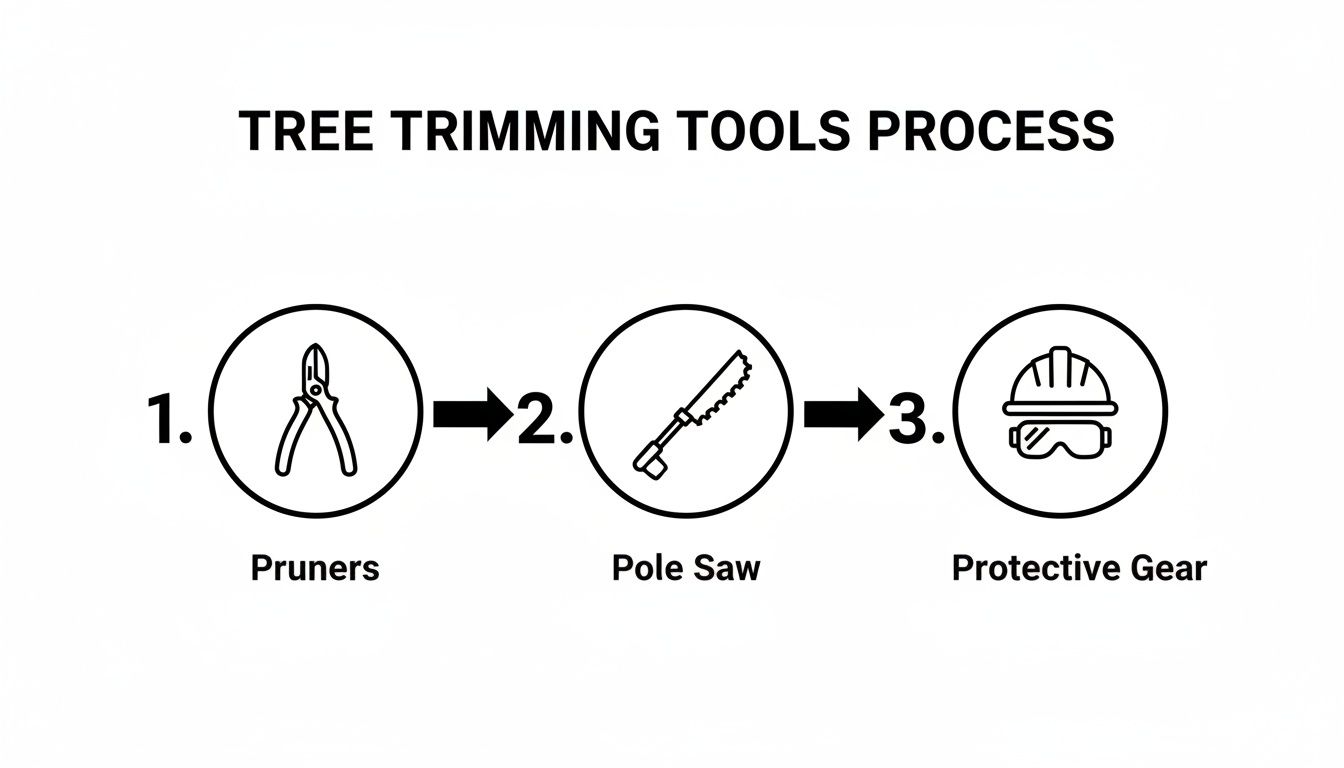
As you can see, grabbing the right tool for the job is step one, but having the right protective gear is just as critical for a safe, clean cut.
What to Prune First
While your long-term goals might be shaping or thinning, some branches are always on the hit list. Start by targeting these problem limbs to give your tree an immediate health and safety boost.
- Dead Branches: These are the easiest to spot. They'll have no leaves in summer, look brittle and dry, and the bark might be peeling. They’re a huge hazard and should always be your first priority.
- Damaged or Broken Limbs: Whether from a recent storm that rolled through Marietta or just old damage, cracked or hanging branches are ticking time bombs. Get them down immediately before they fall on their own.
- Diseased Wood: Keep an eye out for cankers (sunken, discolored areas), strange fungal growth, or weeping spots. Removing these sections can sometimes stop an infection from spreading deeper into the tree.
- Crossing or Rubbing Branches: When two limbs grow into each other, they rub away the protective bark and create open wounds. This is a five-star invitation for pests and disease. The rule of thumb is to remove the weaker or less well-placed of the two branches.
Mastering the Three-Cut Method
For any branch thicker than an inch or two, you can't just lop it off from the top. The weight of the limb will cause it to snap mid-cut, tearing a long, ugly strip of bark right down the trunk. This is hands-down one of the most common and damaging mistakes I see homeowners make.
The solution is the three-cut method. This simple technique removes the branch's weight first, letting you make a final, precise cut without causing any damage.
- The Undercut: About a foot away from the trunk, make your first cut on the underside of the branch. You only need to saw about one-third of the way through. This little cut is your safety net—it stops the bark from tearing.
- The Relief Cut: Move another inch or two further out from your first cut (away from the trunk) and saw down from the top. The branch will snap off cleanly at the undercut, taking all that dangerous weight with it.
- The Final Cut: Now all you have is a small, lightweight stub. You can make your final, careful cut just outside the branch collar. This is the last step, and it’s the one that ensures the tree can heal properly.
Understanding the Branch Collar
The branch collar is that slightly swollen, often wrinkly area where the branch grows out of the trunk. Think of it as the tree’s natural healing zone, packed with specialized cells ready to grow over a wound. Your final pruning cut should always be made just outside this collar, leaving it completely intact.
Crucial Tip: Never, ever make a "flush cut" by sawing the branch off perfectly flat against the trunk. When you remove the branch collar, you create a large, unnatural wound the tree can't properly seal. This mistake leaves the core of the tree exposed to rot and disease for years to come.
The goal isn't to make the trunk look smooth; it's to make a cut the tree can easily heal. Leaving that collar allows the tree to form a protective "donut" of new wood over the wound, sealing it off from the elements. It's a key difference between pruning and trimming that the pros always respect.
Pruning for Specific Goals
Once you've cleaned up the problem limbs, you can move on to more strategic cuts. For homeowners in dense areas like Alpharetta or East Cobb, two of the most common goals are improving clearance and airflow.
- Crown Raising: This is simply removing the lowest branches to create more room underneath the tree. It’s perfect for getting clearance for a driveway, a walkway, or just so you don't have to duck every time you mow the lawn.
- Crown Thinning: This involves selectively removing branches throughout the canopy to reduce its overall density. Doing this allows more sunlight to filter down to the inner leaves and dramatically improves air circulation—one of the best natural defenses against fungal diseases.
A word of caution: when thinning, try not to remove more than 25% of the tree's living canopy in a single year. Over-pruning can put the tree into shock and create a whole new set of health problems.
When to Step Back and Call a Certified Arborist

Knowing how to properly trim your oaks is a fantastic skill for any homeowner. But knowing your limits? That’s even more important.
While snipping a few small, reachable branches is a perfectly fine weekend project, there are clear lines you should never cross. Recognizing these red flags is the single most important safety decision you can make, protecting both yourself and your valuable tree.
Here’s my rule of thumb: if the job requires you to leave the ground, it’s no longer a DIY task. The risks of working at height, fumbling with heavy equipment, and navigating a complex canopy shoot up with every foot you climb. A simple slip can have devastating consequences, which is why professionals rely on specialized climbing gear and strict safety protocols.
Signs It Is Time to Call a Professional
Certain situations should immediately move a trimming job off your to-do list and onto an ISA Certified Arborist's schedule. These pros have the training, equipment, and critical insurance needed to handle complex and dangerous work safely. For homeowners in places like Milton and Johns Creek, where gorgeous, mature oaks are the norm, hiring a pro is often the default—and correct—choice.
Keep an eye out for these specific red flags:
- Proximity to Power Lines: This one is non-negotiable. Never attempt to prune any branch that is near or could possibly fall onto a power line. The risk of electrocution is severe and absolutely life-threatening. Only qualified utility line clearance professionals are legally allowed to work in these areas.
- Branches Larger Than a Few Inches: Once a limb gets thicker than about five inches in diameter, it demands a chainsaw and advanced rigging techniques for safe removal. The sheer weight of these branches can cause serious injury or property damage if they fall uncontrolled.
- Signs of Major Disease or Decay: If you spot large cavities in the trunk, significant fungal growth (like mushrooms popping out of the bark), or widespread dead branches in the canopy, the tree needs an expert diagnosis. An arborist can assess the tree's structural integrity and figure out if it can be saved or if it has become a hazard.
- Any Work Requiring a Ladder: Let me be blunt: using a ladder for tree work is notoriously unstable and a leading cause of horrific injuries. A certified arborist will use ropes and a harness or a bucket truck (aerial lift) to safely access the tree's canopy.
The Value of an ISA Certified Arborist
Hiring a certified arborist is so much more than just paying someone to cut branches; it's an investment in your property's future and our local ecosystem. Here in the U.S., a staggering 30% of our 91 native oak species are of conservation concern. ISA Certified Arborists use proven, science-based methods to encourage strong, storm-resistant structures. This is critical for preserving these majestic trees that support over 2,300 other species. You can learn more about the importance of professional oak care from the Morton Arboretum.
An Arborist's Expertise Includes:
- Expert Diagnosis: They're trained to spot subtle signs of stress, disease, or pest infestations that the average homeowner would easily miss.
- Specialized Equipment: From aerial lifts to industrial-grade chippers and cranes, they have the right tools for any job, big or small.
- Proper Insurance: A reputable tree company carries hefty liability and worker's compensation insurance. This protects you from any financial risk if an accident happens on your property.
Ultimately, calling an arborist isn't giving up; it’s making a smart, responsible decision that puts safety and the long-term health of your oak first.
Your Oak Tree Trimming Questions, Answered
Even when you've got a game plan, questions always pop up. That's natural. After all, you're not just lopping off branches; you're the steward of a living landmark on your property. We get questions all the time from homeowners across the Atlanta area, so we've put together some straightforward answers to the most common ones.
Think of this as your quick-reference guide, designed to clear up any confusion and give you confidence when you need it most.
How Much Does It Cost to Trim an Oak Tree in the Atlanta Area?
This is the big one, and the honest answer is: it really depends. The final price tag is a mix of your tree's size, its current health, and how tricky it is for a crew to get to it.
For a smaller, younger oak that just needs a little shaping, you might be looking at a few hundred dollars. But for a massive, old oak tucked away in a tight East Cobb backyard? One that needs skilled climbers and specialized rigging could easily run $1,500 or more.
The only way to know for sure is to get an ISA Certified Arborist to come out and take a look. They’ll give you a detailed quote based on the actual work involved, not just a ballpark guess.
Can I Trim My Oak in the Summer if a Branch Breaks?
Yes, absolutely. If a branch is broken, dead, or hanging dangerously, get it down immediately, no matter what month it is. Safety always comes first.
But—and this is a big but—that’s only for emergencies. Any other kind of pruning, like thinning out the crown or lifting the canopy, needs to wait for the dormant season. Here in Georgia, that means waiting until October through March. Cutting a healthy branch in the summer leaves a fresh wound that’s like a dinner bell for the beetles that spread deadly oak wilt.
A Critical Step for Summer Cuts: If you have to make an emergency cut during the high-risk spring or summer months, you absolutely must paint the wound right away. Use a non-asphalt-based pruning sealant to completely cover the cut. This creates a barrier that masks the sap's scent from those disease-carrying insects.
What Is the Difference Between Trimming and Pruning?
Most people use these words interchangeably, but in the tree care world, they mean slightly different things. "Pruning" is the more precise term for what a professional does to a tree.
- Pruning: This is all about strategy. It’s the selective removal of branches to improve a tree’s health, structure, and safety. Every single cut has a purpose, guided by the science of how trees grow.
- Trimming: This word is more often used when talking about shaping hedges or shrubs into a neat, uniform box. It’s focused on aesthetics, not the long-term health of the plant.
When a certified arborist is working on your oak, trust me, they're pruning, not just trimming.
Do I Need a Permit to Trim Oak Trees in Forsyth or Cobb County?
For most routine jobs on your own property, you’re in the clear—no permit needed. This covers the usual maintenance like clearing out deadwood or thinning the canopy a bit.
The situation changes, however, if your oak is a designated "specimen" tree because of its size, age, or species. The rules can also get stricter if the tree is in a protected area or a historic district. These ordinances vary a lot from one place to the next. Roswell’s rules aren't the same as Milton's, and Forsyth County might have different guidelines than Gwinnett.
This is where a local, professional tree service is invaluable. They live and breathe these municipal codes and can tell you instantly if a permit is needed. They can even handle the application process for you, saving you a major headache and making sure everything is done by the book.
When you're looking up and the job feels too big, too high, or just too complicated, don't take the risk. Your safety and the health of your beautiful oak are what matter most. The team at Richmond Tree Experts GA has the ISA Certified Arborists, professional equipment, and local know-how to handle any oak tree care needs in the Atlanta area. For a professional assessment and a free estimate, get in touch with us at https://richmondtree.com.
Not sure what your tree needs? Richmond Tree Experts has worked on Marietta and Metro Atlanta trees since 1985, and every job is looked at by an ISA Certified Arborist before it is priced. Start with an ISA Certified Arborist evaluation, or see everything we do: tree removal, stump grinding and arborist services across Cobb, Fulton, Cherokee, Gwinnett and DeKalb counties (service areas).
Call (770) 974-3964, 7am to 11pm every day, or request an estimate online.

