

The tree is gone, but the stump is still in the middle of the lawn, and you're trying to book sod, repair a driveway, or make the yard safe after a storm. A quick grind sounds straightforward until someone asks how deep to go and whether you want the chips left behind.
The stump grinding process should follow two decisions: what's buried beside the stump, and what you'll put in its place. A shallow grind can suit a lawn, but it isn't automatically suitable for a replacement tree, artificial turf, or a retaining wall. Cleanup deserves the same attention as the cutting.
How Long Stump Grinding Takes and How Deep It Goes
Use the table below as a residential planning estimate, not a promised completion time. It assumes a professional machine, clear access, and no unresolved utility or metal conflicts; grinding time isn't the same as the entire appointment.
Typical grind time and target depth by stump size
| Stump diameter | Typical grind time | Target depth for lawn | Target depth for replanting |
|---|---|---|---|
| Under 12 in | 15-30 minutes | Shallow, below the root flare | 8-12 in below grade |
| 12-24 in | 30-60 minutes | Shallow, below the root flare | 8-12 in below grade |
| 24-36 in | 1-2 hours | Shallow, below the root flare | 8-12 in below grade, plus major lateral roots |
| Over 36 in | 2-4 hours or split across visits | Shallow, below the root flare | Deeper removal of the root crown and major lateral roots |
Replanting depth is a starting specification, not a guarantee that a planting hole will fit. The root ball and remaining woody material determine whether additional removal or a different planting position makes more sense.
What the machine actually removes
A grinder uses a rotating wheel fitted with carbide teeth to reduce the stump and major surface roots to fragments. Unlike excavator-based stump removal, grinding generally leaves surrounding soil less disturbed, but it doesn't extract the entire root system.
For commercial scale, a 2025 field study published in iForest measured more than 60 invasive alder stumps per scheduled machine hour using a 36-kilowatt remote-controlled forestry mulcher, with stumps averaging approximately 30 centimeters in diameter. That's restoration equipment working through a site, not a residential appointment with gate access, window protection, and cleanup.
Book the whole job, not just wheel time
Diameter matters, but species, root flare, stones, terrain, operator experience, and equipment size also affect progress. A wide root flare can require substantially more cutting than the visible trunk suggests.
Measure across the stump at ground level and photograph the surrounding roots. Then identify the planned finish and ask whether the complete visit, including protection, chip removal, and restoration, fits a short appointment or needs a larger work window.
How to Check the Site Before the Grinder Arrives
Start with the route from the truck to the stump. A machine that reaches the driveway may still be unsuitable for a narrow gate, soft side yard, steep bank, or tight turn beside a shed.
The Stump Site technical guide emphasizes buried-utility marking and hazards including thrown debris, rollovers, and cutting injuries. Treat the site inspection as a condition of starting work, not something to resolve once the wheel is running.
Walk the access route and cutting area
- Record the stump's shape: Note diameter, height, root flare, and exposed roots. Include roots extending toward pavement or neighboring trees.
- Check nearby improvements: Identify windows, fences, sheds, driveways, drains, and walls that need protection or limit machine movement.
- Inspect the ground: Flag slopes, wet patches, loose stones, and places where equipment could lose support.
- Look for hardware: Nails, wire, fence fittings, cables, and old tree supports can damage teeth or become projectiles.
Where roots have lifted paving or disturbed an outdoor feature, Prestonwood Commercial Services' resource can help you assess tree root damage before deciding what to cut. Don't assume every exposed root belongs to the removed tree.
Separate public and private utilities
Call 811 before digging, and arrange the applicable utility marking before grinding. Public marking doesn't establish the location of every privately installed line.
Identify irrigation, invisible dog fences, yard lighting, septic components, and private electrical or gas lines separately. Provide installation drawings if you have them, but use a qualified locator when the actual route remains uncertain.
Stop-work rule: Hardware in the stump or a utility conflict means the grind waits until the cutting plan changes. A shallower cut isn't permission to work blindly.
Plan where chips will discharge and where the crew will stage removed material. A stump-grinding barrier can help protect surrounding features, but it doesn't replace an exclusion zone or resolve an underground conflict.
Before the visit, photograph the stump and access route, mark the intended stump with spray paint, and point out nearby sprinkler heads. These details matter on established properties in Roswell, Marietta, and throughout Cobb County and Cherokee County, where later planting additions may not appear on original plans.
Safety Rules That Prevent Grinder Injuries
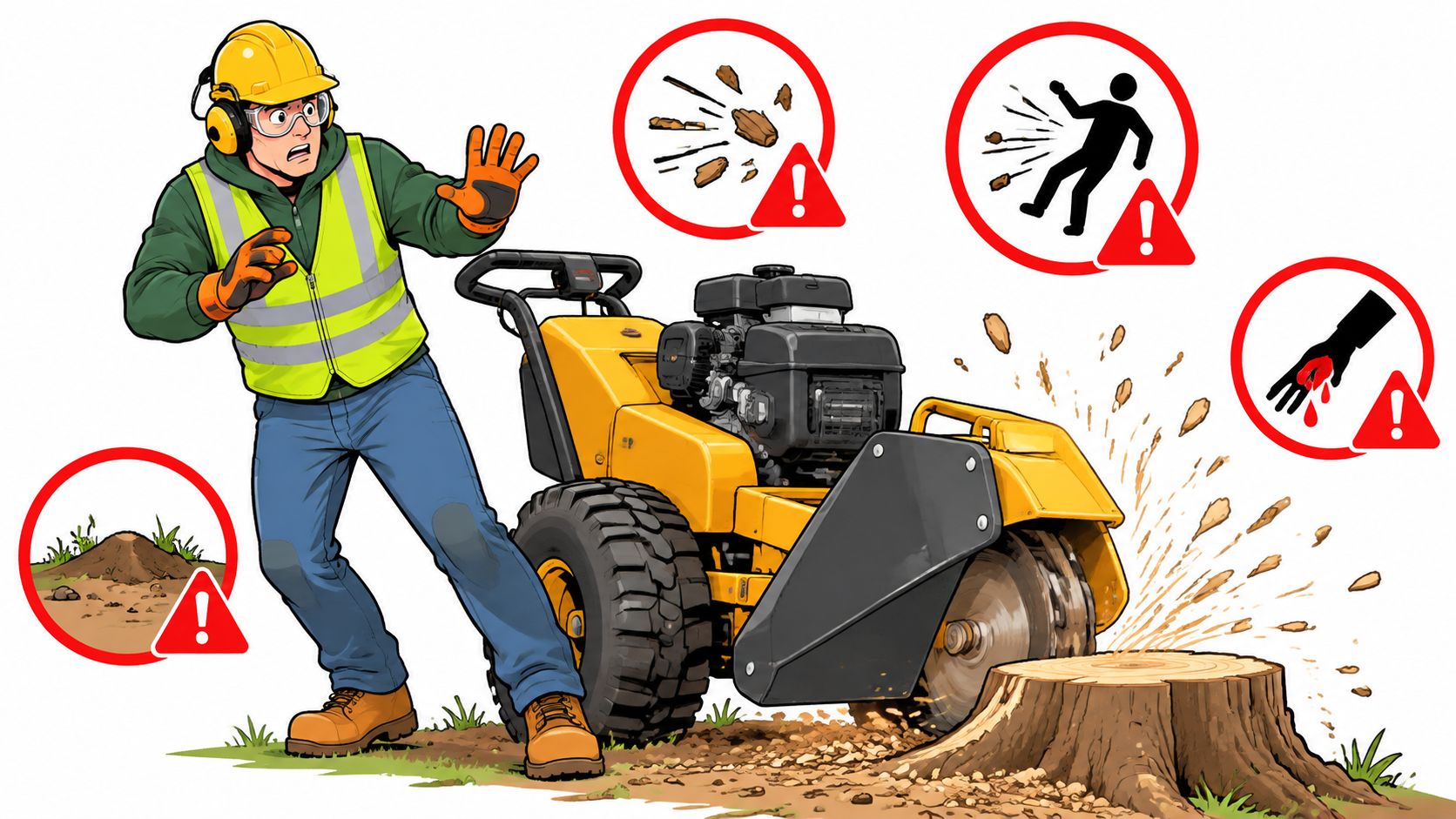
A grinder can throw chips, kick back, or become unstable on uneven ground. Treat operation as hazardous work, not routine yard cleanup. The cutting wheel and its discharge path are the main danger areas. OSHA's tree-care safety materials and accident context provide general context for the risks involved in tree-care work.
Set the boundary before starting
Follow ANSI Z133 safety guidance and associated operating precautions, along with the grinder's operating manual. Keep required guards in place while the wheel rotates, wear appropriate eye and hearing protection, and never backfill while the wheel is engaged. The manufacturer specifies the bystander distance and exclusion zone for each machine. Keep people and pets outside that boundary throughout operation.
- Keep guards installed: Don't bypass the chip shield or run the machine with damaged guarding.
- Wear appropriate protection: The operator should have eye and hearing protection and sturdy work boots before startup.
- Protect the discharge area: Wind, hard surfaces, and nearby glazing can redirect debris. Adjust the exclusion zone and shielding to account for those conditions.
- Stop for intrusions: Stop cutting immediately if anyone enters the exclusion zone.
- Respect unstable footing: Wet ground and slopes can reduce traction and undermine machine stability.
Know when a site exceeds DIY limits
A fence may restrict an operator's escape route or make shielding difficult. On a slope, unstable footing can turn a manageable stump into a machine-control problem. If visibility, stable positioning, or a clear exclusion zone can't be maintained, don't start. A screen can protect nearby property from some debris, but it does not make standing beside an operating grinder safe.
Bring in a trained crew when the setup can't be made safe, particularly near buildings, public walkways, or occupied parking areas. Match the equipment and work area to the site, and keep people clear until the machine is shut down.
How to Grind a Stump Step by Step
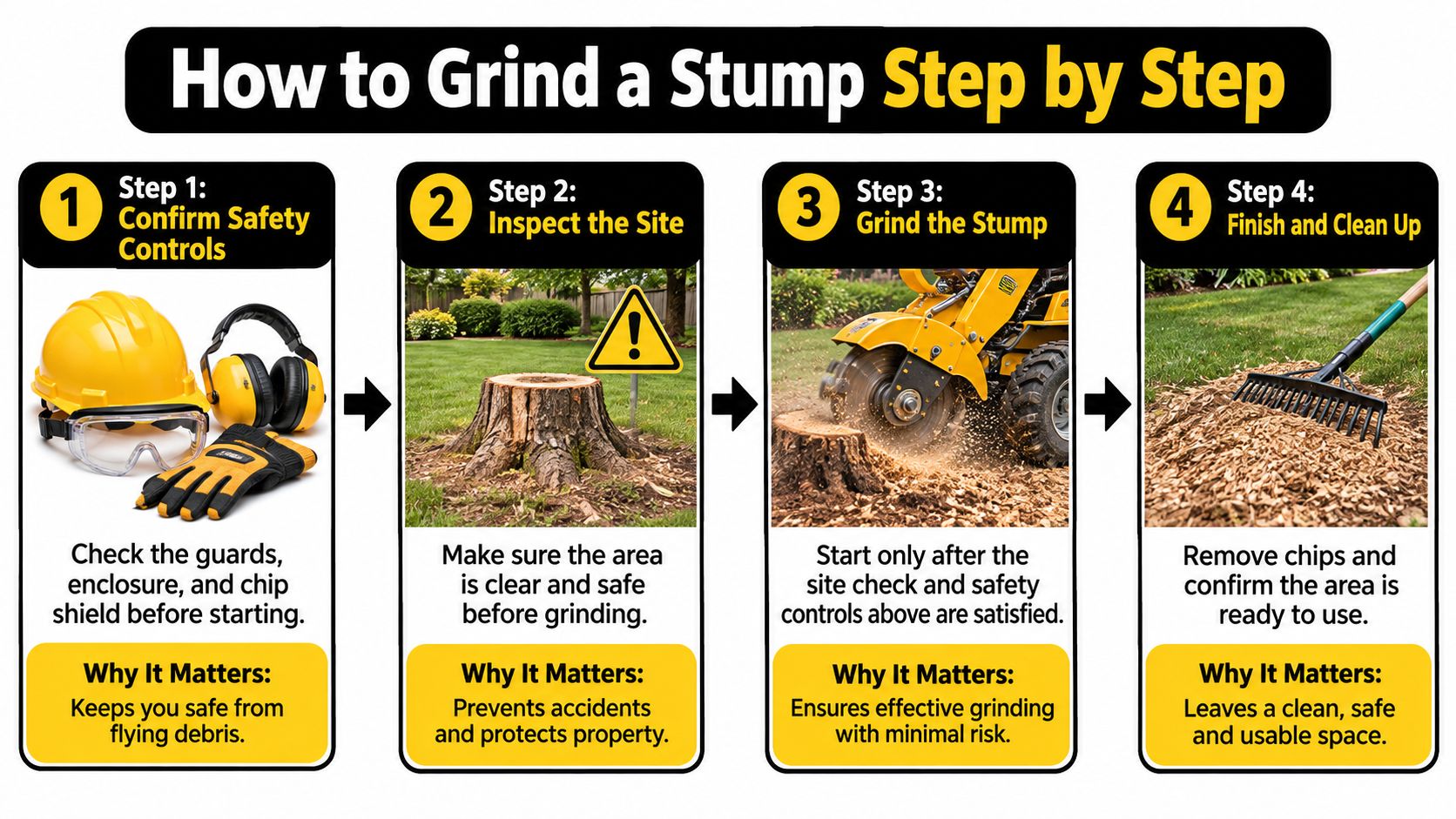
Start only after utility conflicts, access, and safety controls are resolved. The machine's operating manual takes precedence over a generic sequence because controls, positioning, and cutting techniques differ between models.
This overview shows how inspection, cutting, and cleanup fit together.
Make controlled cuts
Confirm the safety controls. Inspect guards, enclosure, chip shield, and controls before starting the engine. Don't run the wheel if a required protective component is missing or damaged.
Clear the exclusion zone. Move people, pets, vehicles, and loose objects out of the working area. Maintain that boundary throughout the operation, not just during startup.
Position the machine securely. Set up on stable, level ground with the cutting wheel above the stump, following the manufacturer's positioning instructions. Don't improvise support on a slope or work from ground that won't hold the equipment.
Engage the wheel clear of wood. Let it reach operating speed before making contact. A controlled approach avoids forcing a stalled or jerky first bite.
Lower gradually and sweep laterally. Work from the accessible edge toward the center in controlled passes. Take manageable cuts rather than forcing the wheel into the stump.
Pause to inspect. If metal, stone, unusual vibration, or another obstruction appears, stop and investigate. Shut down and wait for all moving parts to stop before approaching the cutting area, clearing debris, or making adjustments.
Check the specified depth. Measure from the surrounding finished-grade reference with an inch-marked stick only after shutdown. Professional machines commonly grind approximately 8-12 inches below grade, but restoration requirements determine the actual target, as described in Montgomery County's stump-removal specifications.
Address the specified surface roots. Reduce roots included in the work scope below the finished surface so they won't obstruct mowing or foot traffic. Don't chase roots toward utilities, structures, or retained trees without reassessing the work.
Rake out the grindings. Separate material for hauling or deliberate reuse, rather than pushing everything into the hole. Leave access for inspecting the remaining wood and preparing the correct backfill.
Check the finish before covering it
A shallow scrape can hide substantial root flare beneath loose chips. Rushing the first pass can also drive the wheel into a stone that a careful inspection would have exposed.
The cutting is complete when the specified stump and root material is removed to the agreed depth, not merely when nothing protrudes above the lawn. Finished grade comes after cleanup and suitable backfilling, with planting areas free of concentrated grindings.
The following video provides an additional view of the equipment and cutting process.
What to Do With Grindings Before Replanting
If you plan to plant where a stump stood, decide where the grindings will go before the work begins. Fresh grindings aren't replacement soil. Decomposing wood mixed into planting soil can temporarily tie up nitrogen and make it harder for plants to establish, according to University of Illinois Extension's stump-removal guidance. Chips can serve as surface mulch, but buried wood may take many years to decompose.
Chip handling and backfill by planned use
| Planned use | Chip handling | Backfill requirement |
|---|---|---|
| Lawn, sod or grass seed | Remove chips before adding topsoil | Clean topsoil, lightly compacted, with allowance for settling |
| Garden bed or shrub planting | Remove chips from planting soil; use only as surface mulch | Clean planting soil through the intended planting depth |
| Artificial turf, pavers or retaining wall | Remove chips and grindings from the base | Compacted base built to the installer's specification |
| No replanting, grass-free area | Chips may stay as surface mulch | Grade level with clean soil; no topsoil required |
| Public or commercial site | Barricade, backfill, grade and seed promptly, following any local requirements that apply to the site | Follow applicable site requirements |
Deadlines vary by jurisdiction, so confirm local requirements before work begins. The needed cleanup depends on the finish: a lawn, planting bed, and paved base do not call for the same backfill. A single standard depth is not right for every project. Set the grind depth and chip-removal plan around what will be planted or built, after checking for buried utilities.
Remove the woody layer, not an arbitrary scoop
Rake away loose chips and inspect the soil beneath them. Remove concentrated wood-contaminated material through the zone needed for planting or base construction. A thin cap of soil won't turn a chip-filled hole into a suitable foundation.
For turf, replace removed material with clean soil, compact it lightly, and allow for settlement. For paving, artificial turf, or retaining walls, have the installer set the excavation and base requirements before finalizing the grinding scope. Chips left in the wrong place can cause more callbacks than the grinding itself.
Plan for the finish: Surface mulch and buried backfill serve different purposes. Don't use one in place of the other.
Once woody debris is removed, Shopifarm's guide to improving garden soil offers context for preparing a planting bed. Coordinate that work with the broader landscaping after tree removal plan rather than treating the stump hole as an isolated patch.
Before work starts, agree on what happens to the chips and how deep clean backfill will go.
Decide Whether to Grind It Yourself or Hire a Pro
A small stump in an open lawn may suit a DIY grinder, but only if you have training, suitable equipment, marked utilities, and effective safety controls. Private lines, embedded metal, unstable ground, or nearby structures make a trained crew the safer choice. The right scope depends on what comes next: grinding depth and chip cleanup should follow the planting or construction plan, not a standard depth.
Who should grind or remove, by situation
| Situation | Who should handle it | Why |
|---|---|---|
| Small stump in open lawn, utilities marked, no metal | Homeowner with a rented grinder may be suitable | Lower-risk setting if the exclusion zone and PPE are in place |
| Stump near irrigation, an invisible dog fence, septic system, or private lines | Trained crew with a locator | Public utility marking does not cover private lines |
| Stump with embedded nails, wire, or fence hardware | Trained crew | Metal can damage the wheel and throw fragments |
| Tree removal in Marietta on a nonexempt parcel | Check authorization before cutting | Prior authorization is generally required; sudden-weather imminent hazards have an emergency exception |
| Tree leaning on a house, over a power line, or blocking a road | Emergency crew; stay clear | Downed or energized lines and unstable trunks are not DIY work |
Resolve permits and emergencies first
Under Marietta's tree-protection ordinance, nonexempt tree removal generally requires authorization from the Department of Development Services. Sudden-weather imminent hazards have an emergency exception. Hazardous-tree notifications require verification, with a response no later than 10 business days after all required documents arrive. These rules concern tree removal, not every existing stump.
For storm damage, FEMA recommends photographing damage and contacting your insurer; many policies cover disaster-caused fallen-tree removal when a home is damaged or access is blocked. Keep away from electrical debris. FEMA's cleanup guidance warns against touching, cutting, or moving downed lines, even if they appear de-energized.
Compare the actual scope
Searching for tree removal near me or tree service in Marietta, Roswell, Kennesaw, Woodstock, Acworth, or Canton? Ask for a written estimate that lists the scope. Confirm licensing, insurance, professional equipment, and the earliest safe response time rather than assuming same-day availability.
Tree removal costs reflect size, access, hazards, depth, and cleanup. An ISA Certified Arborist reviews every job before pricing, including whether a hazardous tree needs removal or whether pruning could preserve it.
Compare stump grinding versus removal before land clearing or lot preparation. If pavement is planned, concrete upgrades for Atlanta homeowners can help define the finished project before excavation.
Chips left behind can create more callbacks than the grind itself, especially when the next step is planting or construction. Confirm whether chips, brush, and rounds will be hauled away or left for you. Richmond Tree Experts GA takes them away unless you want the wood. After storms, the company removes and hauls away debris to make the property safe again quickly; unstable trees should be addressed before routine stump work.
Richmond Tree Experts GA offers stump grinding, tree removal, pruning, and storm cleanup, with an ISA Certified Arborist assessing every job before pricing. Discuss the stump, access conditions, buried utilities, and planting plan with Richmond Tree Experts GA so the grind depth and cleanup match what you plan to build or plant.

